Investors flock to Singapore despite trade uncertainty
They are actively seeking logistics and multi-user industrial assets.
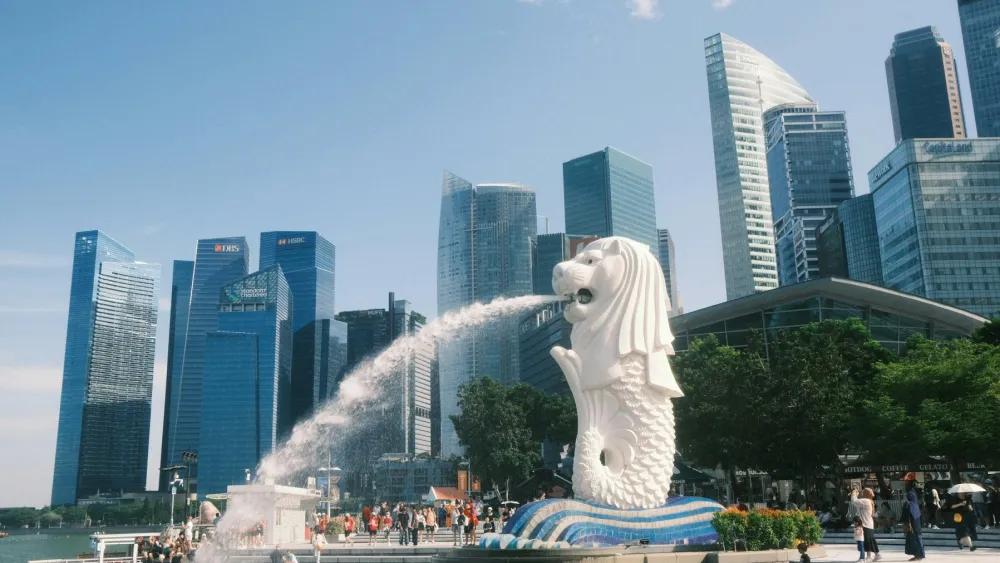
Singapore continues to attract investors and manufacturers despite rising tariffs and global economic uncertainty, according to a report by Knight Frank.
The tariffs imposed on Singapore by the United States currently stand at a baseline 10%, significantly lower than those affecting other Southeast Asian exporters. This has attracted numerous multinational companies to establish or expand their operations on the island.
Notable developments include Cariflex’s inauguration of the world’s largest polyisoprene plant in Jurong Island this May, covering 6.1 hectares. Alcon Manufacturing and Logistics also expanded its contact lens production capabilities with a new facility in Tuas opened in June. Micron Technology announced an $8.9b semiconductor plant in Woodlands, expected to start in 2026. The National Semiconductor Translation and Innovation Centre for Gallium Nitride, a $123m facility in one-north, is expected to advance Singapore’s capacity to produce next-generation semiconductors from mid-2026.
The logistics sector is likewise growing, with DP World launching its first Singapore warehouse spanning 140,000 square feet at the Mapletree Benoi Logistics Hub in May. ESR Group broke ground on the 143,000-square-foot Sunview Logistics & Container Hub in Jurong, expected to be fully operational by 2027.
“Amidst the uncertainty due to the ongoing economic and geopolitical tensions, Singapore’s stability and brand as a strategic business hub is expected to continue as a bulwark for firms looking for a safe harbour to set up or expand,” said Calvin Yeo of Knight Frank Singapore.
Singapore’s economy expanded by 4.3% year-on-year in Q2 2025, surpassing expectations, according to advanced estimates from the Ministry of Trade and Industry (MTI). Quarter-on-quarter growth reached 1.4%, continuing the momentum from the 4.1% annual growth recorded in the previous quarter. The manufacturing sector grew by 5.5% year-on-year, albeit with marginal 0.1% quarter-on-quarter gains.
Data from the Economic Development Board (EDB) also showed that manufacturing output in May increased 3.9% compared to the same period last year. Excluding biomedical manufacturing, output rose by 4.9%. Most manufacturing clusters saw growth, except the general manufacturing cluster, which contracted 8.9% year-on-year. Transport engineering and precision engineering clusters led the gains with double-digit growth rates of 25.6% and 10.3%, respectively.
However, the business outlook turned negative, falling to -6% due to global trade tensions. The purchasing manager’s index dropped into contraction in April and May but returned to expansion in June.
Industrial property sales jumped 185.5% in Q2 to $2.2b. Transactions increased 4.7% to 424. Major deals included sales of a data centre at 9 Tai Seng Drive for $455m and business parks The Strategy and 5 Science Park Drive for $280m and $245m, respectively.
Looking ahead, the industrial investment environment in Singapore is expected to remain stable despite ongoing global challenges. Singapore’s status as a safe and strategic hub continues to draw investor demand for logistics and multi-user industrial assets, particularly those with long lease tenures exceeding 20 years.
That said, the global manufacturing sector faces challenges that may weigh on rental growth in factory, business park, and warehouse segments during the second half of 2025.
“But given the buying interest from end-users, as well as both institutional and private wealth investors, industrial prices could track moderate gains of between 3% to 5% for the entire year,” the report said.
















 Read Here
 Advertise
 Sign Up