Singapore's 30 largest insurance firms 2014

Regulatory changes are key concerns for insurers in 2015

The year is already shaping up to become a banner year for the insurance industry as many changes are set to unfold. For the big picture of what’s to come for the industry, Singapore Business Review gathered the insights of the country’s top insurance firms. Key areas of concern for this year are broadbased regulatory changes, as well as needed initiatives in product innovation.

Regulation still active

Although the Monetary Authority of Singapore (MAS) has already introduced gamechanging regulations, regulatory compliance, especially to certain amendments, will still play an active role this year. Among the regulations introduced by the MAS, “the Financial Advisory Industry Review (FAIR) and the Risk-Based Capital 2 Framework (RBC2) are among the most impactful regulatory changes,” says Lance Tay, CEO of Tokio Marine Life Insurance Singapore.

One of FAIR’s most important changes will be the introduction of the Web Aggregator. As a spokesperson from AXA Life Insurance Singapore explains, the Web Aggregator is a system that allows consumers to compare prices and features of Life Insurance products and Direct Purchase Insurance, and all Life Insurers in Singapore will be mandated to comply. According to AXA, changes such as the Web Aggregator “will mean changes to the life insurance landscape in Singapore.”

While the consensus seems to be that these impending regulatory changes will be major, whether they will be positive or negative remains unclear. Peter Huber, CEO of Zurich’s Life Business in Singapore, however, believes the changes to be generally positive: “Given the complexity of the financial industry, we embrace such initiatives which simplify products, enhance accessibility, reduce costs and improve services for our customers.”

Insurance firms in Singapore are just as accountable to their customers as they are to the MAS, if not more so. And for the year ahead, several professionals believe that product innovations are necessary to meet the changing tastes of potential customers.

For instance, AXA points out that consumers now prefer products with more of an investment focus, rather than a savings or protection focus. This is largely the reason why
new sales were flattish last year, according to AXA.

Despite the noted change in consumer tastes, Tay believes that focusing on protectionbased products is still immensely important. “This is because the aggregate underinsurance gap of Singaporeans is S$462 billion, and on average, the Singaporean working adult is underinsured by 3.7 times his annual income.” Indeed, the industry is expected to face demands on multiple fronts in the year ahead.

Who made it to the top 30?

AIA Singapore topped the Singapore Business Review’s ranking of largest insurance companies in the city according on their 2013 total assets. Data compiled from Monetary Authority of Singapore show that AIA Singapore, classified as composite insurer – offering both general and life insurance products – is ahead of its closest competitor NTUC Income Insurance Co-operative by 1.69b.

The Great Eastern Life Assurance Company has the highest total assets amongst all the life insurer companies and ranked third overall.

Join Singapore Business Review community
A NOTE FROM SINGAPORE BUSINESS REVIEW

The people you want to reach are already in this room.

Every quarter, SBR lands on the desks of the founders, CFOs, and directors running Asia's most consequential companies. Every day, they open our newsletter and read our website. It's a room that took twenty years to build — and it's the one most of our partners are trying to get into.

The good news is that the door is open. We work with companies on thought leadership articles, sponsored content, industry summits across Southeast Asia, regional awards programmes, podcasts, and media placements in print and digital. The shape of the right partnership depends on what you're trying to do, which is why we'd rather start with a conversation than send a rate card.


If you have something this room should know about, tell us. We'll tell you honestly whether we can help, and how.

No rate cards until we understand the brief. It's a better use of everyone's time.

Top News

AI shifting how wealth management solutions are built and delivered at scale
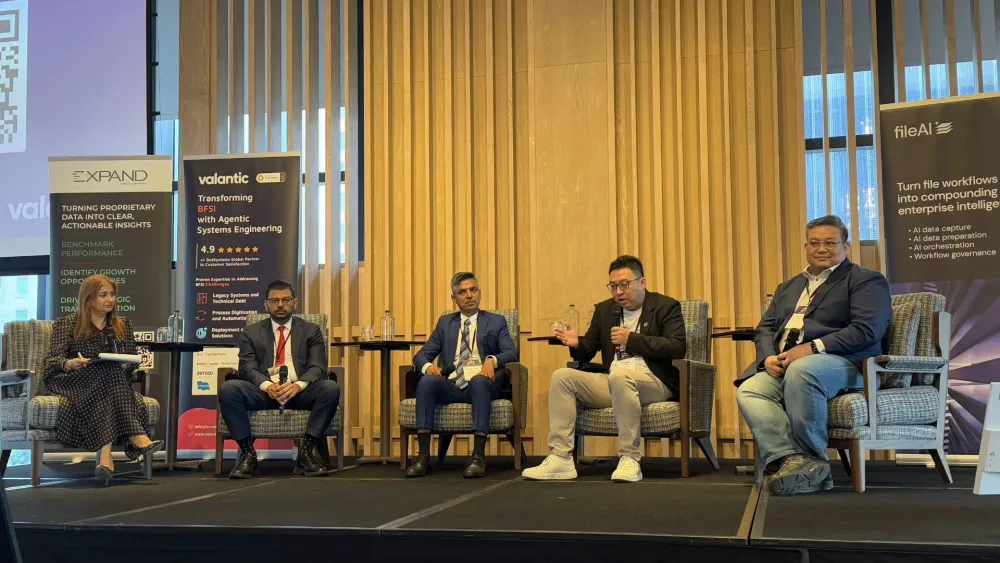
DBS aims to reduce investment insights preparation from hours to minutes using agentic AI.Artificial intelligence (AI) is changing wealth management economics by enabling advisers to serve more clients, not by replacing them, according to DBS Bank.The bank is using AI to automate time-consuming investment insights preparation to focus on building and delivering more personalised wealth solutions and recommendations at scale."We need to treat AI as the best personal assistant you'll ever have, and multiply that by 10," Wilfred Quek Siew Yih, managing director and group head of Wealth Management Solutions for Global Financial Markets at DBS Bank, said at the Asian Banking & Finance and Insurance Asia Summit held in Singapore on 1 July."It really removes your administrative frictions... so that you can concentrate on engaging and planning [with the] client from an emotional standpoint, whilst the AI does your portfolio analytics [and] looks at the client's profile,” he said.The shift represents a fundamental change in how wealth solutions providers operate. Instead of producing standardised portfolios for broad customer segments, AI enables advisers to tailor recommendations to individual clients."Gone were the days when you were coming up [with] a portfolio based on a generic segmentation view," Quek said. "Today, you can look into all these different aspects and deliver a very personal outcome for a client."Behind the scenes, DBS is deploying agentic AI to compress workflows that once took investment products teams several hours.Quek said his team previously spent mornings reviewing financial news, consolidating internal research, developing market views, generating trade ideas, pricing products and preparing presentation materials for clients—a process that "probably takes two, three hours easily across colleagues."The bank is now working to complete the same workflow in "10–15 minutes, including a maker-checker, human-in-loop process.""With that, you really can scale a business, and you can hyper-personalise," he said. Instead of producing a single market view once a day or once a week, we can now generate multiple personalised updates throughout the day, tailored to different clients and investment advisers, especially when markets are volatile.For DBS, the productivity gains are intended to expand employees’ capacity rather than reduce reliance on human expertise."The humans are here to stay," Quek said."AI is meant to enhance. Just imagine an adviser today who can talk to five clients because of the work they needed to do, versus tomorrow, where you can talk to 50 clients with the same granular attention you can give to your clients today."Even as AI takes on portfolio analytics and administrative work, Quek argued that human judgment remains central to wealth management."You wouldn't want AI to tell you everything you need to do and just execute a deal for you," he said. "End of the day, there's an element of emotional empathy, emotional intelligence."That philosophy also shapes DBS' approach to AI governance.Quek said the model will become increasingly important as banks compete for Asia's growing mass affluent segment, which he described as "one of the most underserved.""With that scale, you need AI to help you serve your clients," he said.Whilst digital capabilities continue to expand, Quek does not expect AI to eliminate the need for advisers or wealth centres.
Asia insurers risk irrelevance as protection gaps widen
An expert said Singapore saves 36% of its income despite having high protection and critical illness gaps.
Insurance
Banks urged to turn pricing into a strategic growth lever
A consultant says data-driven pricing can boost revenue and lower funding costs without sacrificing volume.
AI governance failures threaten banks’ returns
95% of GenAI spend has no outcome as organisations remain in the early stages of adoption.