Shipping firms feel seasick

With Singapore’s economy recovering one would have thought that its shipping companies would have been sailing into calmer waters.
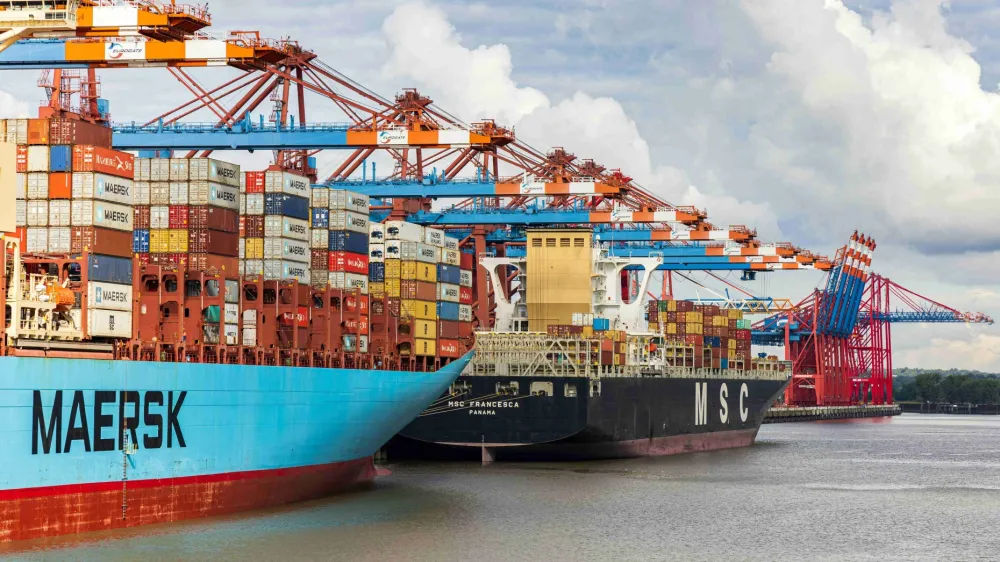
Not so, as the results of shipping companies has shown that the perfect storm in shipping rates and volumes continues to batter results. Indeed, Singapore’s largest shipping company, Neptune Orient Lines, continued to flounder on even weaker cargo rates.

To June this year cargo rates were down 28.9 per cent year on year and not surprisingly this led the company to report a 38 per cent revenue slump on August 7 which pushed it deep into the red. If there was a silver lining it was that the rate of volume slowdown reduced, albeit marginally, but the reality is shipping volumes in Asia are just not picking up across the board.
Faced with an oversupply of ships, this continues to put pressure on shipping rates. So what’s going on?

Europe the bright spot
In a word, blame America. Spot rates for cargo shipping to the US continued to slide through July and hover near recent lows.
The only positive sign for the industry is that rates for Asia-Europe trade are starting to improve, presumably because the recession is ending quicker in those markets. In July alone the shipping rate for China to Europe bound cargo jumped a welcomed 10 per cent and rates for China to the Mediterranean increased by a more robust 15 per cent.
Still, rates remain well below recent averages.

In 2006 the rate was for Hong Kong to Los Angeles shipping averaged US$2000/FEU.
But by the middle of this year that had slumped to little more than US$800/FEU.
And it is going to get a lot worse, even when the economy recovers. The reason is the number of supermax ships is set to double over the next 24 months.

Too many ships
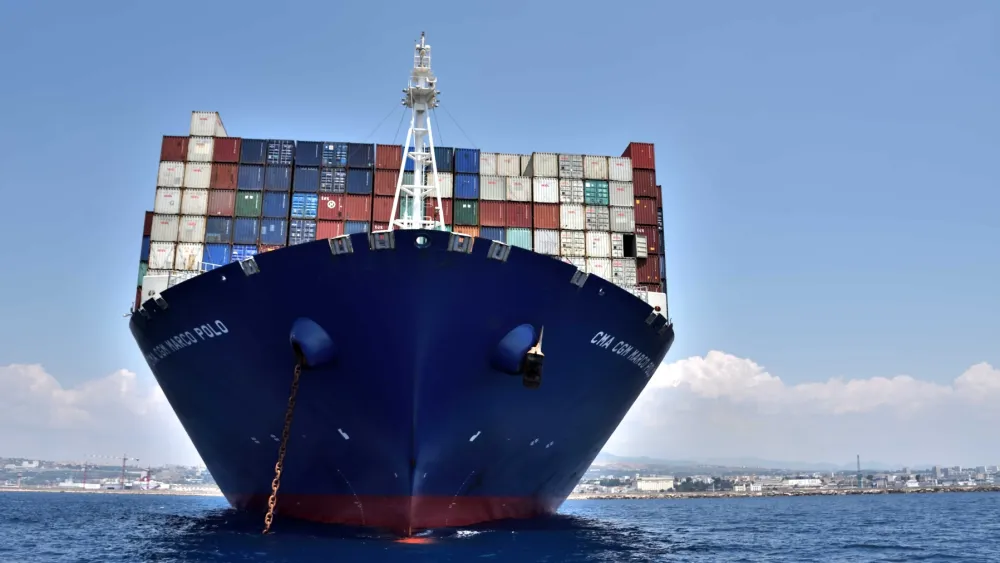
Currently there are 855 such ships in service, but according to Chris Bartlett, chartering manager at Braemar Seascope, there are a further 700 on order. Almost 200 of these will be launched during the remainder of this year, and a further 198 over the fist six months of next year.
“Even China’s massive appetite for iron ore and coal is not going to offset the rise in shipping capacity.
The rates are still going down and owners are facing huge losses,” he said. Neptune Orient Line’s loss does not come as a surprise given that freight rates and volumes have fallen by 20 per cent and 24 per cent year-to-date, notes OCBC analyst Lee Wen Ching.
But will the tough times continue or will shipping firms such as Neptune Orient and the rest of the shipping corporations catch a break this year?

“While an improvement in global trade in 2H09 may ease some pressure on earnings, Neptune Orient Lines is likely to incur losses for the full year,” said Lee.
Join Singapore Business Review community
A NOTE FROM SINGAPORE BUSINESS REVIEW

The people you want to reach are already in this room.

Every quarter, SBR lands on the desks of the founders, CFOs, and directors running Asia's most consequential companies. Every day, they open our newsletter and read our website. It's a room that took twenty years to build — and it's the one most of our partners are trying to get into.

The good news is that the door is open. We work with companies on thought leadership articles, sponsored content, industry summits across Southeast Asia, regional awards programmes, podcasts, and media placements in print and digital. The shape of the right partnership depends on what you're trying to do, which is why we'd rather start with a conversation than send a rate card.


If you have something this room should know about, tell us. We'll tell you honestly whether we can help, and how.

No rate cards until we understand the brief. It's a better use of everyone's time.

Top News

AI shifting how wealth management solutions are built and delivered at scale
DBS aims to reduce investment insights preparation from hours to minutes using agentic AI.Artificial intelligence (AI) is changing wealth management economics by enabling advisers to serve more clients, not by replacing them, according to DBS Bank.The bank is using AI to automate time-consuming investment insights preparation to focus on building and delivering more personalised wealth solutions and recommendations at scale."We need to treat AI as the best personal assistant you'll ever have, and multiply that by 10," Wilfred Quek Siew Yih, managing director and group head of Wealth Management Solutions for Global Financial Markets at DBS Bank, said at the Asian Banking & Finance and Insurance Asia Summit held in Singapore on 1 July."It really removes your administrative frictions... so that you can concentrate on engaging and planning [with the] client from an emotional standpoint, whilst the AI does your portfolio analytics [and] looks at the client's profile,” he said.The shift represents a fundamental change in how wealth solutions providers operate. Instead of producing standardised portfolios for broad customer segments, AI enables advisers to tailor recommendations to individual clients."Gone were the days when you were coming up [with] a portfolio based on a generic segmentation view," Quek said. "Today, you can look into all these different aspects and deliver a very personal outcome for a client."Behind the scenes, DBS is deploying agentic AI to compress workflows that once took investment products teams several hours.Quek said his team previously spent mornings reviewing financial news, consolidating internal research, developing market views, generating trade ideas, pricing products and preparing presentation materials for clients—a process that "probably takes two, three hours easily across colleagues."The bank is now working to complete the same workflow in "10–15 minutes, including a maker-checker, human-in-loop process.""With that, you really can scale a business, and you can hyper-personalise," he said. Instead of producing a single market view once a day or once a week, we can now generate multiple personalised updates throughout the day, tailored to different clients and investment advisers, especially when markets are volatile.For DBS, the productivity gains are intended to expand employees’ capacity rather than reduce reliance on human expertise."The humans are here to stay," Quek said."AI is meant to enhance. Just imagine an adviser today who can talk to five clients because of the work they needed to do, versus tomorrow, where you can talk to 50 clients with the same granular attention you can give to your clients today."Even as AI takes on portfolio analytics and administrative work, Quek argued that human judgment remains central to wealth management."You wouldn't want AI to tell you everything you need to do and just execute a deal for you," he said. "End of the day, there's an element of emotional empathy, emotional intelligence."That philosophy also shapes DBS' approach to AI governance.Quek said the model will become increasingly important as banks compete for Asia's growing mass affluent segment, which he described as "one of the most underserved.""With that scale, you need AI to help you serve your clients," he said.Whilst digital capabilities continue to expand, Quek does not expect AI to eliminate the need for advisers or wealth centres.
Asia insurers risk irrelevance as protection gaps widen
An expert said Singapore saves 36% of its income despite having high protection and critical illness gaps.
Insurance
Banks urged to turn pricing into a strategic growth lever
A consultant says data-driven pricing can boost revenue and lower funding costs without sacrificing volume.
AI governance failures threaten banks’ returns
95% of GenAI spend has no outcome as organisations remain in the early stages of adoption.