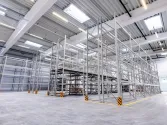
APAC commercial property investment hit $163b in 2018
Investments in office, retail and industrial properties hit a new high of $146b.
Data from Real Capital Analytics (RCA) showed that total investment volume into APAC commercial property in 2018 came off marginally from a year ago but is still close to all-time high levels at $163b, according to UBS Asset Management’s 2019 real estate outlook.
Excluding multifamily apartments and hotels, total APAC investment volume into the traditional commercial asset classes of office, retail and industrial properties topped the record set in 2017 to hit a high of $146b in 2018.
“This is in spite of market talk of rising interest in alternative asset classes amidst a hunt for yield, and testifies to growing capital flows into the more traditional and defensive asset classes of office, retail and industrial properties,” the report’s authors Adeline Chan and Shaowei Toh explained.
The rental performance in the office market across prime cities in Asia Pacific (APAC) has been largely positive over the last two years, with most markets enjoying strong net absorption and buoyant leasing demand.
Rents were also driven by supply constraints, but heading into 2019, the dynamics look set to diverge, the report’s authors noted. In Tokyo and in major Chinese cities, large amounts of spaces are expected to be completed.
“Whilst this is likely to weigh on rents in China, the saving grace for Tokyo is that most of the upcoming space is already pre-leased, and coupled with a record-low vacancy rate,” Chan and Toh said. “This still gives the Japanese capital some runway for rental growth.”
“Cities in Australia have been witnessing stock withdrawals in the past few years although supply is slowly starting to trickle through starting in Melbourne, which is expected to cap rental gains in the city in 2019. Prime areas in Hong Kong have seen heady rental gains and look to be testing the limits of affordability whilst in parallel, the decentralization trend shows signs of gaining more traction.”
According to the report, the retail sector is still going through a period of regeneration, as retailers which have yet to adapt to changing consumer habits find themselves continuing to struggle. On the other hand, e-tailers, which first captured the hearts of consumers online, now find themselves with enough of a following to venture into the physical retail space and grow their brands.
“Improvements in the labour market have yet to translate into a tangible pick-up in spending and consequently retail demand. Signs of stabilisation in markets such as Hong Kong and Singapore are now met with another roadblock, where moderating economic prospects are likely to weigh on consumer sentiment,” Chan and Toh highlighted. “Nevertheless, demand for prime retail space in key cities should still remain robust, supported by growing inbound tourists.”
Meanwhile, demand for logistics space has been strong, as third-party logistics (3PL) providers and chain retailers continued to seek well located distribution units near major ports, railways and roads to facilitate the efficient delivery of goods. This is said to reflect the countervailing effect of the long term trend of growing e-commerce, which continues to play out across APAC.
“Other segments of industrial real estate are benefitting from government policy – in Australia, a push for infrastructure projects have given the construction sector a boost, which has in turn been taking up more industrial space,” the authors noted.
In places like China and Hong Kong, politics will derive greater value out of industrial land amidst changes in economic structure. This has resulted in limitations of industrial use and constricting supply.

























 Read Here
 Advertise
 Sign Up