Green roads ahead: How SEA can get back on track on its net-zero goals
The pandemic derailed the net zero initiatives of several SEA economies.
Southeast Asia has a critical role to play in achieving global net-zero carbon emission goals, and it is not too late to get back on track, Bain & Company said in its latest report.
According to its "Southeast Asia’s Green Economy 2021 Report: Opportunities on the Road to Net Zero" report, noted that despite greener initiatives from SEA economies, such as Singapore's National Green Plan and Indonesia's 2060 Net Zero Commitment, the region fell off the net-zero track due to COVID-19.
But as the region that is most at-risk when it comes to climate shocks, standing to lose 3-4% of GDP in 2030, which translates to US$130-$200b in losses if global warming gets worse by 2.0-3.2°C, Southeast Asia has much to lose.
There are opportunities to get back on track, Bain & Company said, particularly in the fields of the energy transition, valuing nature, and agri-food transformation.
Whilst energy transition is one of the region's largest challenges, it could also push towards faster adoption renewables such as solar and wind, and more energy-efficient practices.
As one of the region's undervalued resources, putting a "better price" on nature will give more opportunities for SEA investors and businesses enabled by tech and financial innovation to scale protection of SEA's natural resources and realize potentials as global carbon sinks and biodiversity banks, Bain & Company explained.
As a backbone of the SEA economy, agri-food transformation is also seen as a source of emissions and environmental impact. Sustainability can be improved by empowering not just large firms, but smallholder farmers.
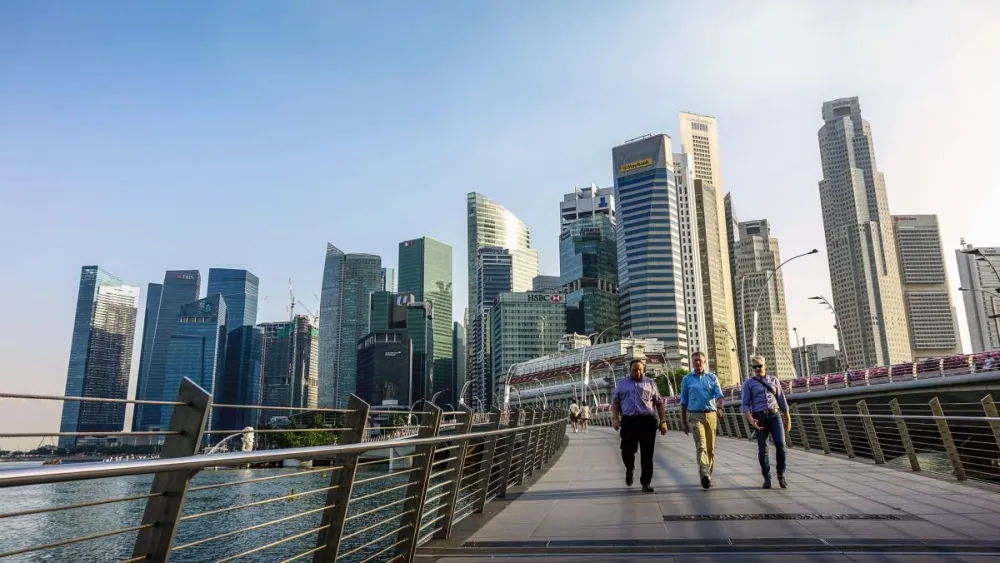
It cited Singapore as a nation that plays an important role as they grow the “green data revolution.”
“There are green shoots in digital innovation taking place in SEA, with the development of Singapore’s digital twin for climate resilience modelling and geospatial mapping of SEA forests for better conservation as prime examples,” the report read.
With all of these developments and potential, Bain & Company said that there is room for growth for investors. Currently, investors see sustainability as an opportunity with 57% now integrating the factor in their investment thesis.
Approximately US$2t is required over the next decade to facilitate a sustainable transition of SEA’s infrastructure, 40% of this which will need to come from the private sector.
Three ingredients are seen as crucial moving forward: an eco-system wide co-innovation; collective transition support, leveraging public-private partnerships and blended financing; and regional collaboration.






















 Read Here
 Advertise
 Sign Up