Sole focus on automation limits AI's revenue potential, experts say
Ninety-five per cent of AI proof of concepts fail due to unclear objectives.
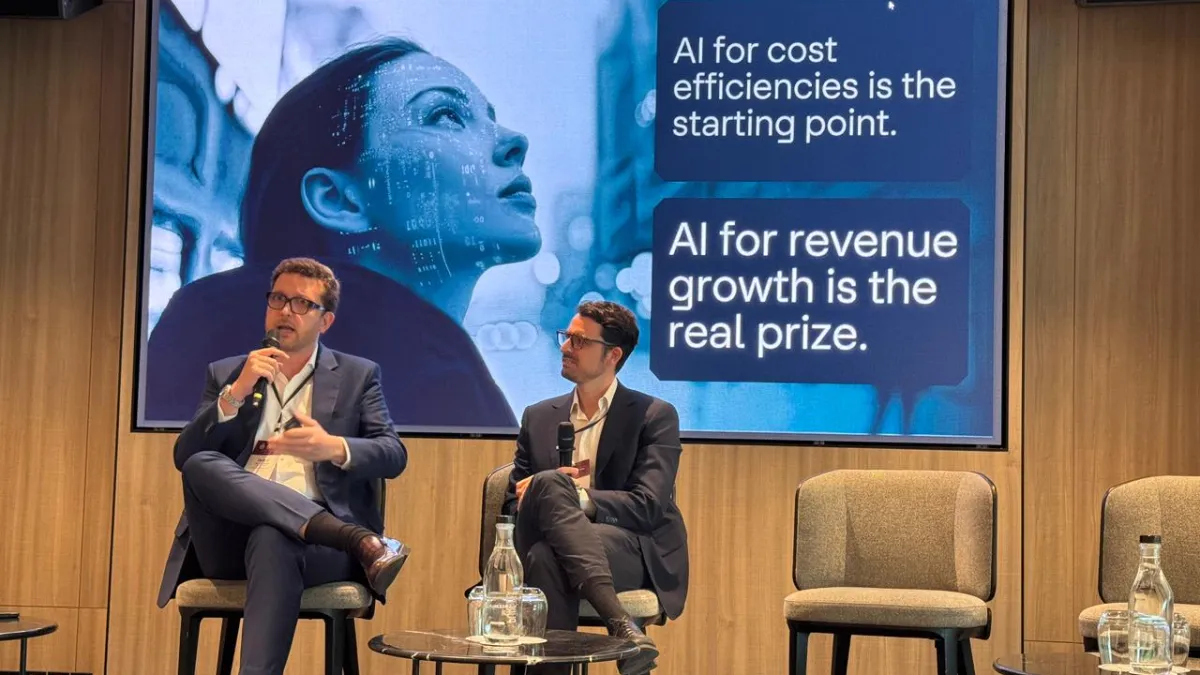
Telecom operators should treat artificial intelligence (AI) as part of their core business strategy rather than simply a cost-cutting tool, industry experts said during the 2026 Asian Telecom Summit in Singapore.
AI is ultimately about generating revenue, adding value, and transforming the way companies work, said Alvaro Davis Mendez, Telco and Media Market Head for ASEAN at Indra Group.
However, the majority of telcos have so far focused more on automation and cost efficiency, according to Jose Pablo Del Reguero de la Torre, Head of Strategy and Innovation at Indra Group Telecom & Media Consulting.
“In some cases, they may have relied too heavily on automation to replace personnel,” he said. “This approach can be challenging, as achieving a return on investment from substituting staff with automation is not always straightforward.”
“Once we understand how to use it properly and stop treating it as just another technology to implement in business support systems or operations support systems, we can start seeing real benefits,” Mendez added.
Del Reguero de la Torre cited what he described as a study from MIT, which he said found that 95% of the time, AI is already failing on proof of concepts (POC).
“The biggest challenge is the lack of definition. What do I want to achieve starting from the first day?” he added.
Companies tend to look at use cases that have worked elsewhere instead of building their own, Mendez added. “The second issue is that they often don’t clearly understand the purpose of a POC—why they are doing it in the first place—so it’s hard to fix or improve.”
“What is the end goal?” he said. “Do we want to generate revenue or improve efficiency?”
Meanwhile, both speakers outlined what they described as two strategies for telecom operators: defence and growth.
On the defensive side, Mendez noted that companies should use AI to reduce customer churn and improve network stability. Meanwhile, on the growth side, operators can use AI to create new revenue streams and explore new business models.
Del Reguero de la Torre said telecom companies are investing in data centres and artificial intelligence centres because “they know it’s a way to maximise the revenues they’re going to have in the next few years.”
Efficiency is the starting point, he emphasised. “Automation and process optimisation are where telcos begin with AI. But the real value lies in revenue growth.”























 Read Here
 Advertise
 Sign Up