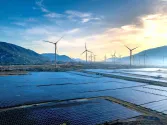
Singapore records one of APAC’s lowest fossil fuel subsidy levels
In 2022, Singapore’s fossil fuel subsidies accounted for 5% of its GDP.
Note: This article was updated on July 6 to reflect corrected data from MSCI’s Climate Action Progress 2025 report. MSCI revised the report on July 1, 2025, after identifying factual errors stemming from an incorrect citation of underlying IMF data.
Singapore’s early adoption of a national carbon tax and its ambition to lead in green finance have made it one of the markets with the lowest fossil fuel subsidies in Asia-Pacific, according to MSCI’s APAC Climate Action Progress Report 2025.
The report revealed that in 2022, Singapore’s fossil-fuel subsidies accounted for 5% of its GDP, a figure that includes both explicit subsidies for petroleum and implicit subsidies across petroleum, natural gas, and coal.
The findings reinforce Singapore’s regulatory leadership. The country was an early adopter of a national carbon tax in 2019 and will implement climate-related disclosure standards aligned with IFRS S2 starting in 2025. Its national strategy, the Green Plan 2030, outlines key decarbonisation goals.
The report warned that real-economy decarbonisation in Asia-Pacific could stall if governments continue to support fossil-fuel subsidies.
“These subsidies can distort markets by keeping fossil-fuel prices artificially low, discouraging clean-tech investment and reducing incentives for companies to act in the near term,” it said.
MSCI also flagged a potential policy disconnect. While climate risk disclosure is becoming more standardised, fiscal incentives may be undermining those very efforts.
“Data suggests that [fossil-fuel subsidies] can slow the transition to a lower-carbon economy,” the report noted. Though often intended to ease inflationary pressures, such subsidies “potentially contradict” national climate pledges.
The report called for stronger alignment between fiscal policy and climate goals, stating: “Navigating a route between persistent risks and emerging opportunities will be critical… to accelerate the shift from fossil fuels toward clean-energy systems.”




















 Read Here
 Advertise
 Sign Up