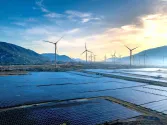
Singapore releases draft guidance on voluntary carbon credit use
The public is invited to submit feedback by 20 July.
The National Climate Change Secretariat (NCCS), Ministry of Trade and Industry (MTI), and Enterprise Singapore (EnterpriseSG) have jointly released a draft guidance document to support companies in the voluntary use of carbon credits as part of credible decarbonisation strategies.
The guidance, developed in collaboration with the Singapore Sustainable Finance Association (SSFA) and various industry stakeholders, aims to bring greater clarity and integrity to the voluntary carbon market (VCM), and the public is invited to submit feedback by 20 July 2025.
Carbon credits, which represent the reduction or removal of greenhouse gas emissions, are traded on carbon markets and serve as a key instrument in the global transition to net zero.
These credits enable companies to complement their decarbonisation efforts, especially when dealing with hard-to-abate emissions, and also help direct funding to emissions-reducing projects in emerging and developing economies.
However, the growth of carbon markets, particularly the VCM, has been hindered by inconsistent standards and a lack of clear guidelines, leading to reputational concerns and hesitation amongst companies.
To address these issues, the draft guidance outlines several core principles. It aligns with international frameworks, including approaches agreed under Article 6 of the Paris Agreement, where relevant.
It also stressed that carbon credits must have high environmental integrity, encouraged companies to prioritise all feasible emissions abatement measures before using credits for residual emissions, and clarified that corresponding adjustments do not apply to credits used voluntarily, as these are not counted toward national climate targets.
This draft guidance is a key component of Singapore’s broader strategy to foster a high-integrity and vibrant carbon market ecosystem.
Related initiatives include allowing carbon tax-liable companies to offset up to 5% of their taxable emissions with eligible Article 6-compliant credits, requiring businesses to disclose the role of carbon credits in their decarbonisation plans under reporting standards aligned with the International Sustainability Standards Board (ISSB), and supporting the supply of high-quality credits through the Carbon Project Development Grant.
Additional efforts include developing a robust local ecosystem for carbon services and trading, offering regional capacity-building for carbon project development, and working with like-minded countries to harmonise guidance on credit usage.
Moreover, industry stakeholders are also taking proactive steps. The SSFA is currently surveying companies to inform the development of a complementary Claims Guidance Code and is working with regional partners under the ASEAN Common Carbon Framework to promote the supply of and demand for high-quality carbon credits.












 Read Here
 Advertise
 Sign Up