
Singapore's YoY investment volume plunges 34.7% in Q1
The commercial sector is seeing the biggest decline.
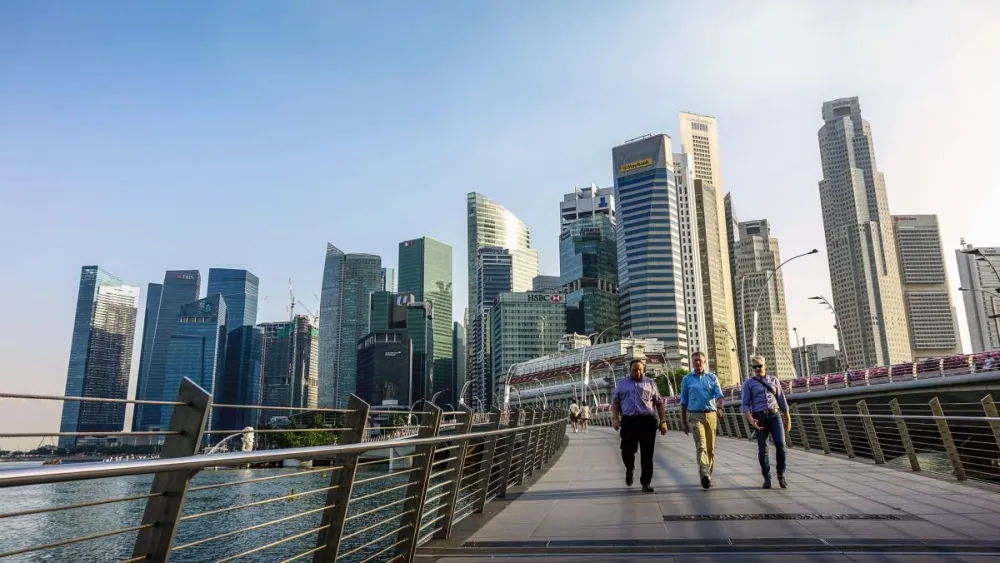
Singapore's investment landscape witnessed a significant dip in the first quarter, as volumes dropped by 34.7% compared to the previous year, with commercial sectors experiencing the most notable declines.
"In the first quarter, investment volume was around 4 billion Singapore dollars, marking a 34.7% decline quarter on quarter," explained WeiLeng Tang, Managing Director & Head of Capital Markets at Colliers Singapore.
She noted that one-third of this volume, approximately 1.2 billion Singapore dollars, was buoyed by a few large Government Land Sales (GLS) tenders. "These GLS tenders accounted for about 31.5% of the total investment volume," Tang added, highlighting their critical role in stabilising the market.
Despite the overall downturn, certain sectors showed resilience. "The investment this quarter was also supported by the retail sector, which contributed about 40.3%, followed by the hospitality sector at 20.5%, and the industrial sector at 11%," Tang detailed. The disparity between seller expectations and buyer offers continues to impact transaction volumes, with sellers holding strong due to the anticipated lower interest rates.
Looking ahead, Tang is optimistic about the recovery and growth prospects for 2024. "We estimate that investment sales will be five to 15% higher than in 2023, likely coming in between 22 to 24 billion Singapore dollars," he projected. This anticipated increase is fueled by Singapore's reputation for stable returns and potential for long-term capital growth, despite the current market's challenge of a limited number of motivated sellers.
For 2024, luxury residential sales are expected to remain tepid following hikes in additional buyer's stamp duties, particularly for foreign investors. However, Tang noted, "With the ramp-up in GLS sites, the sale of public sites will continue to make up the bulk of residential investments."
Furthermore, Tang pointed out emerging opportunities in the hospitality, suburban retail, and office sectors, suggesting that partnerships between investors and developers could be beneficial. The mid-market is also expected to see more transactions in shop houses and strata office spaces.























 Read Here
 Advertise
 Sign Up







Commentary
‘Tokenmaxxing’ – The wrong AI race to run in Singapore
To outsmart modern fraud, we must first know the enemy
Why Singapore SMEs cannot wait for quantum cyber risk to arrive before securing data
Is Singapore's emphasis on long-term security and stability hindering purpose-driven employees?
When Singapore's agentic AI ‘chefs’ arrive, will the kitchen be ready for them?
What Singapore’s app store rules reveal about the future of online trust
Faster hiring alone will not fix construction’s productivity problem
Beyond policy: How Singapore's service sector can win at the frontline
Solving the production problem behind Singapore’s ‘pilot purgatory’
Transformation without disruption: Your Existing ERP is an accelerant to business innovation