Korea’s industrial production rises 3.8% in July
Morgan Stanley says production activities were affected by the holidays, and possibly by the heavy rainfall in the month.
Production capacity also slowed down to 4.4% in July, vs. 5.2% in June.
Here’s more from Morgan Stanley:
| Korea's industrial production rose 3.8% YoY in July, below the consensus forecast of 6.2%. It was also lower than the growth of 6.5% in June. On a working-day adjusted basis, production was up 5.4% YoY in July, slightly lower than 6.5% in the previous month. Consensus and we had expected strong industrial production in July, due to better-than- expected exports in the month. However, the actual data showed that production activities were affected by the holidays, and possibly by the heavy rainfall in the month. Producers’ shipments reported the similar trend, up 3.0% YoY in July, compared to growth of 5.8% in June. Manufacturers' capacity remained tight, as the capacity utilization ratio continued to stay high at 82.1%. Production capacity grew at a slower pace at 4.4% YoY in July, vs. 5.2% in June, indicating that producers were reluctant to add capacity on a large scale. Capex growth dropped to negative territory again: Despite the tight capacity, Korean producers were still disciplined in their capex investment. Equipment investment showed a decline of 2.7% YoY in July, compared to growth of 4.7% in June and 10.3% in May. It was the second decline this year, after equipment investment dropped 0.6% YoY in April. Investment in machinery equipment and transport equipment declined 2.3% YoY and 4.3% YoY, respectively. Domestic machinery orders, excluding vessels, were also not robust, with value declining 2.4% YoY in July, compared to a gain of 20.7% YoY in June. Public machinery orders rose 44.9% YoY July, but private orders were down 4.9% YoY. The construction sector remained the weak link in the economy. The value of construction orders declined 34.6% YoY in July, vs. a gain of 13.3% in June. Public construction orders dropped 55.5% YoY, vs. a decline of 17.6% in June, and private construction orders declined 9.3% YoY, vs. growth of 41.1% in June. Leading indicator still resilient in July, but could ease in August: Korea's leading indicator increased 2.0% YoY in July, slightly up from 1.7% in June. We think the leading indicator in July was still supported by resilient exports and consumer confidence in the month. However, it is likely to show a weaker reading in August, as the stock market declined and consumer confidence fell following S&P's downgrade of the US Treasury bonds in the month. In addition to that, producers’ sentiment was also affected by intensified external uncertainties, and machinery orders have declined in recent months. As for the consumption trend, sales of consumer goods were still resilient, up 5.3% YoY in July, vs. 5.8% in June. Service sector output also held up well despite the high inflation environment, rising 3.8% YoY, vs. 3.5% in June. However, we think the consumption trend could see downward adjustment in the next few quarters due banks' tightening of consumer loans. Bottom line: We think the decline in capex growth in July was a further indication that business sentiment was weak in Korea. Manufacturers were cautiously observing the development of the external economic situation, and were not willing to boost equipment investment. According to the Business Survey Index reported by the Federation of Korean Industries, the overall BSI on forecast business conditions dropped to negative territory at 90.4 points for September, compared to 102.1 points for August. A reading of below 100 points means that there were more pessimistic respondents compared to optimistic ones. Clearly, the sentiment among Korean manufacturers was very much affected by the intensified external uncertainties. In the data release today, both machinery orders and construction orders showed a drop in July, which could imply a further slowdown of corporate investment activities in next few months. |
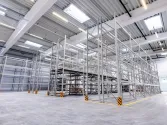
Photo from wahbian























 Read Here
 Advertise
 Sign Up