Will the economic woes in the West take its toll on Asia?
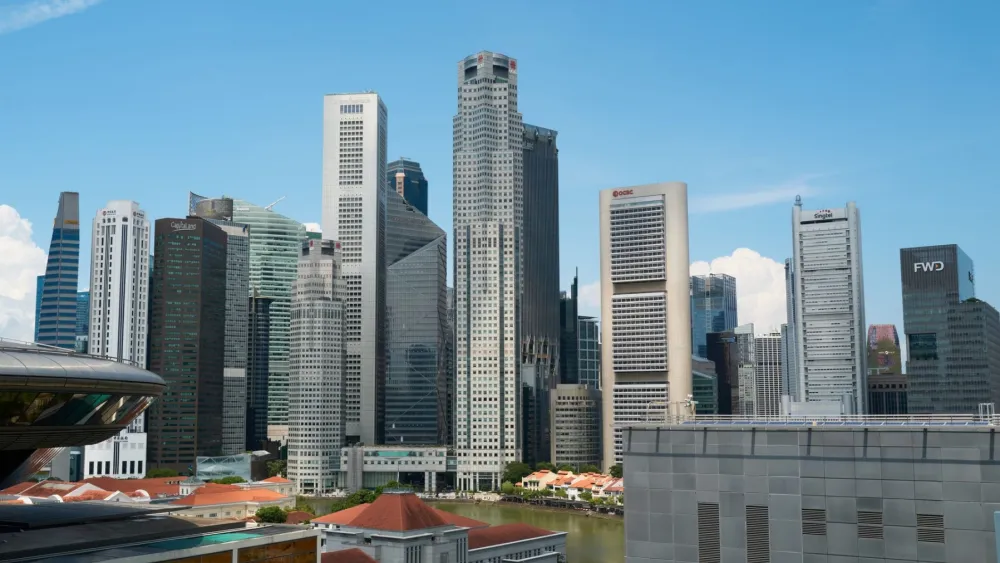
Singapore’s volatile economy made its growth rate decelerate abruptly year-on-year between Q1 and Q2.
According to Standard Chartered, in East Asia, recent months have highlighted the need to differentiate between economies driven by domestic demand, which look more resilient, and the more open economies whose growth rates are more volatile.
Here’s more from Standard Chartered:
| Of the countries that have reported Q2 GDP growth, China and Indonesia saw a limited slowdown on a year-on-year basis, which is still the way data across Asia is assessed, although it can lead to big swings in figures and sometimes in sentiment. Meanwhile, the South Korean, Malaysian, Hong Kong, Taiwanese and Singaporean economic growth rates all decelerated year-on-year between Q1 and Q2. Singapore's deceleration was particularly abrupt, reflecting both the openness of its economy and of its manufacturing industry. Overall, recent performance has been in line with our view of a soft patch in Q2 established since the start of the year. Some economies have a decent seasonal adjustment of their data and of these, Indonesia actually accelerated in Q2 (2.9 in Q2 versus 1.5 in Q1), while China was steady (2.2 in Q2 versus 2.1 in Q1) while Malaysia decelerated (2.4 in Q2 v 7.6 in Q1). In contrast, Hong Kong and Singapore, the two most open economies in the region, contracted in Q2. The diversification in the region is two-fold. One is the shift in trade flows that has been evident for some time. We have referred to this as New Trade Corridors for the last seven years or so, reflecting the increase in ‘south-south’ trade, as flows of commodities, goods, remittances, and portfolio and direct investment have picked-up. The other is the stronger performance of domestic demand. For H2-2011, growth in South Korea has been 3.75%. Of this, private consumption has been 1.57%, government spending 0.27%, investment has subtracted 0.58% and net trade has added 2.47% (with exports a positive of 6.38% and imports a negative of 3.91%). Adding up all the components gives the overall growth picture. Based on this, one can see the extent to which private consumption has been a mainstay of growth across much of East Asia during H1-2011. Last year, private consumption, too, was strong, but the big delta for the rapid growth in some of the more open economies was a surge in exports, which naturally is hard to sustain in growth terms this year. |


























 Read Here
 Advertise
 Sign Up