These 3 possible fronts may trigger more cooling measures
Prices for private homes bound for soft-landing, says MayBank.
Barring another economic catastrophe, MayBank believes that the combination of unsold inventory build-up, buyers’ fatigue and continued policy risks still point to a soft-landing for private residential property prices, which it expects to decline by 10% over the next 18 months.
Based on the figures for May, MayBank notes that there are a total of 81,561 units (including ECs) from the confirmed projects in the pipeline, of which 19,794 units (or 24%) remain unsold.
More specifically, the URA estimates that there are a total 38,000 new and unsold residential units in the pipeline already with planning approvals.
"Including the 7,100 potential units from the 2H12 GLS Programme, we are looking at ~45,000 units in the pipeline, which is more than the ~37,000 new homes sold in 2010 and 2011 added together," says MayBank.
In spite of the build-up of unsold stock, MayBank believes that more measures are possible.
According to MayBank, the 3 possible fronts that may trigger more cooling measures are as follows:
Timely reminders required. To a certain extent, the various rounds of cooling measures introduced by the government serve as timely reminders to home-buyers and investors that the global economy remains fragile and that the property market is notoriously cyclical. As previously mentioned, the 1,702 new homes (excluding ECs) sold in May is still a relatively elevated figure – annualizing that would translate to 20,400 units per year, which far exceeds any previous year sales.
Cues from the Property Price Index. Secondly, the URA’s flash estimate of the Property Price Index will be announced on 2 July, and may yet surprise on the upside. This is on the back of benchmark pricings achieved by projects such as Sky Habit @ Bishan by CapitaLand, and Katong Regency at Tanjong Katong by UOL. If there is another significant rise in the index, it may trigger more measures such as even higher Loan-to-Value ratios for second and subsequent properties, or higher property tax for units deemed as investment properties.
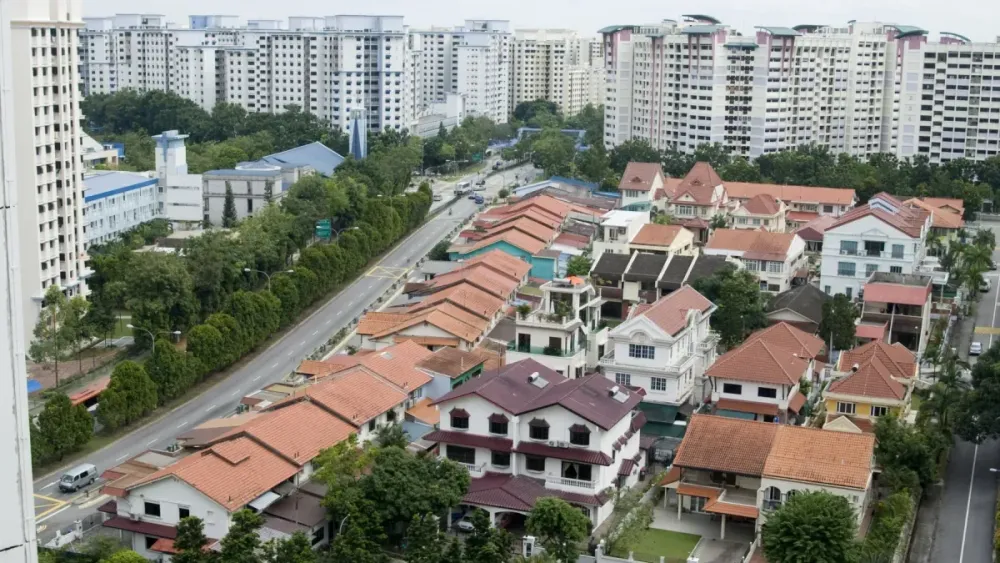
Staving off a shoebox bubble. There is unlikely to be an immediate conclusion to the ongoing debate about “shoebox” units, defined here as units smaller than 51 sqm or 550 sq ft. Clearly, the Ministry of National Development has already highlighted that it is monitoring the phenomenon of rising number of such units in the suburban areas, where demand for such units is still fairly untested. However, it may be prudent for the government to tighten regulation on this front, by restricting the minimum size of such units, and limiting the proportion of such numbers within projects located in the suburban areas.
























 Read Here
 Advertise
 Sign Up