Top 3 reasons why Singapore property beats rival HongKong
UOB Kay Hian expects sales volume to slow down by 10-15% in 2012 but here's why Singapore property still tops ASEAN market.
1. Property interest backed by high concentration of millionaires in Singapore.
According to a recent report by the Boston Consulting Group, Singapore has the highest concentration of millionaire households globally, with 17% of all households having at least US$1m in private wealth, followed by Switzerland a distant second at 14.3% of all households.
In terms of GDP per capita, Singapore is currently ranked as the fourth-highest in the world and number 1 in Asia with about US$59,711 per person, surpassing neighbourhood rival Hong Kong’s GDP per
capita of about US$49,137 per person.
"With a lack of better alternative investment vehicles in Singapore, we believe property will continue to remain a favoured investment asset class among rich Singaporeans," said UOB Kay Hian.
2. Singapore’s high homeownership rate implies government can tweak policy measures in case of steep fall in prices.
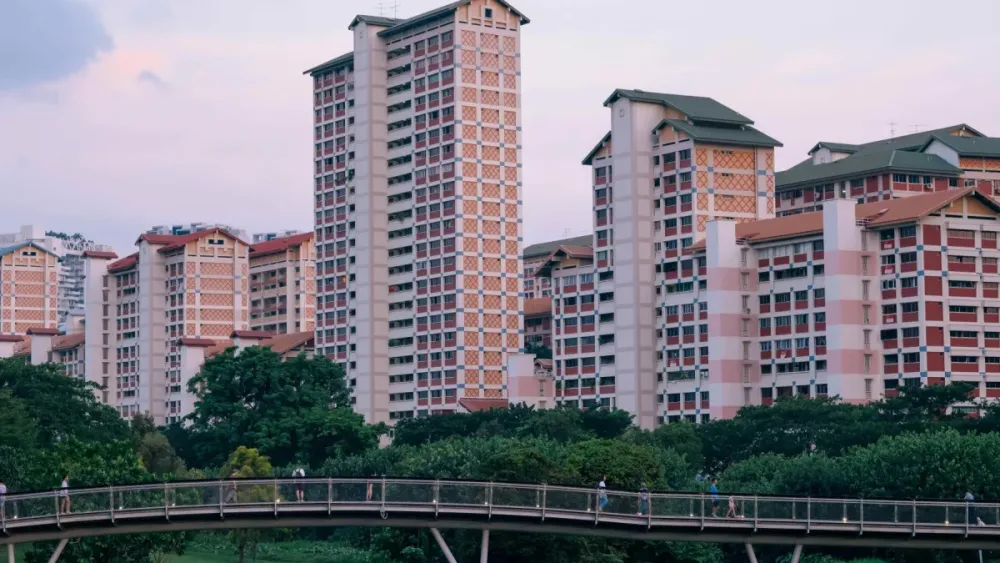
Among South-east Asian countries, Singapore has the highest homeownership rate of about 89%, with about 82% of its population owning public housing compared to just 30% in Hong Kong.
"With the bulk of the population owning their own properties and staying in public housing, we believe the government’s objective is to maintain stable property prices in line with the country’s long-term GDP growth and not see a sharp decline in housing prices as this will adversely impact economic growth. Thus we believe the government can tweak policy measures to support property prices in case of a drastic price fall," said UOB Kay Hian.
3. Low unemployment levels and higher median income growth drive long-term growth.
Unemployment levels, a key underlying variable in property demand, remained at a 14-year historical low of 2% as at end-11 with 121,300 jobs added last year compared with 115,900 in 2010. The low unemployment levels were also supported by better-than-expected median monthly household income growth which rose 11.0% yoy to S$7,037 following a 5.6% growth in 2010.
This is 49% higher than in 2001 when median household incomes were S$4,716 a month. In contrast, the median household income in Hong Kong had only increased 9.5% over the decade to HK$20,500 (S$3,360) per month in 2011.
"The extremely low interest rates and higher-than-expected wage growth in Singapore are likely to be the long-term demand drivers lending stability to the longer-term outlook of the country’s property sector," said UOB Kay Hian.
























 Read Here
 Advertise
 Sign Up