Here's why higher oil prices could be a boon for SIA
It hedged 20% of jet fuel at US$65/bbl and 25% of Brent at US$45/bbl.
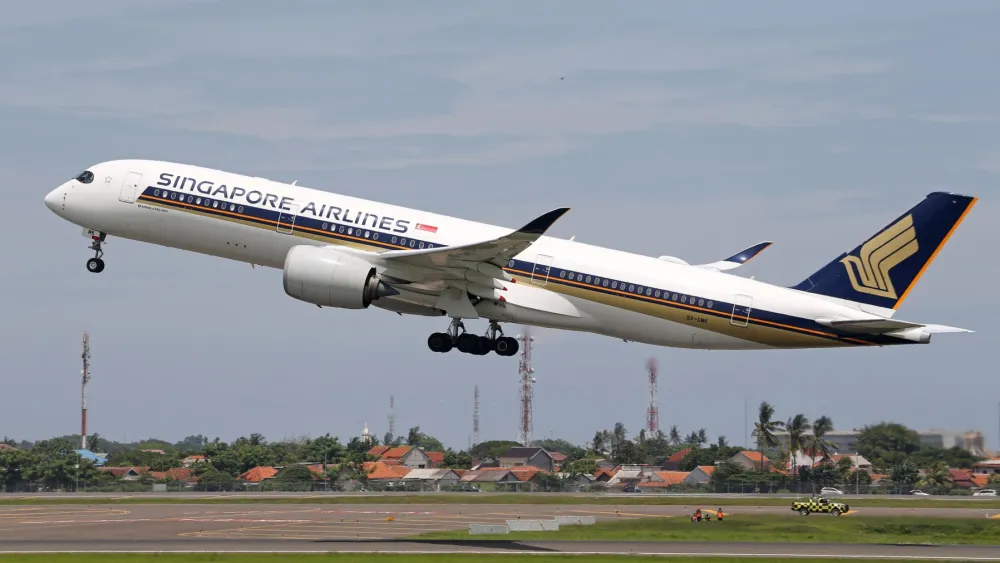
Despite competitive pressures on Singapore Airlines (SIA), UOB Kay Hian said the company is "clearly more optimistic now than anytime over the past five years."
UOB Kay Hian analyst K Ajith noted that attractive fuel hedges will give SIA pricing advantage over rivals. "SIA has hedged 20% of group jet fuel requirements at US$65/bbl and 25% of Brent at US$54/bbl. This is about 41% of group’s fuel requirements at roughly US$65/bbl, which is about 5ppt higher than that in FY2018," he said.
Not only that, SIA has also long-dated hedges until FY2023 of up to 46% at US$55-58/bbl on Brent. Ajith added, "We view this as a strategic move, especially given that Chinese carriers do not hedge jet fuel. In previous years, yields towards South West Pacific, a key originating market, was depressed due to aggressive capacity additions by Chinese carriers. Given lofty fuel prices, Chinese carriers are unlikely to aggressively lower ticket prices as it is likely to impact their profitability."
But the airlines' reason to be optimistic does not end at fuel prices. SIA also thinks that its transformation plan first outlined last year is starting to bear fruit, Ajith noted.
The analyst commented, "On the revenue front, the improvement in pax yield was partly attributed to a new fare regulation system. Meanwhile, the integration of SIA Cargo within the SIA group would have resulted in better management of bellyhold cargo space amongst the parent airline, Scoot and Silk Air. SIA cited record high pax load factor and pax traffic as key positives. SIA also achieved an operating cash flow margin (before working capital changes) of 18.7%, the highest since FY2011."
Ajith added that SIA believes yields have bottomed and that it forecasts pax capacity to grow 2ppt YoY higher at 8% in FY2019. "We believe the increase in capacity is underpinned by SIA’s optimism of strong underlying demand. We also believe that load factors will remain at relatively high levels, given that forward bookings have already risen 48% YoY. SIA, Silk Air and Scoot’s capacity is forecast to grow at 5%, 9% and 17% respectively," he said.
SIA took off from its $138.3m loss last year as its profits soared to $181.8m in the fourth quarter of 2017. The parent airline turned around from a loss to an operating profit of $178m, thanks to higher passenger flown revenue driven by growth in traffic and passenger yield.

























 Read Here
 Advertise
 Sign Up