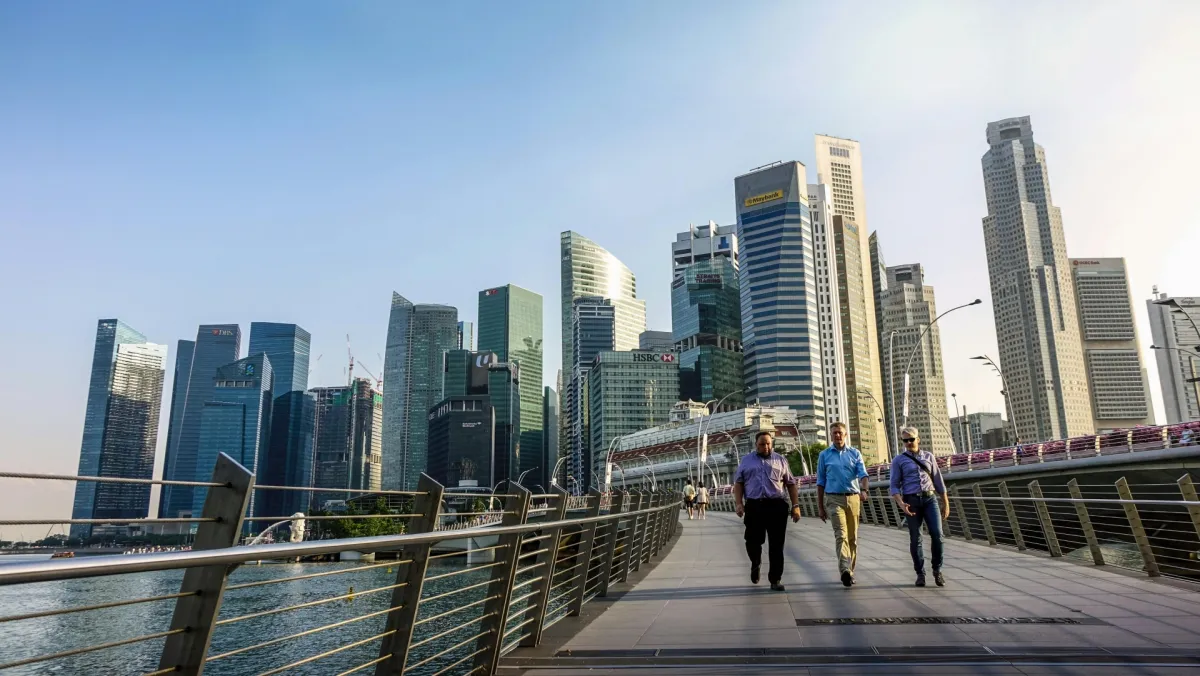
Singapore banks see uneven exposure, with DBS most affected
DBS derives 7.4% of income from Indonesia and India operations.
Singapore banks are expected to face limited impact from the recent weakness in regional currencies, although DBS could be more exposed because of its operations in Indonesia and India.
The Singapore dollar has remained strong despite the ongoing conflict in the Middle East, reflecting confidence in Singapore’s fiscal position and financial system, according to a report by UOB Kay Hian.The report noted that the closure of the Strait of Hormuz had disrupted oil supplies, pushing crude oil prices above US$100 per barrel in April before easing to around $115.7 (US$90).
Higher energy costs have placed pressure on oil-importing economies and weakened several Asian currencies against the Singapore dollar.
The Indonesian rupiah and Indian rupee were amongst the worst-performing regional currencies in the first five months of 2026, falling 7.4% and 6%, respectively, against the Singapore dollar.
UOB Kay Hian said DBS is more vulnerable to the weakness in the rupiah and rupee, with exposure to Indonesia and India contributing 7.4% of the bank’s total income in 2025.
OCBC and UOB also have exposure to Indonesia, although analysts said this is partly offset by stronger earnings from Malaysia, where the ringgit appreciated 1.6% against the Singapore dollar during the same period.
OCBC remains UOB Kay Hian’s top pick, with a target price of $26.80, whilst DBS has a target price of $65.20.
The report said Singapore banks continue to benefit from the city-state’s reputation as a financial safe haven during periods of geopolitical uncertainty.
Analysts said higher levels of wealth management inflows and deposits have supported liquidity and fee income for local lenders.
DBS said it has stress-tested its loan portfolio against scenarios including oil prices rising to between $154.2 (US$120) and $257 (US$200) per barrel, as well as a 30% decline in currencies such as the rupee and rupiah.
The bank said its direct exposure to Middle East companies remains limited, although it is monitoring broader risks such as supply chain disruptions, higher raw material prices and slower economic growth.
Separately, OCBC said it expects its acquisition of HSBC’s International Wealth and Premier Banking business in Indonesia to strengthen its wealth management operations in the region. The bank added that the deal is expected to improve earnings and return on equity from the second year onwards.
UOB Kay Hian said Singapore banks remain attractive to investors because of their dividend yields and resilient balance sheets despite continued global uncertainty.
($1.00 = US$0.78)



























 Read Here
 Advertise
 Sign Up