
Precious metal boom is a stress test for Singapore’s gold ambitions
By Vikas SrivastavaMarket participants are no longer satisfied with a single asset for exposure to precious metals.
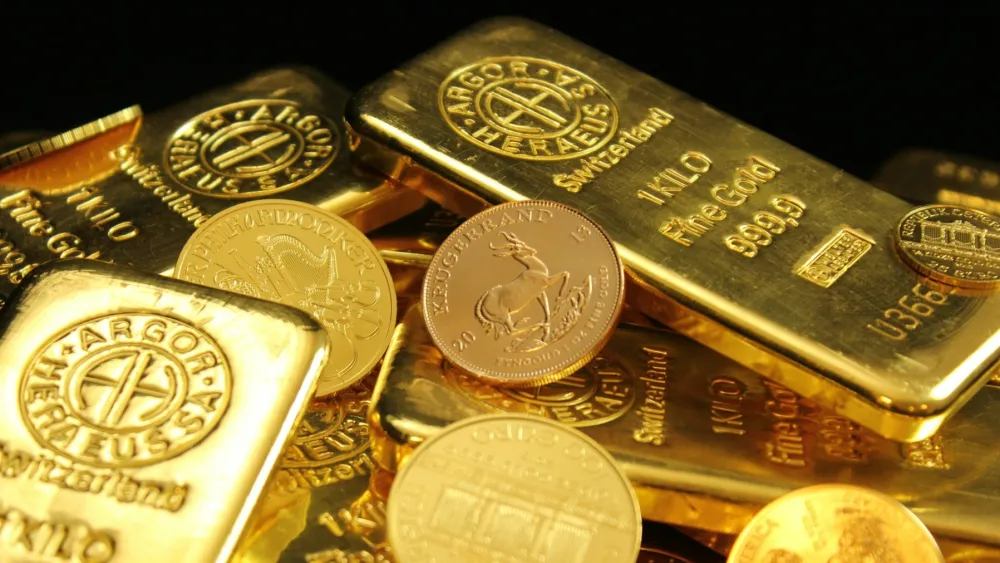
Gold has always been perceived as the slow asset, a long-term store of value, moving in one direction over decades. That is no longer the market we are in. Over the past 18 months, gold has tested this perception, driven by geopolitical events and macroeconomic fragility.
At the same time a second shift is underway, in terms of where Asia’s physical gold is cleared, stored and priced. Singapore is positioning itself to capture more of that activity. The question worth asking is what it will take to succeed.
It was announced at the 9th Asia-Pacific Precious Metals Conference that the Monetary Authority of Singapore (MAS) and the Singapore Bullion Market Association (SBMA) set out the next steps for a regional gold hub, including an over-the-counter clearing system for locally settled gold and central-bank vaulting services. The next phase of development is centred on building depth and liquidity on top of that foundation.
Volatility is the backdrop, but it is also part of the draw.
Safe-haven demand has intensified amidst government debt and questions over the US dollar, and a growing share of it is being felt in Asia, encouraged, in part, by policy beyond Singapore. India’s decision to raise its gold import duty to 15% has pushed buyers and intermediaries to look harder at centres closer to home like Singapore. Attracting those flows, however, is the straightforward part.
The bigger question is whether the market here can price and absorb them when conditions turn.
The rally in gold and silver markets last year brought substantial opportunities for investors, requiring financial institutions of all sizes to adapt quickly to surging demand. They supported inflows not only in the spot market, but through derivatives and ETFs, enabling clients to capitalise on this growth period. But the scale and persistence of the volatility also exposed gaps in trading infrastructure that drag on the value that firms could gain from these market conditions.
Take silver, for example. In late January 2026, silver fell by around 30% in a single session, one of its sharpest single-day falls. The Bank for International Settlements traced the move to the mechanics of leveraged trading under heightened volatility.
As margin requirements on exchange-traded silver futures rose in response to price swings, many heavily leveraged positions became under-collateralised, causing margin calls that forced rapid liquidations, pushing prices lower and triggering a major sell-off.
Episodes like this are now a structural feature of how precious metals trade, and they raise the bar for any market that wants to host the activity. What separates a genuine trading centre from a venue that merely clears and stores is the capacity to keep forming orderly prices when leverage unwinds.
That capacity comes from the presence of enough participants willing to quote both sides through shocks.
Part of the challenge is that precious metals trading mostly remains within relatively narrow, outdated constructs: Constrained access to custom pricing, dependence on manual conversions, and overreliance on a handful of benchmarks. Despite investor appetite extending far beyond a single pairing, exposure is too often channeled into the most familiar, liquid contract: Gold priced in US dollars per ounce.
As demand becomes more regional, sophisticated market participants are no longer satisfied with a single asset or pair to generate exposure to precious metals, no matter how liquid. A bullion dealer in Singapore or the wider region often thinks in grams and kilobars rather than troy ounces, and in local currency rather than US dollars, but is still channeled into the same dollar-per-ounce contract.
Regional players want to trade in alignment with local currencies and conventions, whilst brokers and liquidity providers want streamlined access to tailored currency pairs in order to offer more bespoke pricing to clients. This lack of flexibility can hamper participation and, ultimately, constrain market liquidity.
To capitalise on opportunities created by spikes in precious metals, we must take proven learnings from other asset classes and apply them alongside careful consideration of the markets’ distinct characteristics.
Flexible construction of synthetic currency pairs and streamlined, automated pricing have become standard enablers of modern-day FX markets, enabling them to scale to new heights.
Applying similar principles to precious metals, the natural focus then becomes the ability to synthesize and automate prices across local currencies, different weight measurements (ounces, grams, kilogrammes), delivery locations, and even levels of metal purity.
Singapore's own ambition will require all these considerations. Clearing, vaulting, capital market products, and the trading and pricing infrastructure that lets regional participants transact in their preferred currencies, conventions, and weight measurements each have a role in building a hub with genuine depth and resilience.
As volatility becomes entrenched as a structural feature of global markets, precious metals are increasingly viewed in the same light as FX and crypto, where flexibility in pricing and distribution, automation, and real-time risk management determine which firms can effectively scale operations.
Aligning trading infrastructure across these asset classes now makes clear commercial sense. Technology systems that adapt to specific requirements, conventions, and client demands of each segment are now making this convergence a practical reality.
For Singapore, the opportunity hinges on whether enough liquidity gathers on its infrastructure to produce prices the rest of the market will choose to reference.
If it does, Singapore becomes a genuine price-maker for Asian gold within its own time zone. That distinction is what the next phase of this ambition will reveal.




















 Read Here
 Advertise
 Sign Up