Singapore food firms move muscle abroad, keep brains local
Mass production shifts to Malaysia as R&D and quality control stay put.
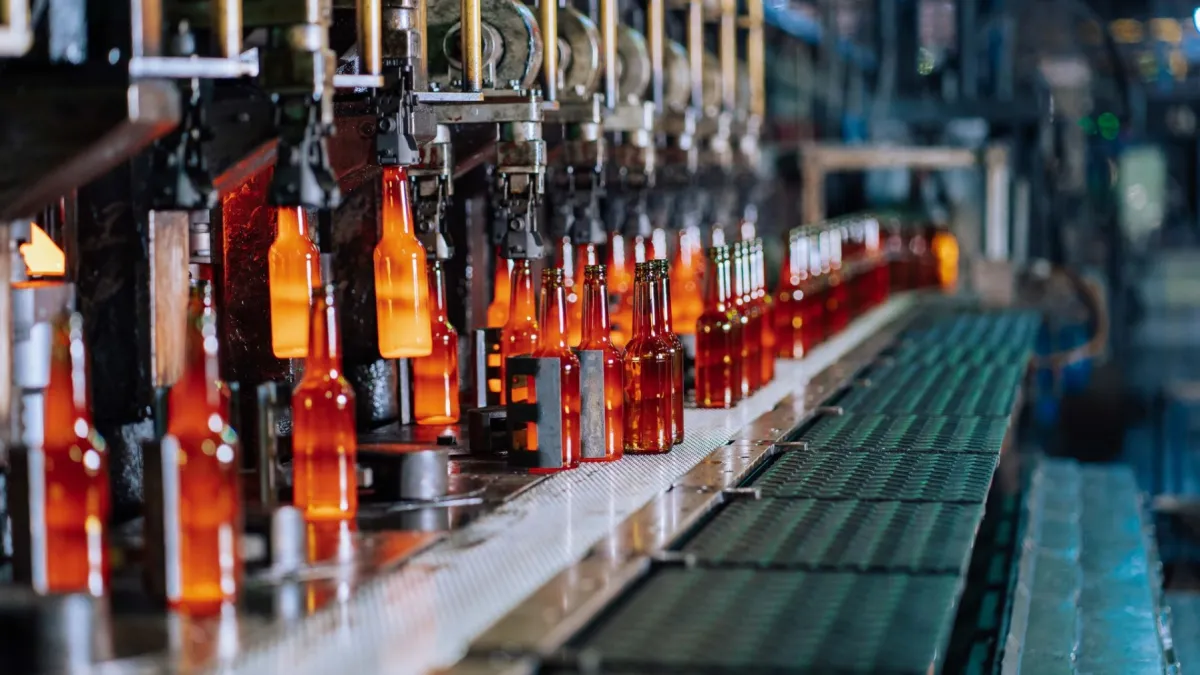
Singapore's food and beverage (F&B) manufacturing sector is keeping research, product development, and quality control at home even as more manufacturers move production to neighbouring countries to lower costs and improve supply chain resilience.
Ben Charoenwong, an associate professor of finance at INSEAD, said the changes represent a reorganisation of the value chain rather than a decline in Singapore's manufacturing base.
“That's value-chain fragmentation; this is what gave us huge economic gains from trade in the globalisation era,” he told Singapore Business Review.
Labour- and space-intensive production is moving overseas, whilst headquarters, branding, research and development, and quality control remain in Singapore.
Recent moves illustrate the shift. Asia Pacific Breweries (Singapore) Pte. Ltd. is transferring production to facilities in Malaysia and Vietnam under an import-based supply model.
Yeo Hiap Seng Ltd. has consolidated can manufacturing in Malaysia, whilst QAF Ltd. said its Gardenia bakery business would move production to Johor Bahru, with its Pandan Loop factory closing on 30 June.
Le Jia Chong, CEO at FoodPlant Pte. Ltd., said manufacturers are responding to structural cost differences, market proximity, and the need for more resilient supply chains.
“High-volume manufacturing may be regionalised, but higher-value activities — product development, process design, and quality systems — continue to be anchored here,” she said in an emailed reply to questions.
Hugo Texier, a partner at Roland Berger Pte. Ltd., said Malaysia offers lower labour costs and more affordable industrial land, making it easier for manufacturers to expand production.
Singapore also faces structural challenges. Charoenwong said shorter industrial lease terms could discourage companies from making long-term automation investments because they face uncertainty over future rental costs.
Labour costs further widen the gap. Data from the Ministry of Manpower showed median monthly manufacturing wages reached $5,850 in 2024, compared with $788 (RM2,490) in Malaysia, according to the Department of Statistics Malaysia.
Texier expects more manufacturers to adopt dual-hub models over the next five years, keeping research, quality control, and commercial functions in Singapore whilst locating large-scale production elsewhere in the region.
Chong said Singapore's competitive advantage would increasingly lie in innovation, advanced food manufacturing, and technical expertise rather than mass production.
“Companies that manage this balance well — retaining control of capability while optimising production — will be best positioned for the next phase of growth,” she said.























 Read Here
 Advertise
 Sign Up