
Singapore employers face talent split as AI hiring tightens
Specialist roles remain candidate-led whilst workers prioritise flexibility stability and development.
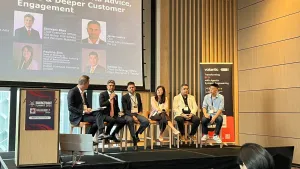
Companies across Southeast Asia are facing a widening divide in hiring power as demand for AI, cloud, and digital transformation talent outpaces supply, forcing employers to compete more aggressively for specialised workers whilst broader hiring markets remain cautious.
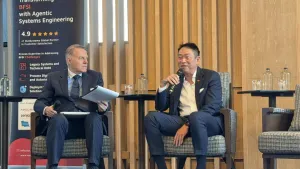
According to Glen Chua, Senior Manager for Banking & Financial Services at Robert Walters Singapore, the labour market is not broadly candidate-driven despite rising concerns about talent shortages.
“The market is only truly candidate-driven in niche areas like AI, data, and cloud, where demand exceeds supply,” Chua said. “Outside of that, hiring remains largely employer-led.”
Helmi Yusoff, Emerging Markets Advisory Leader for Talent Solutions in Southeast Asia at Aon, said organisations expanding geographically, restructuring business models, and investing in automation are increasingly searching outside their organisations for specialised capabilities needed to execute new projects.
“In order for them to implement these new projects, there's also an expectation for the organisation to take a look at the external talent market,” Yusoff said.
The discussion also highlighted growing concern over employee disengagement as workforce expectations shift faster than many employers adapt.
“The biggest risk isn't immediate attrition, it's disengagement,” Chua said. “We're also seeing a shift from quiet quitting to what some call quiet cracking.”
According to Chua, disengaged employees can weaken collaboration, productivity, innovation, and long-term retention. He added that many workers are also reassessing career priorities beyond salary alone.
“Salary is no longer the main differentiator,” Chua said. “Flexibility, job stability, team culture, and growth opportunities are now playing a much bigger role.”
Chua cited findings showing around one in five Singapore workers are overqualified for their roles, reflecting a growing preference for work-life balance and stability over title progression.
Yusoff said companies are increasingly redesigning their “people value proposition” by combining compensation with benefits, career development, workplace flexibility, wellbeing programmes, and recognition systems to retain talent.
“According to Aon’s Future of Total Rewards study, we have seen that even though compensation is important, the number one driver when it comes to attraction and retention of talent is development,” Yusoff said.
Yusoff warned businesses that fail to adapt risk losing specialist talent, weakening employee morale, and losing institutional knowledge needed to execute strategic growth plans and digital transformation programmes.




















 Read Here
 Advertise
 Sign Up







Commentary
‘Tokenmaxxing’ – The wrong AI race to run in Singapore
To outsmart modern fraud, we must first know the enemy
Why Singapore SMEs cannot wait for quantum cyber risk to arrive before securing data
Is Singapore's emphasis on long-term security and stability hindering purpose-driven employees?
When Singapore's agentic AI ‘chefs’ arrive, will the kitchen be ready for them?
What Singapore’s app store rules reveal about the future of online trust
Faster hiring alone will not fix construction’s productivity problem
Beyond policy: How Singapore's service sector can win at the frontline
Solving the production problem behind Singapore’s ‘pilot purgatory’
Transformation without disruption: Your Existing ERP is an accelerant to business innovation