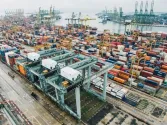
Singapore’s global dispute fault lines
By Rob PalmerGeopolitical and macroeconomic factors will drive disputes, and Singapore must ensure that its disputes system evolves.
Regulatory, geopolitical, and macroeconomic pressures are shaping Singapore’s international dispute resolution architecture.
Singapore’s dispute resolution architecture – comprising the Singapore International Arbitration Centre (SIAC), the Singapore International Commercial Court (SICC), the Singapore International Mediation Centre (SIMC), and more – is increasingly defined by its international users.
Multinational corporations, private equity funds and project sponsors come to Singapore not because their disputes are local, but because their transactions are not.
From a practitioner’s perspective, three sources of emerging disputes stand out in this international setting. Energy disputes are being shaped by the delivery, financing, and termination of complex infrastructure and resources projects across Asia and beyond.
Technology disputes involve decentralised digital infrastructure, licensing, platform rights, and cross-border data-dependent business models. Meanwhile, as the importance of private capital continues to grow, disputes are becoming more prevalent as international investors test governance protections, exit structures, and enforcement options across multiple jurisdictions.
Regulatory, geopolitical, and macroeconomic factors will continue to drive disputes in these sectors. To retain its place as a preferred centre for dispute resolution, Singapore must ensure that its disputes ecosystem continues to evolve.
Energy: Project risk is crossing borders
Energy disputes being resolved in Singapore increasingly reflect the international character of the projects from which they arise. The cases are not confined to Singapore generation or retail markets. Rather, they involve power plants, gas supply agreements, oil and gas assets, offshore facilities, and renewable or transition-related investments located outside Singapore, but connected to Singapore through the arbitral seat, governing law, or enforcement strategy.
Project sponsors, EPC contractors, offtakers, lenders and state-linked counterparties use Singapore as a neutral supervisory and enforcement jurisdiction for disputes whose commercial centre of gravity may lie elsewhere.
Frequently, these disputes are driven by shifting geopolitical and macroeconomic conditions – and this can be expected to continue. To give just one example, export controls intended to ensure energy security may well upend supply chains and alter project economics in ways that result in disputes between project companies and their offtakers.
As geopolitical conditions and associated regulatory changes increasingly feature as drivers of energy disputes, a guarantee of neutrality will become increasingly prized when it comes to dispute resolution.
Indeed, energy and infrastructure counsel already see their dispute resolution clauses not as ancillary mechanics but as core allocation-of-risk provisions. Singapore’s reputation for transparency and neutrality has been a key factor in its rise as a hub for international dispute resolution. Continuing to highlight, and to build on, that reputation will be key to Singapore’s future success.
Technology: Digital infrastructure runs across borders
Technology disputes are increasingly about cross-border (and often decentralised) infrastructure, platform rights and the legal architecture that supports them.
As regulatory fragmentation accelerates, data-localisation mandates, cross-border sanctions regimes, export controls on semiconductors and chips, and emerging artificial intelligence (AI) governance frameworks are all reshaping the operating environment for technology companies that serve multiple jurisdictions.
Industry participants are increasingly focused upon whether their dispute resolution mechanisms have the flexibility to accommodate matters such as regulatory intervention, interim preservation of data or infrastructure, and enforcement against counterparties in different jurisdictions. Innovations such as blockchain-based dispute resolution are now also on the radar.
The practical implication for technology investors, platform operators and infrastructure funds is that dispute-resolution design must keep pace with the changing nature of the underlying commercial arrangements.
And only if Singapore continues to monitor and adapt to these changes will it remain a preferred forum for resolving disputes in the sector.
Private capital: Investment disputes reflect multi-layered structures
Meanwhile, private capital disputes are becoming more international because investment structures are becoming more layered. A single transaction may involve an Asian operating company, a BVI or Cayman holding vehicle, offshore financing documents, Singapore-law or English-law agreements, and assets across multiple jurisdictions.
Disputes over exits, representations, control rights, valuation, fraud, and enforcement often travel across borders faster than the capital itself.
For private equity, credit and infrastructure investors, the practical focus is increasingly on the enforceability of the whole dispute strategy. Singapore’s aim should be to ensure that it is providing credible fora in which those layers can be tested; innovations such as the SIAC’s Restructuring and Insolvency Arbitration Protocol are welcome attempts to cater to the international character of disputes in this space.
Conclusion
Why does the international character of Singapore’s dispute resolution ecosystem matter?
The economic benefits for Singapore are clear. For foreign counsel, multinational corporations and international investors, Singapore is not merely a place to resolve disputes after relationships break down. Rather, it is a platform for designing transactions with enforceable, internationally credible risk allocation from the outset – in other words, a place to do business.
As the pace of regulatory, geopolitical, and macroeconomic change continues to accelerate, Singapore’s next disputes cycle will be shaped by international transactions whose risks are distributed across contracts, projects, and enforcement jurisdictions.
As described, energy, technology and private capital will be key drivers of this. The challenge for Singapore is to ensure that Singapore’s disputes ecosystem remains fit for purpose in the face of this evolving landscape.
Continued adaptation will be key to Singapore continuing to reap the rewards.






















 Read Here
 Advertise
 Sign Up