
Agentic AI tests Singapore governance as workflows expand
Firms are adopting AI agents for productivity while governance gaps raise questions on control and accountability.
Agentic artificial intelligence is moving into enterprise workflows, but governance maturity is lagging as companies test autonomous systems across paperwork, software development and service delivery.
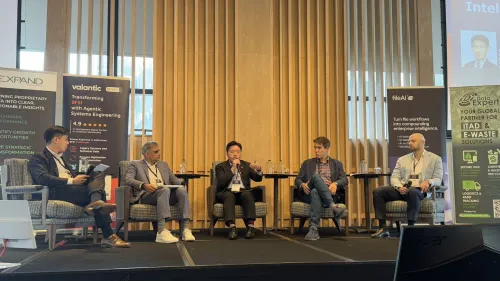
Lee Wan Sie, Cluster Director AI Governance and Safety at the Infocomm Media Development Authority, said enterprises are turning to agentic artificial intelligence for productivity gains, from automating manual paperwork to supporting software development.
“We're starting to see sparks of interesting use cases come up from agentic AI deployment,” Lee said.
Wee Luen Chia, Managing Director of Microsoft Singapore, said adoption is being driven by competitive pressure and rising expectations for faster, more personalised services. He said organisations cannot keep adding headcount to manage growing workloads.
Microsoft’s Work Trend Index found that 66% of artificial intelligence users in Singapore said they were producing work that could not have been created a year ago. Wee said this shows the shift from experimentation to productivity.
The risk is that adoption is moving faster than organisational readiness. Lee said control is needed because agentic artificial intelligence combines autonomy with the ability to act across systems, including calling tools, updating databases and conducting transactions.
Wee said Singapore ranks second globally in Microsoft’s artificial intelligence diffusion report, but leadership alignment remains weak. Only 24% of respondents said their leaders are clearly and consistently aligned on artificial intelligence.
IMDA has released version 1.5 of its Model Governance Framework for Agentic AI, which Lee said gives organisations guidance on risk assessment, human oversight, testing, monitoring and stakeholder use.
Wee said companies should treat artificial intelligence agents like employees by giving them identities, defined access rights and audit trails. They also need clear roles, proper onboarding and access to the right information.
For Singapore organisations, the test is whether agentic artificial intelligence can improve productivity without weakening human accountability.




















 Read Here
 Advertise
 Sign Up








Commentary
‘Tokenmaxxing’ – The wrong AI race to run in Singapore
To outsmart modern fraud, we must first know the enemy
Why Singapore SMEs cannot wait for quantum cyber risk to arrive before securing data
Is Singapore's emphasis on long-term security and stability hindering purpose-driven employees?
When Singapore's agentic AI ‘chefs’ arrive, will the kitchen be ready for them?
What Singapore’s app store rules reveal about the future of online trust
Faster hiring alone will not fix construction’s productivity problem
Beyond policy: How Singapore's service sector can win at the frontline
Solving the production problem behind Singapore’s ‘pilot purgatory’
Transformation without disruption: Your Existing ERP is an accelerant to business innovation