
Singapore data centres balance AI growth with energy limits
Humidity and limited natural cooling make tropical facilities harder to optimise at scale.
Singapore data centre operators are under pressure to improve cooling efficiency as artificial intelligence, cloud and high-performance computing workloads raise power demand in a land- and energy-constrained market.
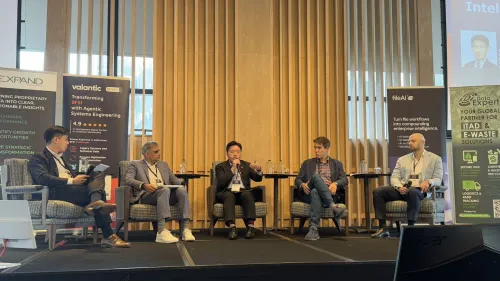
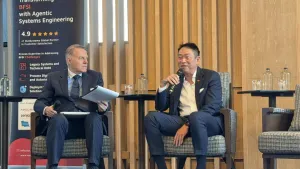
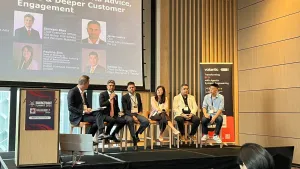
Jon Curry, Vice President Operations for Asia-Pacific at Digital Realty, said the challenge is not simply keeping facilities cool but doing so efficiently as computing demand rises. Singapore’s year-round heat and humidity give operators fewer opportunities to rely on natural cooling than in temperate markets such as Korea or Japan.
Dr Tan Hong Ming, Senior Lecturer from the Department of Analytics and Operations at NUS Business School, said humidity is often overlooked in data centre cooling. Facilities must manage moisture as well as heat, adding energy demand and operational complexity.
Thermal optimisation is feasible across existing data centres in Singapore, Tan said, but it depends on measurement quality and operational capability. Older facilities may lack sufficient sensor coverage and environmental telemetry to optimise confidently. The surrounding microclimate also affects how hard cooling systems must work.
Talent is another constraint. Tan said operators need people who can run digital twins, machine learning temperature models and artificial intelligence tools to support both modelling and operations.
Curry said solutions vary by facility, cooling architecture and workload profile. Some sites can improve performance through operational changes and better airflow management, whilst others may need liquid or hybrid cooling. Testing before deployment is critical because each workload environment requires a different mix of technologies.
Artificial intelligence is also becoming part of cooling management. Curry said Digital Realty has tested artificial intelligence tools in Singapore and Melbourne, with systems now able to assist operators in making real-time cooling adjustments during workload spikes.
Tan said better cooling can free up electricity for other parts of Singapore’s economy, including housing, transport, manufacturing and digital services.
For Singapore, the test is whether data centre operators can support artificial intelligence growth without increasing energy demand unnecessarily.





















 Read Here
 Advertise
 Sign Up







Commentary
‘Tokenmaxxing’ – The wrong AI race to run in Singapore
To outsmart modern fraud, we must first know the enemy
Why Singapore SMEs cannot wait for quantum cyber risk to arrive before securing data
Is Singapore's emphasis on long-term security and stability hindering purpose-driven employees?
When Singapore's agentic AI ‘chefs’ arrive, will the kitchen be ready for them?
What Singapore’s app store rules reveal about the future of online trust
Faster hiring alone will not fix construction’s productivity problem
Beyond policy: How Singapore's service sector can win at the frontline
Solving the production problem behind Singapore’s ‘pilot purgatory’
Transformation without disruption: Your Existing ERP is an accelerant to business innovation