Human oversight remains central as insurers adopt agentic AI: valantic
Agentic AI handles verification and analysis whilst people make final decisions.
Insurers are beginning to use agentic artificial intelligence (AI) to automate underwriting, document verification, and customer servicing, but human oversight remains necessary for decisions that carry financial and regulatory risk.
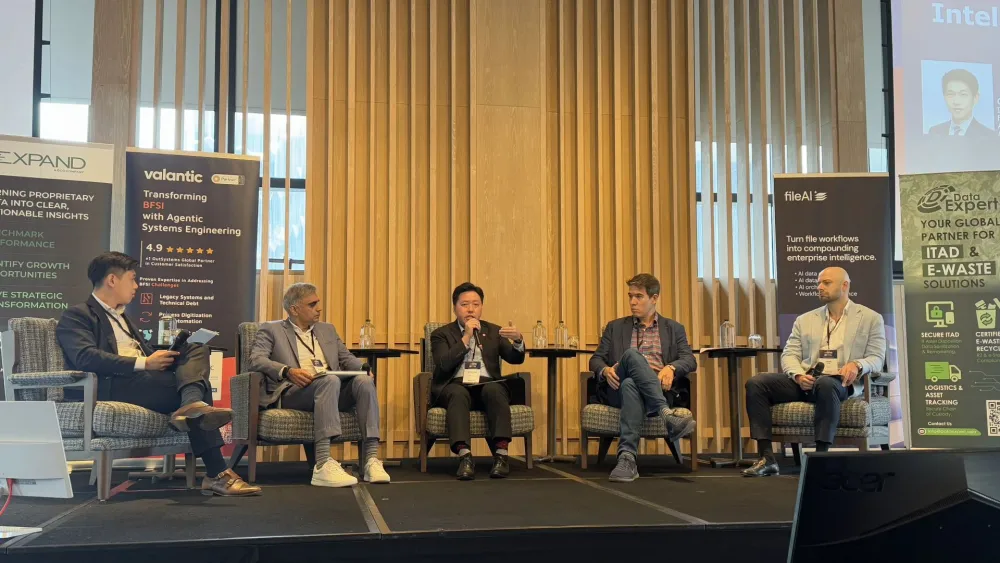
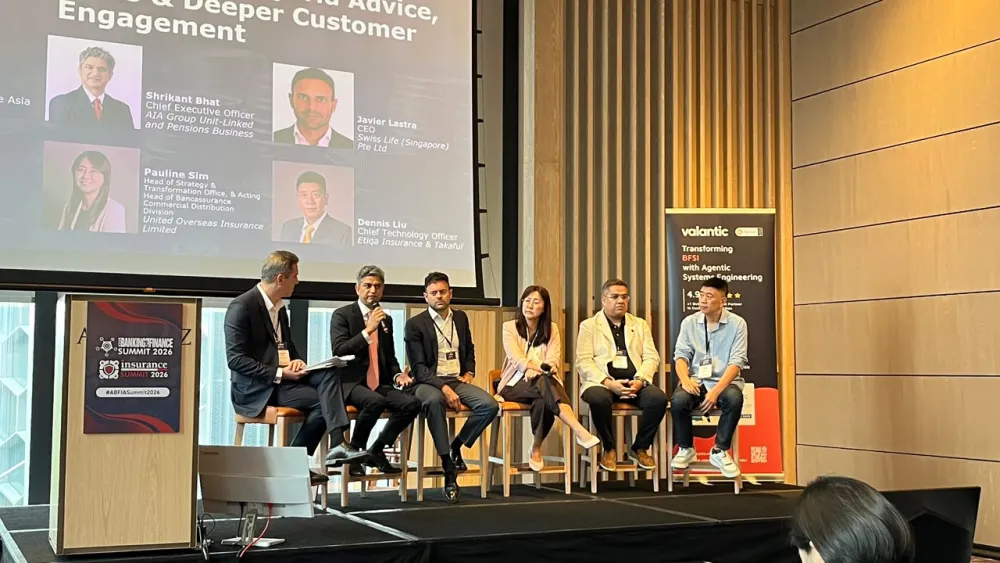
Speaking at the Asian Banking & Finance and Insurance Asia Summit in Singapore, APAC Director for German IT consulting and software solutions firm valantic Gonçalo Carvalho said insurers are moving beyond AI assistants towards AI agents that can execute parts of business processes independently, particularly in underwriting workflows.
Carvalho said insurers must also build governance into these systems to reduce hallucinations and maintain auditability as AI adoption accelerates.
"AI, you need to use, as you know, the right context and guardrails, which is very important but also difficult to structure properly," he said.
He noted that enterprises are expected to increase AI projects significantly over the next few years, whilst many technology leaders remain cautious.
"By 2028, we are expecting 2,500% increase in projects with AI," Carvalho said. At the same time, "67% of IT leaders don't feel comfortable with AI at the moment."
He added that AI-assisted software development is also becoming standard, with "90% of the engineers" expected to use AI-assisted development tools and "55% of the developers" expected to run multiple coding tools simultaneously.
Carvalho said the productivity gains also create new governance challenges.
“With AI, development is becoming much easier. But the important question is: are we building solutions that are safe, secure, scalable, and governed properly?" he said.
To illustrate how agentic AI is being applied in insurance, Carvalho demonstrated a life insurance workflow where AI agents verified customer identification, proof of address, and medical information before routing applications for underwriting.
The AI also generated risk assessments and allowed underwriters to query the reasoning behind its recommendations through a chatbot interface.
During the demonstration, the AI assessed an applicant's risk at "68%." Carvalho, acting as the human underwriter, overrode the recommendation and approved the application.
"Because I'm a human and I have the capacity, authority to do it, I will decide to approve," he said. "It's not on your capacity but on my capacity to approve."
The workflow also generated offer letters, customer emails, audit logs, and recorded whether actions were taken by AI agents or human users.
Carvalho said agentic AI can automate repetitive insurance tasks, but organisations still need clear governance over how AI systems validate information, generate recommendations, and record decisions.
"The agents is already validating the proof of address, identification, other kind of validations that you may need to do," he said, whilst adding that final accountability for underwriting decisions remains with human reviewers.






















 Read Here
 Advertise
 Sign Up