Travel trends reshape banks' payment strategies: Euromonitor
AI and experiences are changing how lenders compete for travel spending.
Changing travel habits across Southeast Asia are creating new opportunities for banks and payment providers, with customer segmentation, experience-led spending, and artificial intelligence (AI) emerging as the key themes shaping the market, according to Euromonitor International.
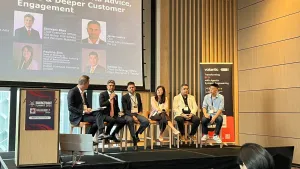
Speaking at the Asian Banking & Finance and Insurance Asia Summit in Singapore on 1 July, David Zhang, regional market insight manager for services, channels, economies, and consumers at Euromonitor International said Southeast Asia is expected to outpace global growth in travel-related consumer expenditure.
He said travel spending on hotels, leisure, dining, and transport continues to expand.
For business travellers, companies continue to prioritise in-person meetings for discussions that cannot be replaced by virtual calls.
Amongst consumers, travel has evolved beyond the post-pandemic "revenge travel" phase into a lifestyle priority, with many seeking family experiences, shopping, dining, and social media value.
Zhang said three trends are reshaping the travel market, namely a widening gap between premium and budget travellers, stronger demand for curated experiences, and the growing use of AI across the travel journey.
The first trend is what Zhang described as a "two-speed era”.
Affluent consumers are spending more on premium airlines, luxury hotels, fine dining, and exclusive destinations, whilst budget-conscious travellers continue to seek lower-cost options, instant cashback, and value-focused rewards.
"The business implication for our banks and payment leaders today is to enhance the different tier of segments' propositions," Zhang said.
Experiences are also becoming a larger part of travel spending where Zhang said more than 68% of Southeast Asian consumers are looking for curated experiences such as concerts, wellness activities, guided travel, and destination-based experiences.
He cited UOB's partnership around Taylor Swift's Singapore concerts as an example, noting that the bank reported a 35% increase in card spending during the concert period and a 45% rise in card applications after offering eligible cardholders priority ticket access.
AI is also becoming more integrated into travel planning and payments. Zhang said AI is now being embedded across the customer journey, from trip discovery and booking to in-destination spending and post-trip loyalty.
He pointed to Trip.com, which introduced AI-powered tools including TripGenie and trip.best. According to Zhang, the company reported a 200% year-on-year increase in TripGenie usage and an 80% customer satisfaction rate in the first half of 2024.
Looking ahead, Zhang said AI could support more automated travel services through agentic AI, including helping travellers manage flight disruptions by reviewing insurance policies, identifying alternative flights, and completing bookings based on user preferences.
He also highlighted the need for greater interoperability between payment methods, citing examples of partnerships that connect cards, digital wallets, and cross-border payment platforms.
However, Zhang said customer trust will remain important as AI adoption increases.
"There could be differences regionally around customer trust because of the current capability of AI, as well as the production of frauds and scams with the emergence of AI, for example, deepfake," he said. "If customer lost their trust, that again they won't use our financial services."























 Read Here
 Advertise
 Sign Up