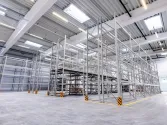
Consumer-centred logistics drives Direct Link
The company believes that to be able to succeed in the cutthroat logistics sector, they need to deliver continuous innovation by letting go of old success models in favour of new.
Based in Singapore for over two decades now, Direct Link Singapore continues to innovate to maintain its competitive edge in the ever-changing e-commerce logistics market. For the company, providing top-notch logistics solutions means putting more premium on finding the right way to the market than dwelling on which truck takes them there.
Hugh O’Connell, Direct Link Worldwide Distribution Pte Ltd’s regional sales and marketing manager for the Asia Pacific, says they have observed a shift away from low-cost untracked postal services to quality tracked and partially-tracked services. In other words, e-commerce firms are focusing on what the consumer wants. “Marketplaces and retailers are recognising and responding to consumer behaviour which is driving a more consumer-centric approach to logistics,” he explains.
The consumers, O’Connell says, are firmly in the driving seat of change. “Rudimentarily, consumers want their orders yesterday, they want to be able to see their orders in transit and they’d like to pay as little as possible. Delivery choice is also increasingly prevalent, influenced by factors such as transit time, preferred delivery company, range of delivery options, such as home delivery, delivery to service-point or parcel locker, time-definite delivery and more,” he says.
E-commerce hotbed
O’Connell says Singapore continues to offer favourable business and trading conditions which makes it an optimal location for regional and global distribution. The logistics firm’s local operation is situated inside the Changi Airfreight Centre free trade zone (FTZ) where it runs an international mail processing centre for outbound e-commerce, as well as a regional transit hub that facilitates the onward movement of e-commerce volumes originating from other parts of the region. The Lion City, he adds, is a prime location for transit cargo originating in other parts of the region.
“Being a relatively open market, there is a healthy level of competition, not only from the dominant incumbent post and express businesses, but also other foreign companies entering the market as well as platforms themselves, such as Amazon, taking greater control of the logistics chain,” explains O’Connell. “From our location inside the FTZ, we can reach consumers around the world by leveraging the global postal network in combination with select commercial partners to service our chosen key markets.”
Singapore is also expected to be at the centre of the booming e-commerce sector. “The opportunity however is a hotbed of fast-emerging ecommerce markets in ASEAN, not to mention gargantuan consumer markets in China and India, all of which are within 5 hours flying time from Singapore,” he says.
With its goal to deliver custom-built solutions and provide the best possible delivery solution to every client around the globe, Direct Link has been ramping up its digitalisation efforts. Data-driven logistics, O’Connell says, is at the forefront of the company’s key performance indicators.
“Data-driven logistics begins with enabling our customers to interact and integrate with our services and systems, from labelling, order tracking, consumer delivery notifications, through performance monitoring and even marketing tools,” he explains. “Digitalisation of cross-border logistics is largely being driven by global trends in online retail and consumer behaviour. Not only do we consider the needs of our customers but also those of our customers’ customers. No matter how we measure ourselves, the consumer is the ultimate barometer in determining delivery performance.”
Continuous innovation
Direct Link is very much committed to its investment in Singapore. The logistics firm considers the city-state a strategic gateway to a wealth of emerging ASEAN markets as well as the Lion City being a growing cross-border e-commerce market.
Focusing on consumer-centred logistics means Direct Link cannot sit on its laurels. The e-commerce space has moved companies from the conventional relationship between cost and service — low cost-low service and high service-high cost — to the low cost but high service paradigm. This has put pressure on the logistics sector to do more. “Do it better than you did yesterday, but do it for less, or as little as possible,” says O’Connell.
“Continuous improvement, whilst important, isn’t enough to maintain a competitive edge in the current and ever-changing e-commerce landscape,” he adds. “We need to be in a state of flux, of continuous innovation, letting go of old success models in favour of new.”






















 Read Here
 Advertise
 Sign Up