Brexit to benefit Asia in the long run
By Andrew ChungThe result is official. The United Kingdom voted to leave the European Union on 23 June.
In a referendum to decide if it would remain in or leave the European Union, 52 percent of voters opted Britain out of the EU. The decision has shocked the world. We saw the weakening of the Sterling Pound almost instantly following the result announcement and a sharp decline in the key stock markets globally.
Uncertainty has caused negative impact on companies and businesses as they plan to ‘exit’ and divert their bases out of Britain and Europe. Firms are already on the hunt for the 'new London' after the decision for the UK to leave the EU and has left many businesses pondering their future in the financial capital of Europe.
One in five businesses surveyed by the Institute of Directors are considering moving some of their operations outside the UK, according to media reports. This includes mobile giant Vodafone and US investment bank Goldman Sachs.
However, Brexit may not be as dramatic as the media perceives it to be. As the real Brexit is possibly happening around October 2018 at the earliest, Britain is still bound by certain EU rules on tax such as aspects of value-added tax and customs duties. The trading arrangements with the rest of the members in the EU will likely be unchanged for this period of time.
Brexit is not the only major cause of market volatility this year. Markets will also be impacted by the outcome of the upcoming Presidential elections in the United States. A similar anti-establishment sentiment may be brewing in the US as well as Donald Trump and Hilary Clinton are aggressively campaigning for the Presidency.
This is where Asia Pacific (APAC) as a region can become champion of the world. According to an estimation by the United Nations Economic and Social Commission for APAC (UN ESCAP), the region’s population has grown more than 4.4 billion in 2015, which is nearly 60 percent of the total world’s population. IMF Regional Economic Outlook published in May 2016 expected Asia Pacific economies to grow 5.3 percent during 2016-2017, and remains the engine of the global economy.
It is also worth noting that Asian exports to the UK make up only a total 0.7 percent of regional GDP, which implies that any British recession should not pose major threat. Many countries in APAC also will rely more heavily on domestic market demand as their economic drivers, which make them less vulnerable to the global economic changes.
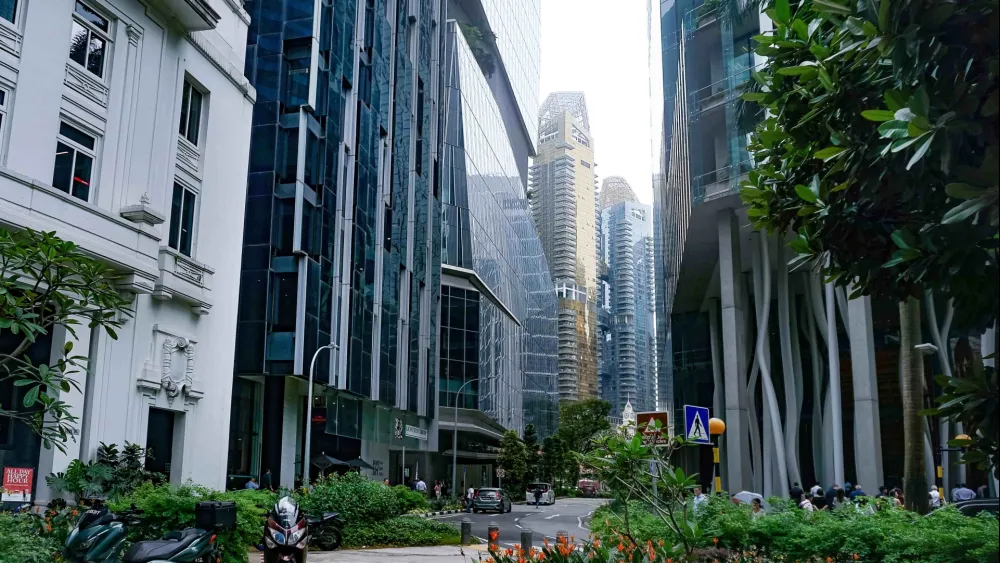
As the leading APAC region hubs, Hong Kong and Singapore have stepped up their game to invigorate their economies. In March this year, the Hong Kong government announced that its 2016-2017 Budget will see measures to support SMEs including tax cuts and injecting HK$5 billion into the Innovation and Technology Fund (ITF).
On the other hand, the Singapore government has also implemented special tax schemes to support newly incorporated companies. More and more global companies have chosen to move their headquarters to Singapore. According to Monetary Authority of Singapore and industry surveys suggest that between 2005 and 2015, the number jumped from 3,600 to 12,600.
In the case of Singapore, the country is part of ASEAN that will further implement the regional economic integration under the Asian Economic Community. The AEC is to allow a single market and production base that will see free flow of goods, services, investment, and skilled labour across the region. While Hong Kong, with the close ties with China, offers the advantage of renminbi liquidity and proximity to Chinese corporates.
With Asia positioned as an attractive destination for foreign investment, the increased instability in the UK and Europe is likely to have a positive effect on Asian economies. Injecting more investment in Asia Pacific will be an inevitable step for companies worldwide. However, to do so and remain competitive, businesses need to adopt flexibility in their business and investment approaches.























 Read Here
 Advertise
 Sign Up