Diffusion to confusion: Solving APAC’s healthcare coordination crisis
Fragmented care has left patients facing inconsistent advice and complex journeys.
The Asia-Pacific healthcare sector has reached an inflexion point, defined by an incredible amount of demand and an environment of severely constrained supply.
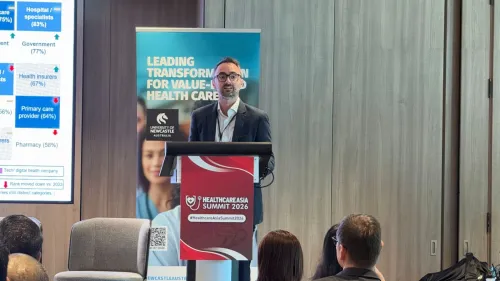
Speaking at the Healthcare Asia Summit held in Singapore on 25 March, Alex Boulton, partner at Bain & Company, explained that the region is facing a massive structural vacuum. This shift is driven by a diffusion of care that has moved treatment from hospitals into clinics, homes, and phones. While this offers the convenience "patients becoming consumers" now expect, it has birthed a crisis of coordination.
"The diffusion has led to confusion, which has led to a level of complexity, as your care is now being managed by many different individual stakeholders," Boulton said.
This complexity, coupled with "medical inflation [that] is out of control," has created a "really troubling" experience for the modern consumer. The commercial incentive to solve this friction is significant, as loyalty serves as the ultimate defensive moat. In an era of low health insurance penetration and high out-of-pocket spend, loyal "promoters" represent the highest customer lifetime value.
However, capturing this loyalty requires "interconnected journeys that are seamlessly online, offline, in the hospital, [and] out of the hospital," backed by consistent data and medical records. The identity of the "trusted partner" varies significantly by market. In Singapore and Australia, primary care has traditionally "dug in the nails," whereas in Indonesia and the Philippines, insurers are beginning to see a shift in their trust quotient.
To maintain momentum, Boulton argues that insurers must fundamentally shift their business model.
"Stop administering, start managing. Redesign your highest friction member interactions... move from passive reimbursement to active stewardship," Boulton said.
Conversely, providers must "completely reimagine care delivery" and partner more deeply with clinicians. Boulton noted that many clinicians are "concerned" and "upset" because they do not feel part of the decision-making process regarding how new technologies and AI tools are being deployed.
The ultimate winners in this "land grab" for trust will be the organisations that can "zero-base the healthcare delivery mechanism" to handle the surge in demand. As consumers take "a lot more ownership over prevention" and spend more of their disposable income on health, the market will belong to those who can bridge the gap between clinical quality and digital convenience.























 Read Here
 Advertise
 Sign Up