CBRE slashes Singapore 2025 growth outlook to 2.2%
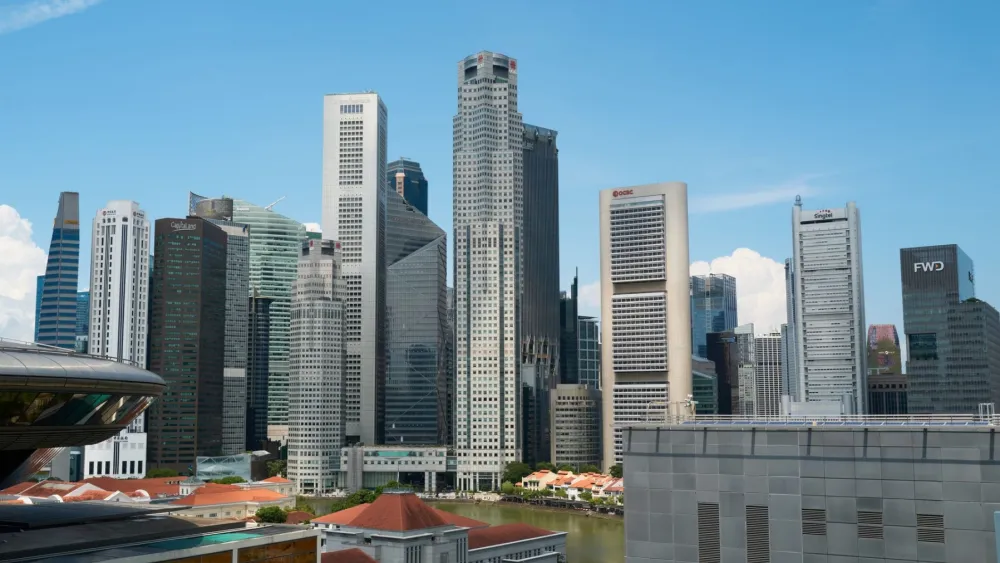
CBRE noted that Singapore remains one of the tightest office markets in the region.
CBRE has revised Singapore’s GDP growth forecast for 2025 down to 2.2% from 3.3%, citing weaker external demand and global trade uncertainty.
Despite this, real estate investment demand in Singapore has remained resilient, placing the city-state among the top-performing property markets in Asia Pacific, alongside Korea and Japan.
Strong capital inflows, particularly into the office and core retail sectors, helped drive this outperformance. Singapore’s performance also contributed to CBRE upgrading its regional investment forecast from 10% to 15% YoY growth for 2025.
Singapore’s Grade A office rental forecast was revised upward, supported by low vacancy and sustained occupier demand. Leasing activity held firm in H1 2025, with companies continuing to prioritise quality space, especially in ESG-compliant buildings.
CBRE noted that Singapore remains one of the tightest office markets in the region, with limited supply reinforcing rent stability.
Whilst CBRE kept its retail rental outlook for Singapore unchanged, core locations remain in demand, driven by tourism recovery and international retailers. Prime retail corridors continue to perform well, though overall rental growth remains subdued due to cautious consumer sentiment and rising costs.
Retail consolidation, particularly amongst F&B and lifestyle brands, has been reported in non-core areas, reinforcing the bifurcation between prime and secondary spaces.
Singapore’s logistics sector rental forecast was downgraded, with rents falling slightly in H1 2025. The decline is attributed to increased completions and weaker demand for older assets.
CBRE expects demand for modern logistics facilities to provide some buffer in H2, but cautioned that oversupply remains a risk, particularly in less central locations.
In the hospitality sector, Singapore’s ADRs (average daily rates) dipped slightly year on year due to an increase in hotel supply at the end of 2024. Occupancy, however, improved modestly, supported by corporate travel and group bookings.
Hotel operators are adapting by focusing on longer stays and operational efficiency, helping stabilize revenue despite weaker pricing power.



























 Read Here
 Advertise
 Sign Up