GDP seen at 2.0% in 2025, but tariffs may halve growth
RHB analysts, however, caution that much of the recent growth appears front-loaded due to early export orders.
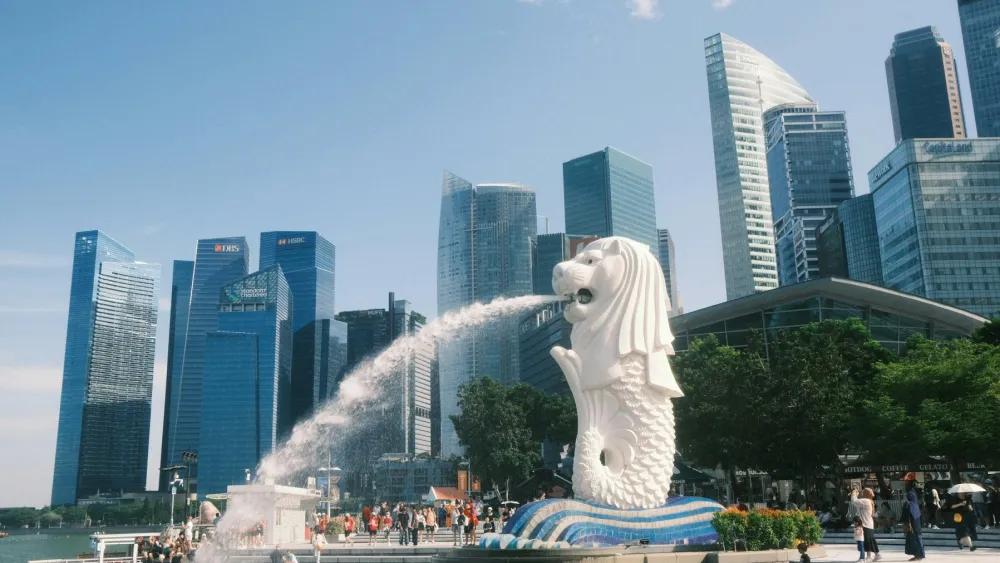
Singapore’s economy is projected to grow 2.0% in 2025, according to RHB Bank’s latest outlook, but economists warn that downside risks ranging from 0.5% to 1.0% remain if global tariff tensions escalate.
The city-state’s heavy reliance on trade, equivalent to nearly three times its GDP, makes it especially vulnerable to external shocks.
The warning comes despite stronger-than-expected GDP growth in the second quarter of 2025. Singapore’s economy expanded 4.3% YoY, outperforming both internal forecasts and the Bloomberg consensus. On a seasonally adjusted basis, GDP rose 1.4% QoQ, reversing a 0.5% contraction in Q1.
RHB analysts, however, caution that much of the recent growth appears front-loaded due to early export orders, and may not be sustained through the second half of the year.
Export demand is expected to remain weak, with particular pressure on manufacturing sectors such as electronics, pharmaceuticals, and precision engineering. Even with exemptions from some US tariffs, Singapore remains exposed to negative spillover effects from regional trade disruptions.
Under the current US-China tariff arrangement, RHB estimates a 0.9% drop in exports could knock 0.25 to 0.30 percentage points off GDP.
In a worst-case scenario, where the US imposes a blanket 20% tariff on global partners and reciprocal tariffs resume, the drag on GDP could widen to as much as 0.6 percentage points.
Still, the report identified three areas of strength. Public sector construction remains robust, buoyed by major infrastructure projects like Changi Airport Terminal 5 and Marina Bay Sands expansion.
The information and communications sector continues to benefit from Singapore’s role as a regional tech hub, and the hospitality industry is seeing steady gains from international tourism.
Looking ahead to the Monetary Authority of Singapore’s policy review, RHB expects the central bank to widen the Singapore dollar nominal effective exchange rate (S$NEER) policy band to ±3.0%, whilst maintaining other parameters. A flatter policy slope remains a possibility if economic conditions deteriorate further.













 Read Here
 Advertise
 Sign Up