MAS flags narrowing fiscal buffers amidst mounting global uncertainty
The MAS chief said economies should maintain prudent fiscal and monetary policies.
Risks are building that could threaten the global economy despite overall resilience through a series of major shocks, the Monetary Authority of Singapore (MAS) chief said.
Speaking at the Lujiazui Forum 2026 in Shanghai on 17 June, MAS Managing Director Chia Der Jiun said the world economy is facing "more frequent shocks and persistent uncertainty" following the COVID-19 pandemic, the war in Ukraine, tariff measures introduced in 2025, a surge in artificial intelligence (AI) investment, and this year's energy supply disruption.
Despite these shocks, global growth recovered from 2023, inflation eased towards target levels by 2024, and global trade continued expanding in 2025, he said.
However, Chia warned that resilience should not be taken for granted.
He said fiscal space has narrowed as governments accumulated higher debt after responding to successive shocks. Debt-to-GDP ratios in many advanced economies now exceed 100%, whilst average fiscal deficits remain above 5% of GDP.
Chia also flagged growing reliance on AI investment as a potential vulnerability.
"Global economic growth and equity market valuations are highly reliant on AI, and could slow sharply or reverse if investment assumptions are reassessed," he said.
Energy supply remains another concern. Chia said the impact of this year's energy shock could intensify in the second half of 2026 if supply recovery remains uncertain and inventories decline.
To strengthen resilience, he said economies should maintain prudent fiscal and monetary policies, strengthen financial regulation, deepen local capital markets, diversify trade relationships, and support labour market resilience.
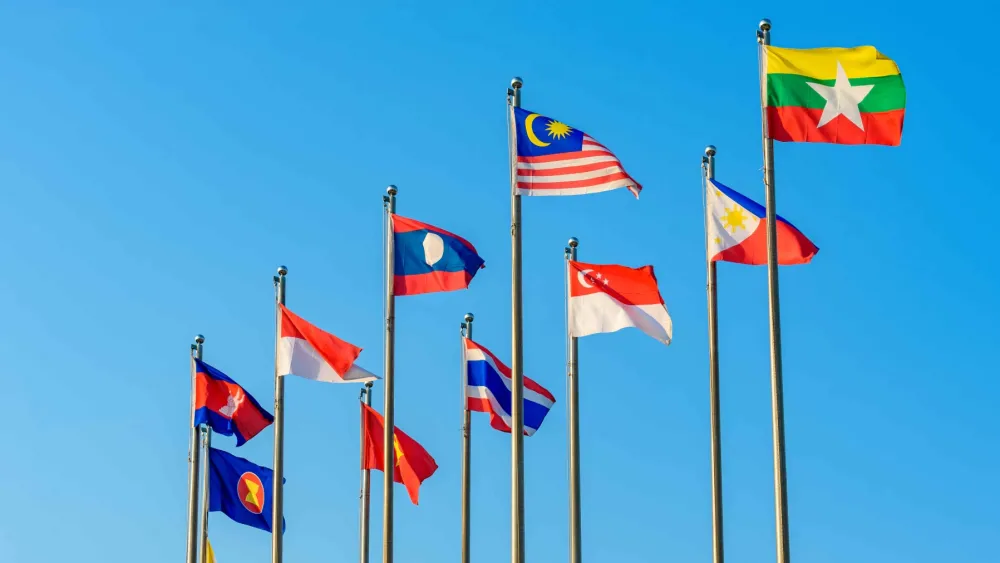
Chia also called for greater regional cooperation, noting that ASEAN-China trade exceeded $1.29 (US$1t) in 2025 and Chinese foreign direct investment into ASEAN reached nearly $25.76 (US$20b) in 2024.
He added that institutions such as the International Monetary Fund, Financial Stability Board, and Chiang Mai Initiative Multilateralisation remain important for financial stability and crisis response amidst rising global uncertainty.























 Read Here
 Advertise
 Sign Up