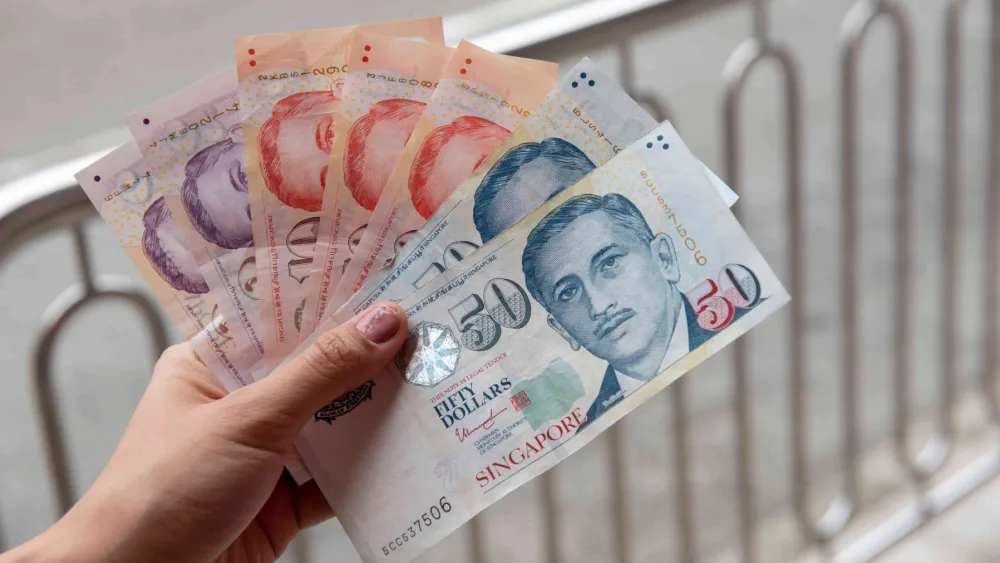
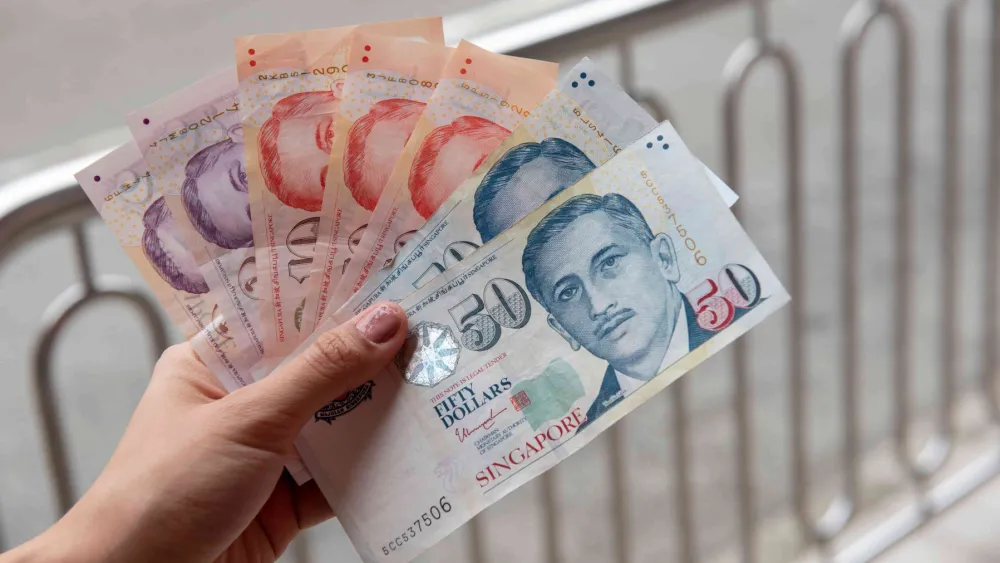
MAS more likely to ease in 2026 as de-facto conditions soften, UOB says
Even under simulations with firmer monthly prints, the core is projected to stay below historical averages.
Singapore’s Monetary Authority (MAS) is more likely to loosen policy in January 2026 than in October 2025, with a 55% against a 45% probability, by flattening the S$NEER slope to 0% appreciation, according to UOB.
In a report, UOB argued that “monetary conditions have already eased de-facto” as 3-month compounded SORA has drifted lower and the S$NEER has slipped within its band.
The firm lifted 3Q25 GDP to +0.5% QoQ (sa) from a prior -0.6%, and upgraded 2025 full-year growth to 2.7%, above the Ministry of Trade and Industry’s 1.5%–2.5% range.
Growth is then seen slowing to 1.5% in 2026. The output gap is assessed as moderately positive in 2025, turning below potential in 2026.
High-frequency indicators for July–August were described as “resilient,” with electronics outperforming on AI-related demand. Strong Taiwan tech exports to the US are seen as supportive for Singapore via regional supply-chain linkages, the note says.
Potential new US trade actions are flagged as a headwind. UOB cited a proposed 100% tariff on patented/branded pharmaceutical imports from 1 October unless companies manufacture in the US, and a possible tariff framework for devices by chip count.
The firm noted core inflation momentum remains weak, citing year-to-date core CPI at 0.6% in August, close to the lower end of MAS’s 2025 forecast range.
Their baseline sees core inflation at 0.5% in 2025 and 1.1% in 2026. Even under simulations with firmer monthly prints, the core is projected to stay below historical averages. The firm expects MAS to trim its 2025 core forecast to 0.0%–1.0%.
Explaining the preference for a later pivot, UOB said MAS would likely want more data to gauge any post-front-loading “payback” in exports and to confirm below-trend core inflation momentum through year-end.
























 Read Here
 Advertise
 Sign Up