Singapore cited by UN ESCAP for green central banking practices
Countries like Singapore “have enhanced... ability to cope with macroeconomic implications of climate change.”
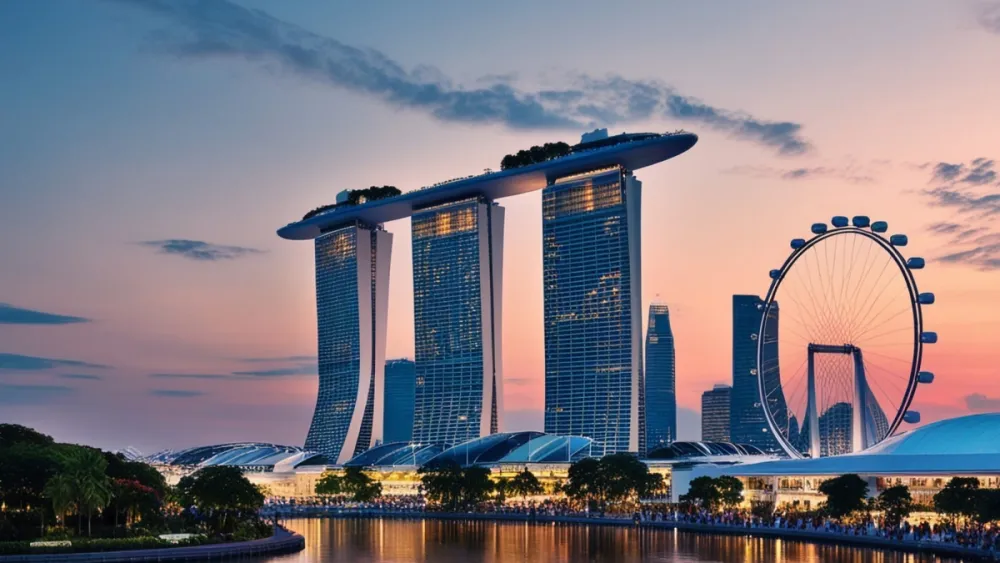
Singapore has been highlighted as a regional leader in climate finance and green monetary policy in the United Nations’ latest Economic and Social Survey of Asia and the Pacific.
The annual flagship report by the Economic and Social Commission for Asia and the Pacific (ESCAP) underscored Singapore’s readiness to manage the macroeconomic risks associated with climate change through strong institutional frameworks and proactive central banking policies.
“Central banks in India, Japan, and Singapore encourage green financing through concessional lending and promoting the issuance of sustainable bonds,” the report stated.
This positions Singapore amongst a small group of Asia-Pacific economies taking early steps to align financial systems with climate goals while safeguarding macroeconomic stability.
Although Singapore is not assessed in ESCAP’s detailed readiness rankings, which focus on developing economies, it is acknowledged for its financial and institutional strength in responding to the economic implications of climate change.
The report noted robust financial systems, like Singapore’s, are essential for “coping with macroeconomic implications of climate change.”
Singapore’s efforts are part of a broader regional push to embed climate considerations into fiscal and monetary policy. ESCAP highlights the growing importance of national green finance taxonomies, transparent risk disclosures, and sustainable public budgeting. In this context, Singapore is noted for helping to shape best practices that others in the region may adopt.
Whilst the report’s core exposure analysis excludes Singapore due to its high-income classification, the city-state is implicitly included in positive examples of climate-aware policymaking.
Countries like Singapore “have enhanced... ability to cope with macroeconomic implications of climate change,” the report stated, pointing to a combination of institutional effectiveness, transparent public finances, and forward-looking financial regulation.
At the regional level, Southeast Asia—where Singapore is a major player—benefited from a global surge in electronics trade in 2024. ESCAP observed “strong performance driven by a global electronics boom,” a trend that supports the region’s growth outlook but also exposes economies to potential volatility from global trade disruptions.
Despite Singapore’s strengths, the report warns that even well-prepared countries remain vulnerable to external shocks, including trade tensions and climate-related economic impacts.
“Macroeconomic impacts of climate change and related policies are notable and wide-ranging, yet not fully understood,” ESCAP cautioned, urging all policymakers to invest in scenario planning and resilient financial systems.
As ESCAP calls for “coordinated regional efforts to safeguard long-term economic prospects and tackle climate change,” Singapore’s climate finance leadership stands out as a model for integrating sustainability with economic policy.
























 Read Here
 Advertise
 Sign Up