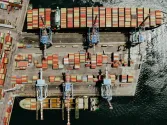
Singapore export growth to stall in 2H25: analysts
Non-Oil Domestic Exports (NODX) fell by 4.6% YoY in July, reversing the strong 12.9% growth recorded in June.
Singapore’s export momentum is expected to weaken significantly in the second half of 2025, as front-loaded shipments in the first half give way to a potential “payback” period and escalating tariff risks.
Both UOB and RHB flagged the likelihood of a slowdown in trade-related sectors, with UOB warning that wholesale trade, transport, and storage could be disproportionately impacted.
RHB has revised its full-year NODX growth forecast down to 2.0%, from 5.2% in 1H25, aligning with the official forecast range of 1% to 3%.
Analysts at both banks also point to structural vulnerabilities in Singapore’s economy—namely its heavy dependence on electronics and pharmaceuticals—which could magnify the effects of global trade disruptions.
The risk landscape is dominated by geopolitical tensions and new tariff threats. Both UOB and RHB cited concerns over possible U.S. tariffs targeting semiconductors and pharmaceutical products amid worsening U.S.-China and U.S.-India relations.
A sharp spike in the Trade Policy Uncertainty Index, reaching 555 according to UOB’s report, underscores the anxiety surrounding global trade policy. RHB’s research further highlighted that among ASEAN economies, Singapore is the most exposed to pharmaceutical-related trade risks.
Non-Oil Domestic Exports (NODX) fell by 4.6% YoY in July, reversing the strong 12.9% growth recorded in June. The decline was steeper than Bloomberg’s consensus forecast of -1.0%, and worse than RHB’s projection of -2.0%.
It did, however, align with UOB’s more conservative estimate of -5.0%. On a seasonally adjusted month-on-month basis, NODX contracted 6.0%, following a 14.2% rebound in June.
The contraction was driven largely by non-electronics exports, particularly pharmaceuticals (-18.9% y/y), petrochemicals (-23.4%), and food preparations (-26.3%), according to RHB.
Electronics exports remained positive at 2.8% YoY, but slowed sharply from June’s 8.0% rise. UOB highlighted divergent trends within electronics, with consumer PCs jumping 80.4% YoY, whilst other computer peripherals collapsed by 93.8%.
One of the few bright spots was Non-Oil Re-Exports (NORX), which climbed 22.1% YoY in July, powered by strong gains in electronics (+29.1%) and non-electronics (+13.8%). UOB attributed this to continued front-loading of shipments in anticipation of future tariff hikes. However, both banks noted that this trend is unlikely to be sustained into the second half.
Export performance by destination revealed a sharp divergence. Both UOB and RHB reported steep year-on-year declines in shipments to the U.S. (-42.7%), China (-12.2%), Indonesia (-32.2%), and Thailand (-21.8%). In contrast, exports to Taiwan (+62.9%), South Korea (+34.5%), and the EU-27 (+77.1%) held up well. UOB noted that gains in the EU were largely driven by non-electronic exports, which rose 90.3%.
Despite mounting risks, RHB maintains a GDP forecast of 2.0% for 2025, with the possibility of an upward revision to 3.0% if global trade tensions ease and demand picks up.

























 Read Here
 Advertise
 Sign Up