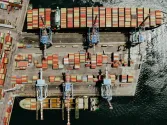
Singapore export recovery set to slow as tariff risks escalate
Singapore’s NODX fell by 4.6% YoY, reversing a strong 12.9% surge in June.
Singapore’s export recovery is expected to lose steam in the second half of the year, with CGS International analysts warning that non-oil domestic export (NODX) momentum will likely remain subdued amid escalating tariff risks and uneven global demand.
In its latest Economics Update, CGS International maintained its full-year 2025 NODX growth forecast at 3.3%, slightly above Enterprise Singapore’s official range of 1.0% to 3.0%. However, the research house cautioned that “ongoing tariff risks” and “sector-specific vulnerabilities”—particularly in pharmaceuticals and semiconductors—could weigh on performance.
“We think the NODX momentum will remain subdued amid ongoing tariffs risks,” the analysts wrote in the report.
The July data provided immediate cause for concern. Singapore’s NODX fell by 4.6% YoY, reversing a strong 12.9% surge in June.
The decline was broader than expected and fell short of Bloomberg’s consensus forecast of -1.0%, though it came in slightly better than CGSI’s internal projection of -6.1%.
The most severe drop came from the United States. Exports to the US plunged by 42.7% in July—marking the third consecutive monthly fall—driven by a staggering 93.5% collapse in pharmaceutical shipments, attributed to both production volatility and rising geopolitical tension.
“Trump has flagged the potential for tariffs on pharmaceuticals of up to 250%, which in our view could be prompting buyers to scale back orders until there is greater policy clarity,” CGSI analysts noted.
In contrast, regional shipments held up well. Exports to Taiwan soared by 62.9%, South Korea rose 34.5%, and Hong Kong gained 20.8%. Electronics exports grew a modest 2.8%, bolstered by strong gains in PCs (+80.4%), ICs (+8.0%), and printed circuit boards (+25.8%).
Still, the broad-based decline in non-electronics—especially pharmaceuticals (-18.9%), petrochemicals (-23.4%), and food preparations (-26.3%)—dragged overall performance down and narrowed the trade surplus to $7.1b, from $8.6b in June.
























 Read Here
 Advertise
 Sign Up