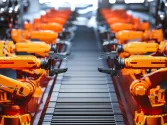
Harnessing talent to tap opportunities in offshore energy exploration
The International Energy Agency predicts that global energy demand would increase by one-third from 2010 to 2035, with Asia leading this demand. Asia-Pacific, Brazil and the Gulf of Mexico will help meet much of that demand. In Singapore this growth is reflected in the annual turnover of the offshore marine industry, with over $8 billion in 2010 and which continues to remain buoyant.
There are increasing opportunities for companies to meet these needs but companies can only realise it with sufficient human capital talent.
With a growing offshore market in Asia, companies face increasing manpower pressure to fulfill the demands of these projects. There is strong demand for technical talent in drilling, exploration, equipment manufacturing, consulting and construction.
The industry has been facing critical talent shortage as seafaring is not always an attractive occupation due to challenging work environments and time spent away from home. That also led to a decreasing pool of leaders to mentor younger employees.
Today, the industry and government have been collaborating to revamp the image of the maritime industry to make it more attractive to students and professionals alike. This is developing world-class standards of R&D and engineering capabilities within the industry, and is transferrable knowledge that can be applied to international projects.
Traditionally, companies preferred to hire from within, today, these companies are looking externally for talent. Opportunities abound for those looking for work in this industry, and technical talent are always much sought after.
Companies in Asia have a growing pool of local talent to tap on. Today, an increasing number of roles are being fulfilled by local talent – Faststream’s Maritime Review 2011 illustrated that 82% of Asian technical positions were filled by local employees, with 11% of roles being filled by Europeans and 7% by other candidates worldwide – this is a shift from a decade ago where many roles were filled by expatriates.
It signals the development of skilled talent in the region. However, a highly mobile workforce in Asia means that companies face challenges in grooming and training talent. This is essential as technology advances mean that marine equipment and vessels are becoming more sophisticated and require experienced personnel to manage them.
It is critical that companies ensure they have strong people strategies in order to retain and attract top talent. Companies need to offer attractive benefits and incentives to attract quality talent from a growing diversified workforce. This includes offering flexible work options, creating more female-friendly and family-friendly work environments, and tapping on a growing pool of older workers who have vast experience to contribute.
Asia-Pacific is poised to significantly contribute towards meeting today’s global energy challenges, and companies would do well to put in place a competitive and robust human capital strategy if they wish to stay ahead of competitors and ride on this growth. Asia-Pacific’s fluid workforce works in favour of the industry if harnessed in the right way, using this, combined with international knowledge-sharing in hubs such as Singapore will assist the region’s progression in offshore oil and gas exploration.
Mark Charman, Group CEO, Faststream Recruitment Group.
Mark is a speaker at the inaugural Seatrade Offshore Marine Asia forum, 25 – 27 April 2012























 Read Here
 Advertise
 Sign Up