Why shale gas is Singapore's latest game changer
By Joergen Oerstroem MoellerSingapore, like the rest of the world, faces a new paradigm for energy supply and even more important the energy supply chain – exploration, exploitation/extraction, transport, grid, pollution, carbon dioxide emissions. Shale gas is the game changer, but to a lesser extent than presumed and resulting in changes different from those original expected.
It will certainly diminish U.S. dependence on imports of oil and therefore facilitate a U.S. withdrawal from the Middle East embedded in the pivot to Asia. It is, however, unlikely yes almost impossible to see why the U.S. deficit on the balance of payments running at around three per cent of Gross Domestic Product should go away as the gap between savings and investment persists. So the imbalance of the American economy will continue to be a ‘game holder’ barring the way for a genuine global economic recovery.
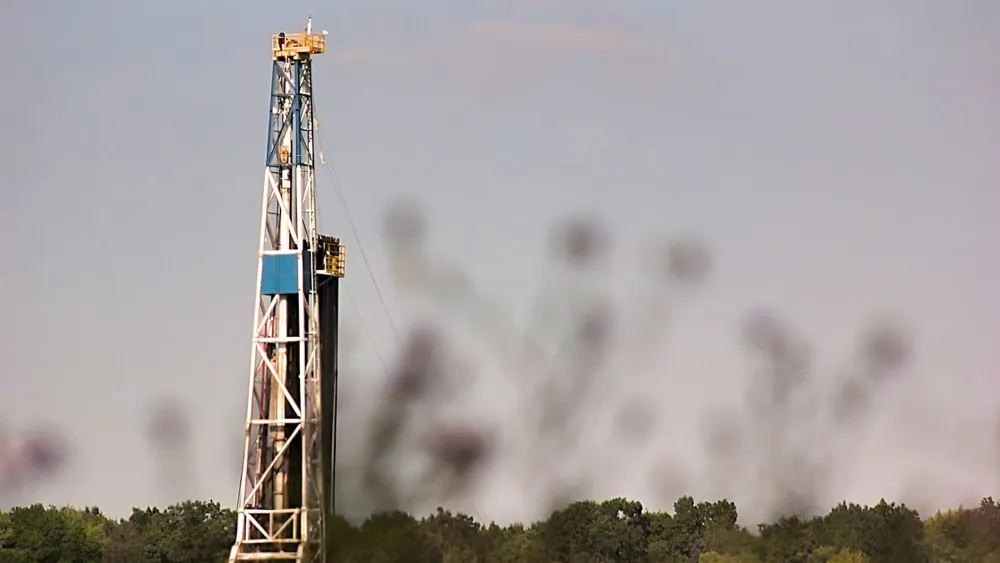
Shale gas basins are mainly found in the U.S., China, Europe, Brazil, and to a lesser extent India plus Russia. Compared to oil, shale gas is found where the main global economic and industrial activity takes place. The consequence is obvious that transport from oil fields in the Middle East, parts of Africa and Latin America will fall almost dramatically in coming decades. Ship owners plus accompanying and supporting business for oil tankers is confronted with a completely new transport and logistics system with much lower demand for their services than hitherto.
Even if shale gas are found much nearer to where the demand for energy is, it still needs to be moved from where extraction takes place to economic and industrial centres. But contrary to oil and gas transport by sea, shale gas will be transported through pipelines – an inland transport & logistics system will gradually supplement the large fleets of oil tankers, terminals, and other infrastructure built over the preceding 100 years. It will not take place overnight, but it will happen.
It is uncertain how fast these changes work their way into the global system. Transforming oil and gas supply chains is a capital intensive undertaking and a time consuming one too. Add to this mounting opposition from environmentalists to exploitation & extraction due to negative effects on the environment, intensive use of water and use of a special kind of sand. The technology still relies on water that is scarce in several countries of which China are the prime example requiring the double of water than in the U.S.
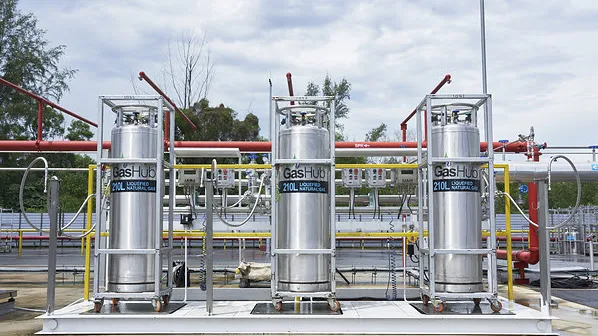
While LNG (liquefied natural gas) is normally regarded as a ‘clean’ energy source with low carbon dioxide emissions enhancing its attractiveness from the view point of the environment, the same cannot be said of shale gas that comes in various qualities – like oil – and therefore not uniformly good for the environment.
Southeast Asia is one of the regions in the world where shale gas has not – yet – been found. The region has over the years developed a substantial industry around oil and gas exploitation, but also as provider of string of accompanying goods and services. This industry will not lose its footing overnight, but it is doubtful whether it will play a role in the future similar to the one it played in the past.
Therefore the challenge is to plug into the new kind of business, adapting to demand exactly like the approach decades ago when spotting opportunities in the oil & gas sector.
Joergen Oerstroem Moeller
Visiting Senior Research Fellow, Institute of Southeast Asian Studies, Singapore.
Adjunct Professor Singapore Management University & Copenhagen Business School.
























 Read Here
 Advertise
 Sign Up