
Customer experience at full throttle: How Singapore’s F1 turns pressure into performance
By Angie TayWhat decides whether people return next year isn’t the promotion they’d see later, but the weekend they just lived.
For one week each year, Singapore runs a citywide showcase in customer experience (CX). Attendance reached more than 269,000 across the 2024 weekend, for example.
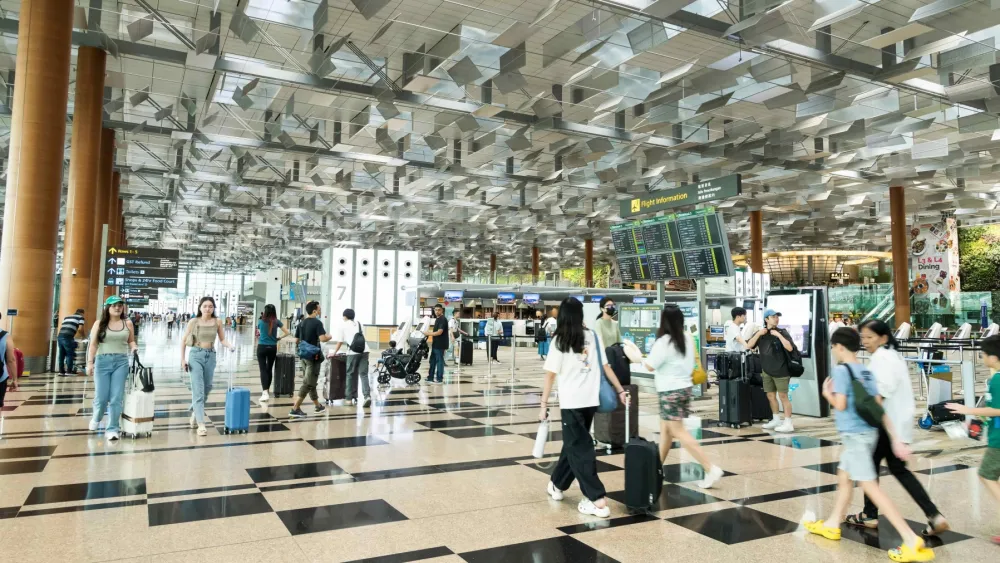
That’s a dense, three-day flow for travel, hospitality, food and beverage (F&B), retail, and transportation, where every queue and every delay becomes a social post or an irate customer on the other end of the phone. The country’s front door feels the pressure, too: In September 2024 (the F1 month), Changi Airport handled about 5.47 million passengers.
CX behaves like a race setup: The tuning that flies on the straights can punish brands in the corners. The F1 night race compresses everything decision-makers worry about into a single, high-stakes weekend: surging demand, premium expectations, late-night operations, and unforgiving handoffs.
In other words, the Singapore Grand Prix is less a sporting event than a live audit of whether your brand’s people and technology can hold the line when everything hits at once. If we take a lap in the customer’s seat, what should this “experience” look like?
The customer journey starts before they even set foot in Singapore
The race weekend doesn’t begin at the circuit, but from a traveller’s first impression on a distributed front door: your brand’s own site and app, authorised ticketing reseller platforms, and online travel agencies (OTA) they already trust.
If those storefronts tell different stories on inclusions, change rules, pick-up instructions, or event-period levies, you’ve built drag into the lap that will show up later as contacts, cancellations, and avoidable costs.
OTA platforms, for instance, don’t just catch traffic. They convert users because the experience is tuned for conversion.
In a recent study on the Singaporean market, two of six OTA platforms led in brand awareness, but only one achieved buying intent in every one out of two prospects. What made the difference was a seamless, user-friendly experience backed by personalised marketing and loyalty programmes.
The same applies to accommodation companies. In the 2024 race week, one major OTA reported roughly 60% more hotel bookings, whilst hoteliers saw nearly a 10% lift in demand for VIP and premium experiences, along with an uptick in last-minute reservations.
Meeting this demand requires staffing flexibly where traffic concentrates, algorithms that surface premium inventory early and across channels, and the ability to serve the late tail with instant confirmations, flexible check-ins, and add-ons embedded in partner flows.
However, all of these only work if your brand delivers consistency. In online marketplaces you don’t fully control, your advantage is a single source of truth that every storefront mirrors.
When the message a customer reads in your app matches what your agent says on the phone and what the OTA confirms in the itinerary, you remove doubt before it turns into a ticket.
Design, too, for when things go off-script. Build recovery and retention into partner experiences as well as your own. That can include lounge passes when flights are delayed, transfer credits when cars are delayed, or late checkout when arrivals slip past midnight.
The goal isn’t silence in the contact centre, but ensuring the customer feels looked after without having to hunt for the fix.
Living the F1 experience across the city is CX in high gear
According to Visa, the 2024 race week attracted a diverse mix of international visitors from around the world. That diversity demands omnichannel, multilingual CX so that information lands in the customer’s preferred language.
The goal should be context-aware consistency, so that policies and support sound natural and reliable everywhere the customer looks.
Payments are part of that welcome: In the same report by Visa, roughly 90% of race-week transactions were contactless. Banking, financial services and insurance (BFSI), and FinTech brands should see it as a CX and UX requirement — it’s revenue capture and brand protection in one move.
Make it effortless to pay for what customers discover online and in store, whilst also making it visibly secure. The same standard should hold across hospitality, F&B, entertainment, and retail, which Visa said are where most of the weekend spend is concentrated.
CX also doesn’t switch off at midnight. Late-night spending between 12 and 6 a.m. spiked by as much as 170% during the 2024 weekend, which makes 24/7 coverage a focused investment.
Additionally, in-city mobility and crowd orchestration set the tone for everything after. Wayfinding and price clarity reduce customer complaints.
For example, during race week, designated pick-up and drop-off points around Marina Bay were restricted, whilst taxis applied a $8 location surcharge on race nights. These should be treated as transparency commitments: Communicate the rules clearly and in real time so that neither the route nor the fare feels unpredictable.
Technology brings this to life in ways any industry can adopt. One mobility platform used basement routing (the process of mapping and navigating through complex, interconnected underground areas where signals for drivers may sometimes be lost) to reduce passenger-driver contact rates by 28% in the F1 zone compared with 2023. It also decreased customer cancellations.
Hotels and venues can mirror this by aligning pick-up pins and concierge scripts to the same mapping logic. Clear communication and smart technology can turn high-traffic, high-pressure moments into seamless experiences. Implementing this properly translates to fewer headaches, faster exits, and customers who remember the experience, not the friction.
Experience is the product that customers would come back to next year
What decides whether people return next year isn’t the promotion they’d see later, but the weekend they just lived: a city at capacity that still feels frictionless.
Around the race window, for instance, the city hosts around 25 conferences and exhibitions that draw 90,000 visitors. That’s roughly 360,000 spectators and delegates moving across gates, suites, F&B stalls, retail stores, and exits in just a few days.
The scale and density argue for humans and artificial intelligence (AI) working in tandem — automation to keep pace, people to keep empathy. Singaporeans are pragmatic about this: 76% said they’re comfortable with AI in customer service if the outcomes are as good or faster.
However, personalisation remains the lever. KPMG’s 2024 report placed nearly 20% of the customer loyalty equation ahead of empathy or resolution, because tailored journeys signal respect and reduce effort. The local airline and banking companies that scored the highest in CX paired data-powered innovations with their loyalty and retention programmes.
However, achieving this can stall in the pits when technology and people aren’t in sync. More than 56% of surveyed organisations in Singapore don’t have integrated technology systems. As a result, agents log in to at least four separate tools on average to resolve a single query, with a fifth juggling more than five.
Address this at the foundations: Use a single source of truth for CX, stitch events into one seamless experience, and streamline agents’ tools into a workspace where AI automates routine tasks and humans make the critical decisions.
For brands, this isn’t just about operational efficiency, but staying relevant in a market where world-class experiences set the standard.
Circling back to the customer’s view of the F1 experience: The challenge for businesses isn’t just delivering during the peak of race week, but ensuring every season, every surge, and every touchpoint feels just as seamless.
The checkered flag shouldn’t be the end of the customer journey, but the return ticket for next year.






















 Read Here
 Advertise
 Sign Up