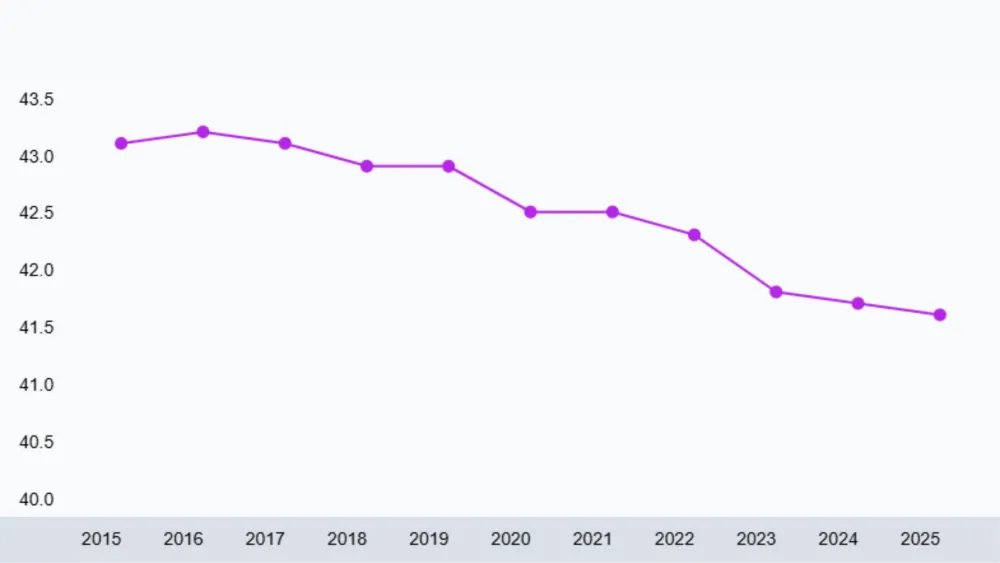
, Singapore

2013: The year the United States becomes a third world country as Asian executive wages overtake American workers

Europe's troubles saw Asian executive salaries overtake European Averages last year, but by 2013 executives in Asia will also be paid more than their American counterparts.

Mercer noted:

Asia Pacific trends
The first trend is the rapid increase in executive pay in the Asia Pacific region, especially in China, India, Indonesia, Vietnam, the Philippines and Malaysia. Contributing factors include continued strong growth in Asia’s industrial production and GDP, accelerating inflation across the region, a scarcity of executive talent and difficulty filling executive positions. While average executive salaries are increasing by 7% across the region, in Europe and North America the comparable rates are approximately 2.5% to 3.0%.

For some time, western-developed economies have posted the highest average compensation, but we’re seeing a dramatic shift as supply and demand factors wreak havoc on compensation levels. Last year, average executive salaries in Asia surpassed those in Europe, and with an annual increase rate higher than in the US, we expect Asian executive salaries to surpass those in the US within the next two to three years.

A second, not unrelated, regional trend is a shortage of executive talent endowed with the ability to innovate, to think globally, to take risks and to move quickly. Such talent is mobile across Asia and, as a result, is driving up pay in some sectors to levels that may prove unsustainable.

Southeast Asia trends
Most companies in Southeast Asia are currently facing fast growth and a shortage of executive talent. In Singapore, companies are expected to continue to focus on performance-based plans, which have almost become the norm in the country.

In Malaysia, stock-option plans are also being replaced by performance-based plans and share-based plans to improve retention. In both these markets, government-linked companies’ take on performance-based plans is consistently influencing market practices.

In Thailand, there is a greater recognition of the need for long-term plans for executives to drive retention, team behaviour and performance – the key emphasis being executive retention to fuel growth.

Recommended actions
Long-term plans are seen as the engine to help fuel growth and retain executives. Boards should look at implementing combination plans that can help companies achieve both. According to Fermin Diez, Mercer’s Senior Partner and Asia Pacific Business Leader, Human Capital business, “We have observed that stock options are losing ground in favour of performance-based share programs for motivation and restricted share programs for retention. Performance metrics are also shifting toward long-term and strategic rather than merely short-term financial measures.”


Tags: 

Join Singapore Business Review community
A NOTE FROM SINGAPORE BUSINESS REVIEW

The people you want to reach are already in this room.

Every quarter, SBR lands on the desks of the founders, CFOs, and directors running Asia's most consequential companies. Every day, they open our newsletter and read our website. It's a room that took twenty years to build — and it's the one most of our partners are trying to get into.

The good news is that the door is open. We work with companies on thought leadership articles, sponsored content, industry summits across Southeast Asia, regional awards programmes, podcasts, and media placements in print and digital. The shape of the right partnership depends on what you're trying to do, which is why we'd rather start with a conversation than send a rate card.


If you have something this room should know about, tell us. We'll tell you honestly whether we can help, and how.

No rate cards until we understand the brief. It's a better use of everyone's time.