Singapore’s Green Transition: Progress and Challenges
A report says SG has ‘insufficient’ renewable resources to meet energy demand by 2050.
Singapore’s biggest hurdle in its energy transition is the mismatch of its renewable energy demand and supply, a recent report revealed.
According to the "Southeast Asia’s Green Economy 2023 Report: Cracking the code" report by Bain & Company, Temasek, GenZero and Amazon Web Services (AWS), the Lion City “demonstrates the strongest need to import clean energy to achieve its 2030 goal and Net Zero in the longer term” amongst countries in the region.
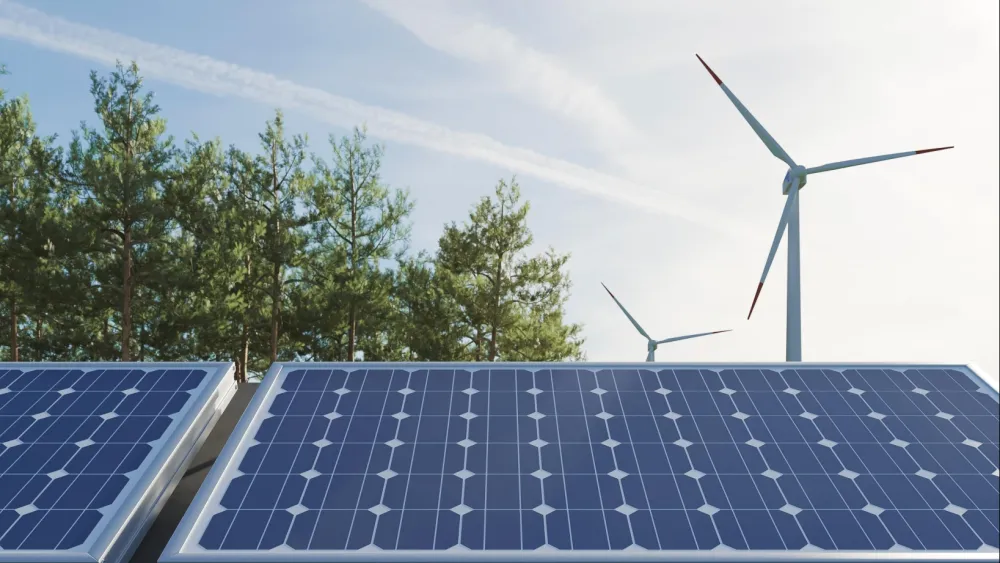
Based on the report, the city-state’s total RE resources are 0.4 GW; of which, 0.3 GW comes from Photovoltaic (PV) Energy and 0.1 comes from onshore wind.
The total RE resources of Singapore are insufficient to meet its electricity demand by 2050 at 18 GW.
“Singapore doesn't have sufficient renewable energy potential to meet 100% of the nation’s electricity demand,” the report stated.
Whilst lacking in the RE aspect, Singapore has been leading in the transport front, from electric vehicle adoption to decarbonising its maritime and aviation sectors.
Data from the report showed that EVs account for 12% of new car sales in Singapore. The highest percentage in ASEAN-6, tied with Vietnam.
Singapore has also gained momentum in decarbonising its maritime sector by establishing the world’s longest Green and Digital Corridor with the Port of Rotterdam.
The corridor is expected to “bring together a coalition of shippers, fuel suppliers, and other companies to work on potential alternative fuel solutions and optimise maritime efficiency, safety, and transparent flow of goods through a digital trade lane.”
In aviation, Singapore has also piloted blended sustainable aviation fuels (SAFs) on flights departing from Changi Airport and sold SAF credits as part of the pilot. The Civil Aviation Authority of Singapore, Singapore Airlines, and GenZero took part in the pilot.
To ensure efficient RE transition and EV adoption, the report recommended several actions for ASEAN countries.
Amongst its recommendations was to double down on power master plans to provide clarity on the transition path, which Singapore has done through its issuance of the Green Plan 2030.
The report also recommended ASEAN countries accelerate EV charging station infrastructure development, citing Singapore’s regulation that mandates EV charging points at all new buildings with car parks.






















 Read Here
 Advertise
 Sign Up