Singapore manufacturing hit as US reshoring cuts demand: report
Notably, 55% of Singapore’s exports to the US are now subject to a 10% tariff, with electronics and machinery forming the bulk of those goods.
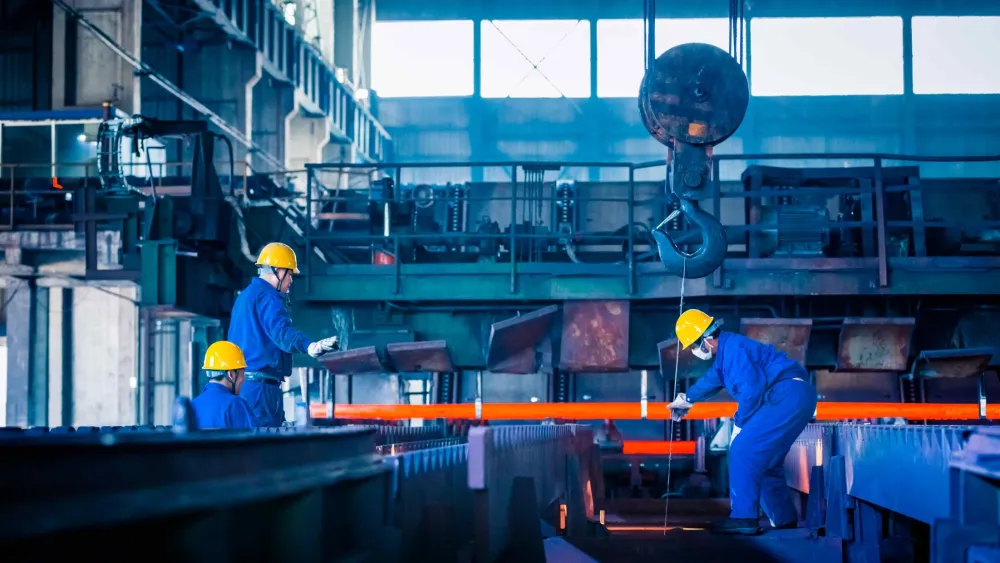
Singapore’s manufacturing sector is confronting mounting pressure from global trade realignments, particularly the impact of US reshoring policies that threaten to reroute investment flows and fragment established supply chains.
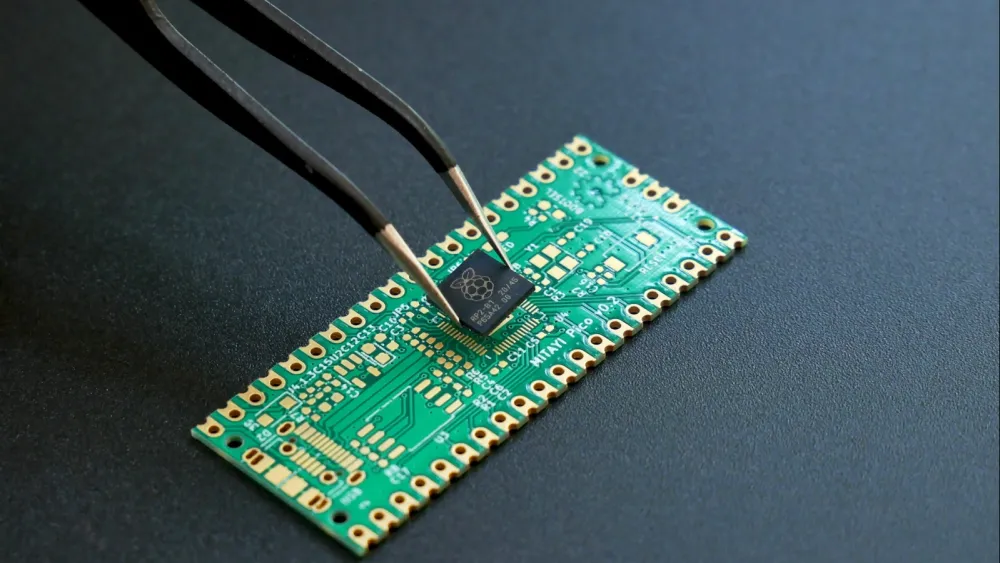
According to a new report by RHB Group, the shift could significantly affect Singapore’s export-reliant economy—especially sectors like semiconductors, medical devices, precision engineering, and pharmaceuticals.
Driven by legislation such as the CHIPS and Inflation Reduction Acts, the US is incentivising firms to bring manufacturing home or closer to North America. RHB warns that this trend, coupled with new tariffs and geopolitical tensions, could reduce US demand for offshore manufacturing services.
Notably, 55% of Singapore’s exports to the US are now subject to a 10% tariff, with electronics and machinery forming the bulk of those goods.
Singapore's vulnerability lies in its open economy and strong trade ties. The US accounts for 23.6% of total foreign direct investment (FDI) into Singapore, largely concentrated in advanced manufacturing.
However, these high-tech industries are precisely the ones facing potential pullbacks as American companies build domestic production capabilities.
Beyond tariffs and FDI risks, the report outlines a broader structural shift. Companies are increasingly adopting “just-in-region” supply chain models, favouring localized production over Asia-Pacific transhipment hubs. This evolution could undercut Singapore’s traditional strengths in logistics and regional distribution.
Still, the outlook isn't uniformly negative. Singapore continues to attract strong inflows into high-value, knowledge-intensive manufacturing.
In 2024, the sector drew $11.1b in fixed asset investments, with significant interest in semiconductors and biotechnology. The city-state already accounts for 10% of global semiconductor output and 20% of manufacturing equipment for chips.
Singapore may also benefit from companies seeking “China+1” diversification strategies. With its political stability, strong intellectual property regime, and skilled workforce, the country is well-positioned to serve as a regional base for capital- and IP-sensitive industries.
Initiatives like the upcoming Johor-Singapore Special Economic Zone and deeper ASEAN digital integration are expected to further strengthen this role.
On the financial front, Singapore Government Securities (SGS) remain a bright spot. Investors have flocked to the bonds amid rising global uncertainty, pushing the 10-year SGS yield down to 2.28%.
























 Read Here
 Advertise
 Sign Up