Chart of the Day: 2021, a horror for household incomes
Average household income for private residential property owners declined 6% last year.
The year 2021 was a horror for household incomes, with the average for private residential property owners dropping 6% in 2021.
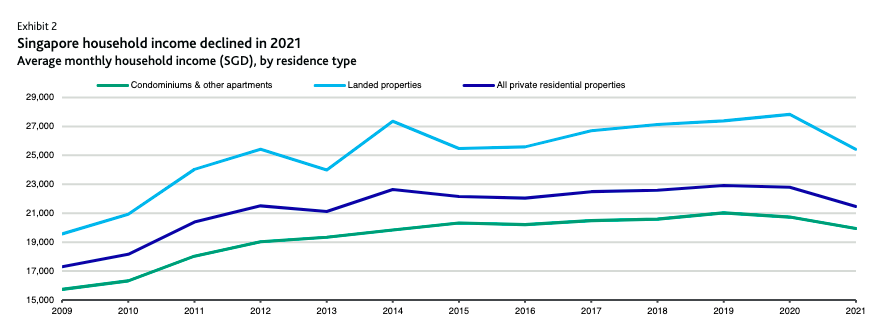
Moody’s Investor Service attributed the decline to wage cuts and job losses.
In addition, private residential property owners also received minimal amounts of COVID-related support funding last year because “their incomes and property values exceeded thresholds for higher support,” the analyst said.
In 2022, however, this will no longer be the case. Moody’s said household incomes for private residential property owners will improve in 2022 on the back of the economy and job market’s recovery.
“We expect Singapore’s economy to continue its recovery in 2022, which will support broad wages increases and higher household incomes,” the analyst said.
With higher household income comes improved housing affordability, Moody's added.
Read more: Three factors that will improve housing affordability in 2022
Moody’s calculate the average monthly household income for residents living in private residential properties by taking into account those living in condominiums and other apartments and landed properties, weighted by the share of the population living within each property subsegment.
Incomes include Central Provident Fund employer contributions.























 Read Here
 Advertise
 Sign Up