FTSE ST Industrials Index up 13.2% in July, outpaces STI
Wee Hur, Frencken, and Samudera led gains.
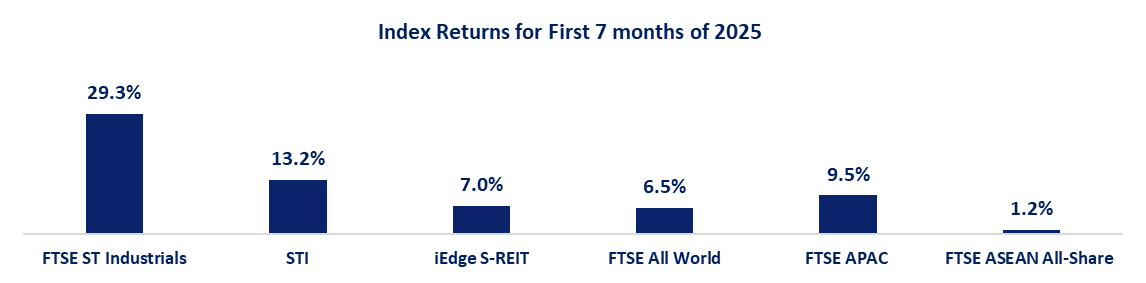
The FTSE ST Industrials Index increased 13.2% in July, outperforming the Straits Times Index’s (STI) 5.5% gain and matching the STI’s year-to-date return, according to a SGX Market update.
The strong monthly performance lifted the Industrials Index’s total return to 29.2% for 2025 so far.
Key drivers of the rally included Wee Hur Holdings, Frencken Group, and Samudera Shipping Line.
Industrials also ranked amongst the top-performing sectors in the FTSE Asia Pacific Index, alongside Healthcare and Telecommunications.
Institutions were net buyers of Singapore stocks in July, with inflows of $396.6m, cutting year-to-date outflows to $1.67b.
Industrials saw the highest institutional inflows, led by Keppel, Yangzijiang Shipbuilding, and Seatrium, which averaged 14.1% total returns for the month. REITs saw the largest outflows.
Markets tracked a stable global outlook for most of July, but sentiment weakened late in the month due to tariff uncertainty and a cautious stance from the U.S. Federal Reserve.
Rate cut expectations for the rest of 2025 fell from 75 basis points at the start of July to just 25 basis points by month-end.
Fed Chair Jerome Powell said tariffs are beginning to affect some prices, but their full impact on inflation and growth remains unclear. Whilst some effects may be temporary, the risk of persistent inflation cannot be ruled out.
Stronger-than-expected 2Q25 GDP data provided some support, but uncertainty over tariffs continues to weigh on sentiment.
Looking ahead, market sentiment may hinge on the clarity and credibility of future trade agreements. "The general outlook from is that the more balanced, economically unequivocal and ironclad the trade deals and tariff rates, the more assured the market sentiment will likely be," analysts noted.
The industrials sector remains a key outperformer in both Singapore and the U.S. this year, supported by trends in reindustrialisation, infrastructure growth, and supply chain shifts.





















 Read Here
 Advertise
 Sign Up