Minister Fu urges ASEAN unity on climate amidst extreme weather
She stressed the worsening impact of climate change, citing recent extreme weather across Southeast Asia.
Minister for Sustainability and the Environment Grace Fu urged ASEAN nations to strengthen regional cooperation on climate action, warning that the world is falling behind on environmental commitments amidst growing geopolitical and economic uncertainty.
Speaking at the 12th Singapore Dialogue on Sustainable World Resources on 28 May, she said, “We have also seen countries taking their foot off in climate action. Political support for decarbonisation is losing momentum, and climate finance is becoming more elusive.”
Despite these setbacks, Ms. Fu stressed the worsening impact of climate change, citing recent extreme weather across Southeast Asia.
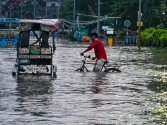
“In the second half of 2024, intense floods swept across Malaysia and Thailand… The Philippines experienced a severe heatwave throughout March and April this year, and Myanmar recorded its highest ever April temperatures of 48.2°C last year,” she noted.
She highlighted progress within ASEAN, pointing out that eight out of ten member states have committed to net-zero or carbon neutrality targets. She also welcomed the forthcoming ASEAN Centre for Climate Change in Brunei, which will facilitate coordination on regional climate efforts.
“As a region, we are working towards integrating the power systems to form an ASEAN Power Grid, which will enhance regional energy security while decarbonising the power sector,” she said.
Ms. Fu emphasised the central role of agribusiness and forestry in the region’s climate response. ASEAN countries produce around 80% of the world’s palm oil and rubber, and 20% of global rice, whilst agriculture, forestry, and fishing contribute about 10% of ASEAN’s GDP.
“Agriculture production is both a cause and a victim of climate change,” she said, referencing a UN study that found food systems account for a third of human-caused greenhouse gas emissions.
Although Singapore does not have a large traditional agriculture sector, it plays a vital supporting role as a finance hub and a growing centre for agritech and carbon services. Ms. Fu noted the country’s collaboration with regional partners to develop climate-resilient crops, including an ongoing study led by the National University of Singapore’s Tropical Marine Science Institute, expected to conclude in Q2 2026.
She concluded with a call to action: “Climate change waits for no one. We need to maintain the momentum of climate action in spite of the global headwinds… Sustainable agribusiness and forestry practices are good for business and the environment.”

























 Read Here
 Advertise
 Sign Up