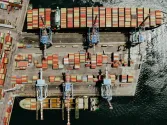
NODX down 4.6% in July
NODX to the US dropped 42.7%.
Singapore’s non-oil domestic exports (NODX) declined by 4.6% year-on-year (YoY) in July 2025, following a 12.9% increase in June, as per data from Enterprise Singapore.
The decline was driven by weaker non-electronics exports, whilst electronics shipments continued to grow. On a year-to-date basis, NODX rose 3.6% in the first seven months of 2025.
On a YoY basis, electronic NODX increased 2.8% in July, slowing from 8% in June. Key contributors included personal computers (+80.4%), integrated circuits (+8.0%), and bare PCBs (+25.8%).
Non-electronic NODX fell 6.6% in July, after a 14.4% rise in June. Pharmaceuticals (-18.9%), petrochemicals (-23.4%), and food preparations (-26.3%) contributed most to the decline.
Exports to the US, China, and Indonesia fell in July, whilst shipments to the EU-27, Taiwan, South Korea, and Hong Kong rose.
NODX to the US dropped 42.7%, China declined 12.2%, and Indonesia fell 32.2%, driven by pharmaceuticals, specialised machinery, and petrochemicals.
Non-oil re-exports (NORX) grew 22.1% YoY in July, extending June’s 18.3% increase, supported by both electronics and non-electronics.
Total trade expanded 8.4% YoY in July, with total exports up 8.6%, led by non-oil exports (+13.2%), whilst oil exports fell 13.7%. Total imports rose 8.1%, after flat growth in June.
Singapore maintains its full-year 2025 NODX growth forecast at 1% to 3%, amid uncertainties in global demand and trade conditions.
























 Read Here
 Advertise
 Sign Up