Kheng Keng Auto: A global business selling scrapped cars and car parts from Singapore
By Centre for Management PracticeIn August 2014, Cher Kwang Siong, the managing director of Kheng Keng Auto (KKA), had to deal with several issues facing the firm. KKA was a Singapore-based family business with global operations, dealing in pre-owned vehicles, recycled auto-parts, and scrap metal.
The continuation of the company's successful internationalisation drive was being hindered by various country-specific regulations. Internally, Cher had to ensure the future of the firm as a going concern.
In 1980, KKA was founded by Cher's father, Cher Kheng Keng, as an auto repair shop. Having grown up helping out in the workshop, Cher's passion for automobiles eventually allowed him to take over the business in 1988. Besides maintenance and repair work, he diversified operations to include the distribution and decommissioning of pre-owned vehicles.
KKA would take car parts from Singapore, where cars had 10-year life spans due to regulation, to export markets, where cars could enjoy life spans of up to 35 years. Cher believed that attention to detail was the key to success,
When I expand into a new market I always stay there personally for three to five months to understand the environment, the government regulations, and to familiarise myself with the local business culture. I stay to make sure the business model is properly set up before getting my employees to go over and carry on the operations.
Our quality has to be uniform, but the way we do business there or trade there may be different. In some cases, the clearance process [for shipments] is very fast and the customer can get the car in five days. In other places, it may take two weeks to a month. If we're not there personally, we may never understand.
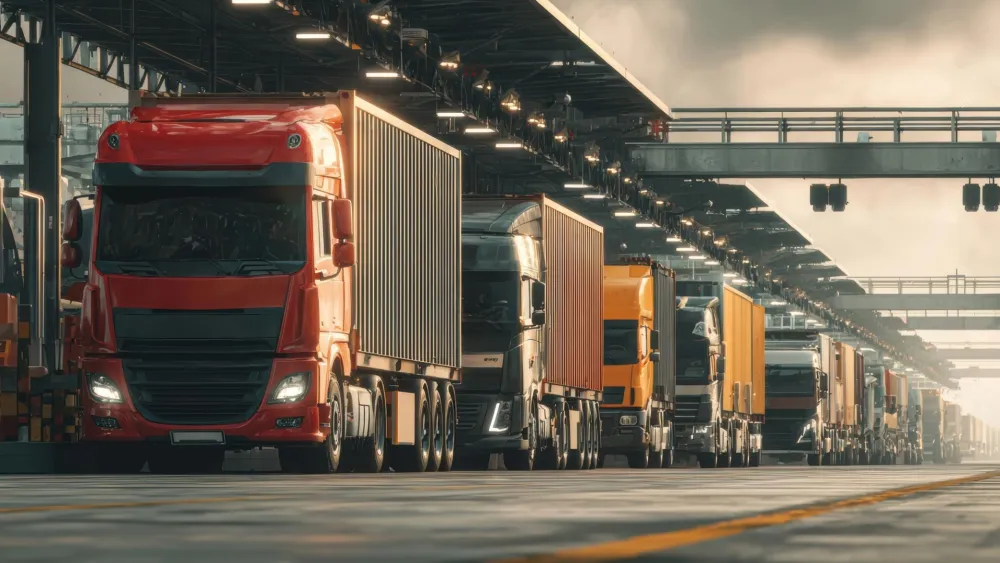
Cher leveraged Singapore's position as a global logistics hub to access multiple overseas markets. By 2013, he had succeeded in expanding to 54 countries in Asia, Africa, the Middle East, and South America with revenues exceeding US$40 million.
Further expansion plans depended on successfully navigating the unique market conditions of individual countries and global regulatory trends that demand greater environmental compliance.
Cher needed capable employees to execute the company strategy. He ruled out his young children taking over the family business due to their lack of working experience and industry competency. In addition to succession planning, KKA faced other human resource challenges.
Retaining talented employees also proved difficult due to a rudimentary reward system. Cher started to convene frequent strategic meetings to foster employee engagement. He also introduced a new bonus system based on performance indicators to retain talented employees.
Cher decided to set up an academy for learning and development and collaborated with learning institutions to change the industry image. Auto repair work had been the purview of skilled mechanics who would have served apprenticeships from a young age. However, Cher observed that the younger generation of workers had an aversion to hard work and physical labour,
[Auto-engineering] is time-consuming, dirty work that is done under hot conditions. The truth is that young people are loath to do this job. But young people also like cars.
Cher hoped the academy could help nurture people's curiosity about cars. It would serve as a talent-pipeline mechanism and repository of corporate knowledge.
The emphasis would be on the continued development of employees' technical and managerial skills. He hoped that the academy would maintain the institutional knowledge accumulated over the years and ultimately produce a capable successor.






















 Read Here
 Advertise
 Sign Up