Game theory in the Gulf: Why Singapore should watch the Middle East carefully
By Muniza AskariThe region sits at the centre of global energy flows.
Iran’s recent announcement that it will not strike neighbouring countries unless attacks originate from their territory may sound like diplomacy, but it is also a strategic signal.
In the current Middle East standoff, words are being used as carefully as weapons. For highly open, trade-dependent economies such as Singapore, these signals matter almost as much as actual conflict.
Global markets react not only to events, but to expectations of events.
When tensions rise in the Gulf region, the consequences travel quickly through oil prices, shipping costs, and investor confidence. Understanding the situation through the lens of behavioural economics and game theory helps explain why even statements of restraint can increase uncertainty rather than reduce it.
A strategy of conditional retaliation
Iran’s position, that it will not attack neighbouring states unless attacks are launched from their territory, creates what game theorists call a conditional strategy.
The logic is simple: If neighbours remain neutral, Iran avoids escalation. If neighbours allow attacks, Iran retaliates.
This resembles a classic tit-for-tat equilibrium, where each player’s move depends on the behaviour of others. Such strategies are designed to signal restraint whilst maintaining credibility. No side wants to appear weak, but none wants a full-scale conflict either.
In theory, conditional deterrence should stabilise the situation. In practice, behavioural economics suggests the opposite can happen. When decisions are made under stress, leaders tend to become more loss-averse. They focus more on avoiding humiliation or strategic disadvantage than on maximising long-term gains.
Reputation concerns, domestic political pressure, and fear of miscalculation can push players toward escalation even when cooperation would be better.
This creates what economists describe as a security dilemma: actions taken for defence are interpreted as aggression, and each side responds by increasing its own level of preparedness. In such environments, even a carefully worded statement can move markets.
Why Singapore is economically close to the conflict
The Middle East may be geographically distant from Singapore, but economically, it is very close. The region sits at the centre of global energy flows, and disruptions there quickly affect prices, trade routes, and business confidence across Asia. Singapore faces exposure through three main channels.
First, energy prices: A large share of the world’s oil passes through the Strait of Hormuz, and even the possibility of disruption can push prices higher. Rising energy costs feed directly into transport, electricity, and food prices, increasing inflationary pressure in import-dependent economies.
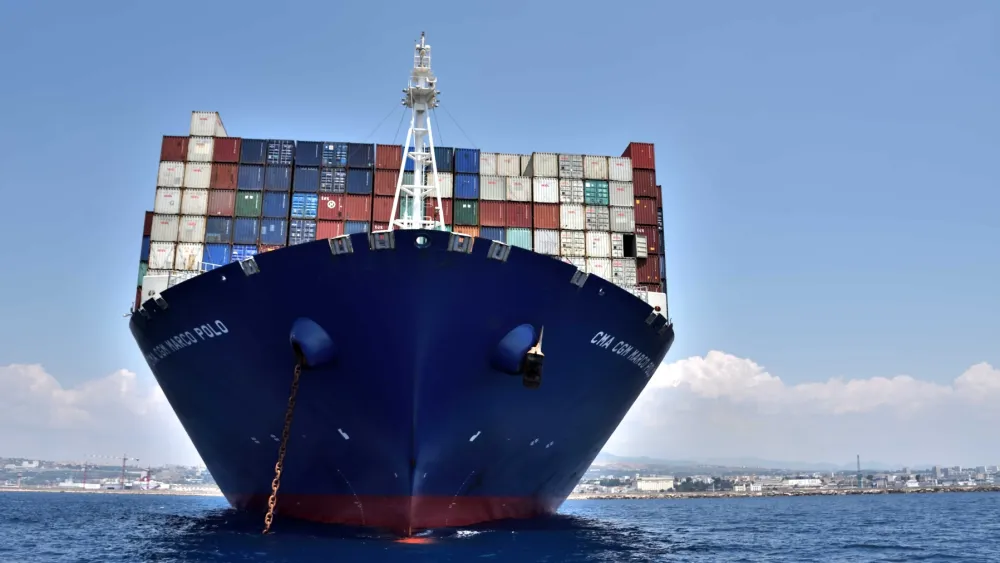
Second, shipping and logistics risk: Singapore’s role as a global trading hub means that higher freight rates, insurance premiums, or route delays can affect businesses even if no actual shortage occurs. Supply chains react to uncertainty as much as to real disruptions.
Third, business confidence: Investment decisions depend heavily on predictability. When geopolitical tensions rise, firms delay expansion, hiring, and spending. Financial markets become more volatile, and risk-averse behaviour spreads across sectors.
From a behavioural perspective, the expectation of instability can become as damaging as instability itself.
The behavioural trap in geopolitical games
Game theory assumes rational players, but real-world decision-making is rarely fully rational. Behavioural research shows that under uncertainty, individuals and governments tend to overweight potential losses relative to gains. This helps explain why conflicts often escalate even when both sides would prefer to avoid confrontation.
Each player fears that backing down will signal weakness. Each ones worries that the other side may misinterpret restraint. As a result, both maintain a tough stance, even when neither wants a direct clash. Iran’s conditional warning to its neighbours is therefore not only a diplomatic message. It is a strategic attempt to shape expectations, influence behaviour, and shift responsibility for escalation.
But signalling games are fragile. If one player misreads the signal, the outcome can change quickly. For small, open economies, this uncertainty matters more than the actual military balance.
What this means for Singapore’s economic strategy
Singapore cannot influence events in the Middle East, but it can influence how resilient its economy is to global shocks. The lesson from behavioural game theory is that stability depends not only on fundamentals but also on credibility and preparedness.
This means continuing to diversify energy sources, strengthening supply-chain flexibility, and maintaining policy discipline that keeps investor confidence strong during periods of global tension. It also means recognising that markets react to perception as much as to reality. When geopolitical risks rise, the countries that remain stable, predictable, and well-prepared become more attractive to investors. In a world shaped by repeated strategic games, credibility itself becomes an economic advantage.
Final thoughts
The current Middle East standoff is not only a military confrontation. It is a signalling game played under uncertainty, where each move is designed to influence expectations. For Singapore, the real risk is not that conflict occurs nearby, but that global confidence shifts suddenly.
In behavioural terms, the world is not playing a single game. It is playing many repeated games at once, with imperfect information. And in such a world, the most valuable strategy is not aggression, but resilience.

























 Read Here
 Advertise
 Sign Up