
What Singaporeans should know about LNG shipping
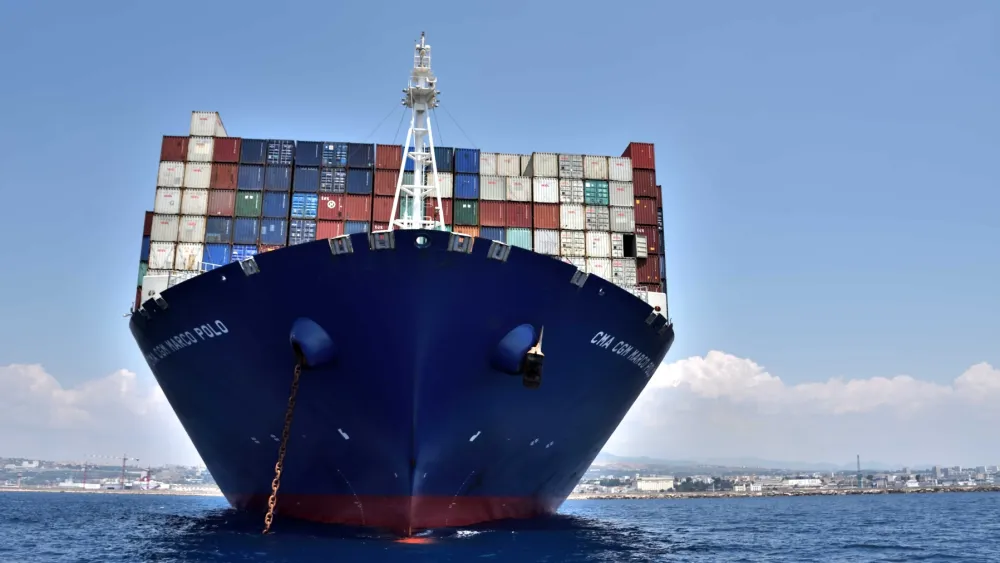
By Stephen ThompsonSingaporeans should be tuned into trends and developments in the Liquefied Natural Gas industry. As with other maritime traffic, much of the world’s LNG trade has long passed through the Strait.
More recently, Singapore has gotten deeply involved in the industry, partly because it has just built its own LNG import terminal, but also because an increasing number of LNG players are establishing regional headquarters and/or trading operations here.
One key trend is the expansion of LNG shipping along the value chain, first as floating regasification terminals and now as floating liquefaction facilities.
LNG shipping began to expand beyond transportation when the US and UK gas markets became large LNG importers in the middle of the last decade. Both of these countries have large, liquid markets with transparent pricing set by gas-on gas competition.
At the time average prices in the two markets were similar, but drivers of volatility were largely independent, setting up arbitrage opportunities for those who had access to LNG import terminals in both places. Such terminals are expensive affairs, requiring inter alia cryogenic tanks and vaporizers to heat up super-cold fuel until it returns to gaseous state.
A few innovative companies decided to put the vaporizers on board ships used as floating storage while the LNG was being regasified. The increased ship cost was more than offset by savings in fixed terminal facilities in the arbitrage markets.
This great idea never really worked commercially. Opportunities to trade into other, less flexible market took precedence over arbitrage between the US and the UK.
Then the US’s shale-gas revolution drove its price far below the UK’s, eliminating the US as an LNG import destination for flexible LNG cargoes. LNG ships with regasification equipment, though, have proved to be an attractive alternative to onshore facilities.
Asia’s first floating regasification terminal recently began operations, using an old LNG vessel refitted with regasification equipment in a Singapore yard. The West Java Floating Storage and Regasification Unit is moored off Jakarta, where it receives LNG from shuttle tankers.
Such FSRUs have limitations compared to larger onshore terminals like the one Singapore just built. But they are less costly and faster projects, with lower requirements for site-specific engineering and ready outsourcing of both conversion and vessel ownership.
Several more FSRUs are planned around Southeast Asia for coming years.
Floating liquefaction is more ambitious than floating regasification. Facilities to treat natural gas and cool it to the point of liquefaction are more complex than those for regasification, and sea states where the FLNG facilities are to be used may be far rougher than the sheltered areas generally chosen for FSRUs.
Three facilities, however, are already being built. Shell’s Prelude venture off Australia is to produce 3.6 million tonnes of LNG per year as well as Liquid Petroleum Gas and condensates. Petronas’s FLNG project offshore Sarawak will produce 1.2 MMt/y. A third project, sponsored by Pacific Rubiales, could produce up to 0.5 MMt/y off Colombia.
A host of other ventures are in planning stages.
Many sponsors hope that floating liquefaction will, in effect, follow in the footsteps of its little brother, offering faster projects with lower capital requirements and less site-specific engineering. Whether FLNG will prosper in these directions or indeed at all is an open question, however.
As ever in the LNG industry, the answer will emerge contending issues and priorities among stakeholders, including the governments of the countries where the FLNG facilities are likely to be built. Their export credit agencies may be an increasingly important source of project financing for the ventures as technical and operational viability is established.
Such promotional efforts, though, may collide with industrial policy and labour unions interests in the countries where the onshore facilities would be obviated. Outcomes may be political as much as economic or technical.
Stephen is among other speakers who will be sharing their expertise at the LNG Shipping 2013 conference to be held at the Grand Copthorne Waterfront Hotel in Singapore from 26-29 November 2013. Click here to register.























 Read Here
 Advertise
 Sign Up