
greenhouse gases
New NUS technique efficiently transforms carbon into high-value chemicals
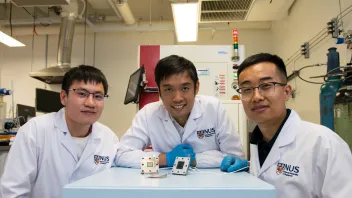
New NUS technique efficiently transforms carbon into high-value chemicals
This reduces the cost of conversion by 30%.
Singapore, Australia launch maritime decarbonisation plan

The plan accelerates the deployment of technologies that reduce greenhouse gases.
How digital transformation drives sustainability: The fast lane on the road to industrial carbon neutrality

Global warming risks are difficult to address because they are long-term in nature but require short-term action to reduce their impact. As a result, governments across the globe are now imposing targets on manufacturing industries that will force a transition to a low-carbon economy. Industrial organizations, according to the Environmental Protection Agency, are responsible for at least 21% of global greenhouse gas emissions. Therefore, they are under pressure from both consumers and governments to rapidly achieve emissions reduction targets. As a result, many companies are looking to digital transformation as a possible approach for achieving those goals.










 Read Here
 Advertise
 Sign Up
















Commentary
Why Singapore SMEs cannot wait for quantum cyber risk to arrive before securing data
Is Singapore's emphasis on long-term security and stability hindering purpose-driven employees?
When Singapore's agentic AI ‘chefs’ arrive, will the kitchen be ready for them?
What Singapore’s app store rules reveal about the future of online trust
Faster hiring alone will not fix construction’s productivity problem
Beyond policy: How Singapore's service sector can win at the frontline
Solving the production problem behind Singapore’s ‘pilot purgatory’
Transformation without disruption: Your Existing ERP is an accelerant to business innovation
From Singapore to Southeast Asia: Thriving in innovation by knowing when to pause
Section 13O, MAS, and the digital footprint of Singapore Family Offices