How the aviation services sector will benefit from Changi's expansion plans
Higher air traffic, tougher competition.
According to Maybank Kim Eng, with airlines in the region poised to embark on capacity expansion in 2014, it sees a higher volume of workload in store for domestic companies such as SATS, SIA Engineering and ST Engineering.
Tailwinds from higher air traffic due to ongoing airspace liberalisation efforts are also expected to yield positive outcomes in the long run.
Here's more:
Changi Airport expansion the best leading indicator. Analysis by our regional aviation team suggests that Singapore’s air traffic growth would likely be constrained in the near term due to limited runway capacity (c.31% from 2012 level).
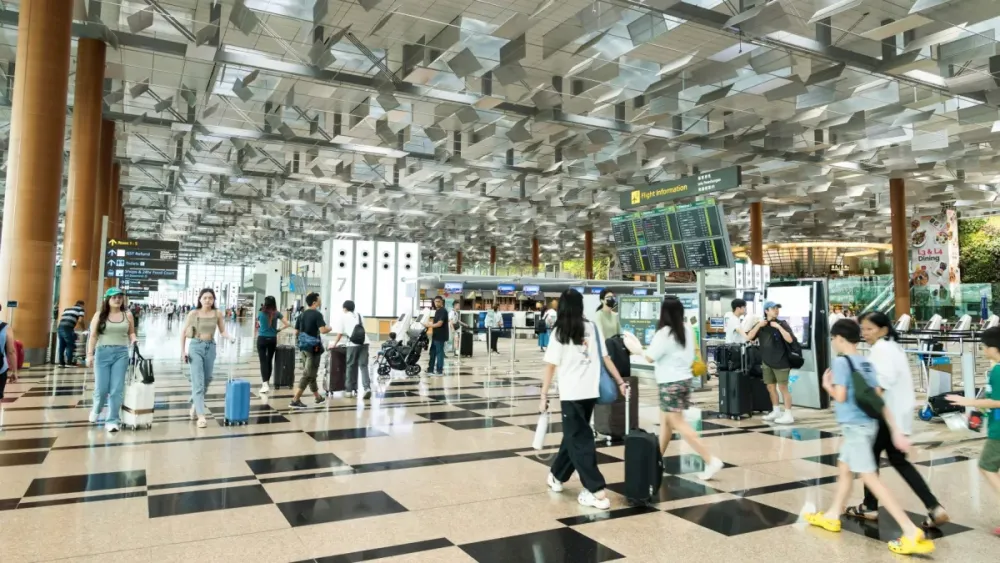
However, plans are afoot to build a third runway by 2020 to spur air traffic growth. Changi Airport’s terminal handling capacity would also be doubled by mid-2020.
In our view, this unprecedented scale of expansion will fuel structurally higher demand for aviation services and is an investment opportunity not to be missed.
Unprecedented scale of expansion. In Aug 2013, Singapore’s Ministry of Transport announced plans to double the capacity of Changi Airport by mid-2020. Air freight and MRO activities will also be allocated more land as part of the expansion. Two new terminals will be built – Terminal 4 (T4) by 2017 and T5 by mid-2020s.
Together the duo’s capacity will be equivalent to the combined capacity of the three existing terminals (T1: 1981, T2: 1990 and T3: 2008).
That it will take 17 years (2008 to 2025) to double the airport’s capacity also represents a significantly faster period than that spent to achieve the current airport capacity (1981 to 2008).
In our view, this unprecedented scale of expansion will fuel structurally higher demand for aviation services and is an investment opportunity not to be missed.

























 Read Here
 Advertise
 Sign Up