CAAS commits $4b to air navigation upgrades ahead of Changi T5 opening
AI-powered tools will help controllers predict traffic flows and manage disruptions.
The Civil Aviation Authority of Singapore (CAAS) will invest $4b over the next 15 years to upgrade Singapore’s air navigation services as air travel demand rises.
The “man-machine-method” upgrade will focus on expanding the air traffic controller workforce, modernising air navigation systems and using technology such as artificial intelligence (AI) to improve air traffic management.
The investment comes as the International Civil Aviation Organization (ICAO) expects global air passenger volumes to nearly triple over the next 25 years, with Asia-Pacific accounting for half of the growth.
CAAS said air navigation providers must expand capacity and capabilities alongside airport infrastructure investments to ensure safe and efficient air travel.
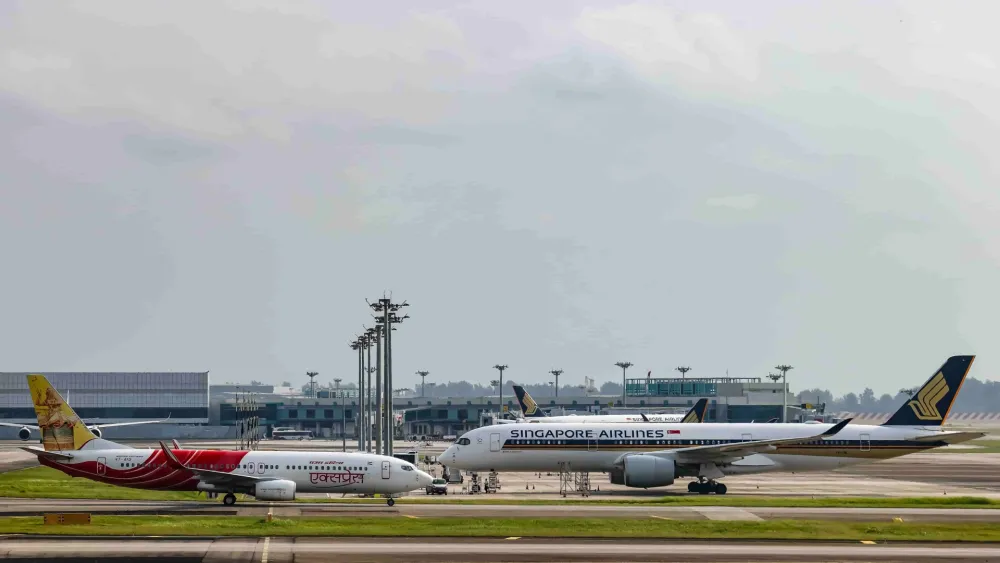
Singapore currently manages one of the world’s busiest and most complex airspaces, with CAAS air traffic control officers (ATCOs) handling about 2,000 flights daily, including 1,000 flights arriving and departing Changi Airport.
The agency plans to increase its ATCO workforce by about 40% from 500 today to around 700 by the mid-2030s, ahead of the opening of Changi Airport Terminal 5 (T5).
To attract more talent, CAAS has introduced a S$20,000 sign-on bonus for new ATCO recruits from 1 June 2026. It will also develop an undergraduate degree specialisation in air traffic control with a local university, introduce an ATC Undergraduate Scholarship, and launch an ATC Management Associate Programme in August 2026.
Beyond manpower, CAAS will strengthen its engineering and research capabilities through the establishment of an Engineering Development Centre to develop and integrate new air navigation technologies.
It will also provide additional support for PhD students researching air traffic management through the Nanyang Technological University Research Scholarship scheme.
CAAS will upgrade more than 30 air navigation systems, including the NexGen Air Traffic Management System, which will replace the current system and double capacity.
The new system will support up to one million aircraft movements annually, process up to 4,000 aircraft positions in real time and increase controller workstations at the Singapore Air Traffic Control Centre from 100 to 150.
The system will also expand ATCO workstations at the Singapore Air Traffic Control Centre (SATCC) from 100 to 150, with completion expected by 2030.
CAAS will also introduce the Integrated Digital Tower System (IDTS), which will use cameras and sensors to provide controllers with a real-time digital view of Changi Airport’s aerodrome.
The system will increase aerodrome ATCO workstations from 20 to 54 and allow more flexible operating arrangements beyond physical control towers. Work will begin in August 2026, with initial operations expected in 2030 and full completion by the mid-2030s.
Other technology upgrades include the Info-Centric Air Traffic Management system, which will use data analytics and predictive tools to manage traffic flows, and the Open Platform for Air Navigation Services, which will enable digital information sharing with airlines, airports and regional air navigation providers.
Changi infrastructure upgrades underway
Additionally, CAAS will also refurbish and upgrade the SATCC and Changi Control Tower to support new systems and future three-runway operations at Changi Airport.
Upgrades to the SATCC will be completed in phases, with the next phase expected by end-2028. Works at the Changi Control Tower will begin in November 2026 and finish by end-2028.
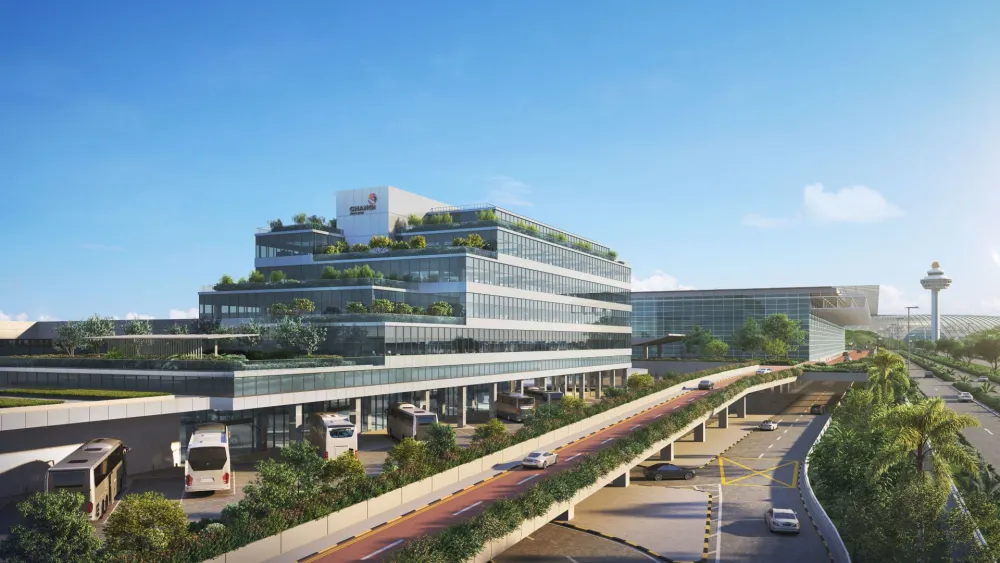
The works will include façade improvements and the construction of a new annex building between the tower and Jewel Changi Airport.
The upgrades will support Changi Airport’s move towards three-runway operations by the end of the decade, which will increase flight handling capacity.
CAAS will also introduce AI-powered tools to support controllers, including a Multi Sector Planner, Digital ATCO Assistant and Automated Read-back Error Detection system.
From 2027, it will trial an AI-powered Multi Sector Planner that allows one planner to support two to three control sectors, reducing coordination workload.
CAAS will also introduce AI-powered tools to support controllers, including a Multi Sector Planner, Digital ATCO Assistant and Automated Read-back Error Detection system.
The agency said it is also working with regional aviation authorities to improve air traffic coordination, including daily operational calls with counterparts from China, Hong Kong, South Korea, Thailand and Vietnam.
“As a global air hub, we are committed to serving all airspace users and to deliver for them an even smoother, more seamless and safer travel experience,” said CAAS Director-General Han Kok Juan said. ”We plan ahead. We invest, partner and leverage technology to ensure that we have the capacity and capabilities we need to meet rising demand and benefit from aviation’s growth.”

























 Read Here
 Advertise
 Sign Up