Construction hits $53b record peak on Changi T5 surge
Total construction output is expected to rise as high as $46b dollars during 2026.
Singapore’s construction sector is expected to see total demand reach a high of $53b in 2026, but the eventual completion of major ‘one-off’ projects may lead to a moderation in activity levels.
Construction demand for the year is expected to remain steady on the back of several large-scale infrastructure developments, according to the Building and Construction Authority (BCA).
These developments include the Changi Airport Terminal 5 project, the Marina Bay Sands Integrated Resort expansion, the New Tengah General Hospital, and rail extensions such as the Thomson–East Coast Line and the Downtown Line 2 Extension
However, industry demand could moderate after the completion of Changi Terminal 5, as it is a one-off project, and schedules may still change due to unforeseen global economic risks.
The new terminal, expected to open in mid-2030, will add capacity for 50 million passengers in its first phase and connect to existing terminals, allowing the airport to operate as a single integrated hub.
Beyond 2026, construction demand is projected to average $39b to $46b per year from 2027 to 2030.
“Medium-term construction demand is anticipated to be supported by a strong pipeline of various large developments such as the redevelopment of NUH at Kent Ridge, various Junior Colleges, and the development of the new Singapore University of Social Sciences City Campus,” the report said.
Preliminary actual construction demand reached $50.5b in nominal terms in 2025, within the authority’s earlier forecast of $47b to $53b. The uptrend was primarily attributed to institutional and housing projects.
Total construction output is expected to rise to between $43b and $46b in 2026, with the projected average of $44.5b about 7% higher than the estimated $41.7b last year.
Separately, JLL has warned of continued cost pressures in the sector. In a 2025 report, construction cost escalation was expected to rise by 5–6% in FY2025 and 5–7% in FY2026, on the back of major public infrastructure projects entering construction and sustained demand for materials, equipment and labour.
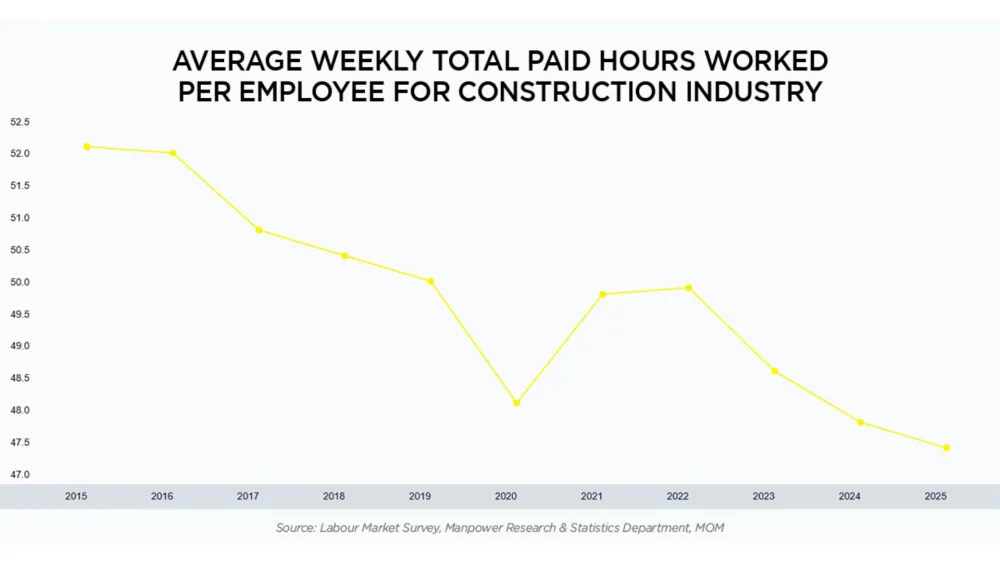
The consultancy firm added that despite the normalisation of supply chains since the pandemic, skilled labour capacity constraints remain a key challenge, which could lead to project delays and higher labour costs.
Meanwhile, BCA said it will enhance support for firms from April, including expanding grants for advanced equipment and digital solutions, and streamlining regulatory processes to improve productivity and manage manpower constraints.

























 Read Here
 Advertise
 Sign Up